Paternity Leave in India: Rules, Eligibility, Duration, and Application Guide (2026)
Summary
Paternity leave in India varies across government and private sectors. This guide explains eligibility, rules, duration, application procedures, and HR best practices. Learn how paternity leave works in 2026, what employees are entitled to, and how organisations can build effective policies.
"Parenthood is not a solitary function performed by just one parent." It was a powerful observation that came from the Supreme Court of India in March 2026, and it has fundamentally shifted how we view workplace benefits for new fathers.
This blog gives you the complete picture of paternity leave in India for 2026. You will learn the exact rules, who qualifies, how many days you can take, and step-by-step instructions for applying.
What Is Paternity Leave and Why Does It Matter?
Paternity leave meaning refers to paid time off work granted to fathers when a child is born or adopted. Paternity leave for men allows new dads to bond with their newborn during those crucial early days.
Moments like attending the first feeds, handling midnight cries, and supporting the partner through recovery are precious for fathers just like mothers.

Core Purposes of Paternity Leave for Men
Paternity leave for fathers serves three core purposes. First, it supports emotional bonding between father and child. Second, it promotes gender equality by sharing parenting responsibilities. Third, it improves work-life balance for both parents.
The concept of what is paternity leave becomes clearer only when you understand its full scope. This leave applies to both biological birth and adoption cases. Many progressive companies have even extended paternity and maternity leave to surrogacy and LGBT parents welcoming children.
Paternity leave rules remain separate from those of casual or privilege leave. Employees receive full pay during this period if they happen to work at companies that have a paid paternity leave policy.
Is Paternity Leave Mandatory in India?
Here lies the most critical fact every HR professional must know. The question 'Is paternity leave mandatory in India' depends entirely on your employee category. The answer also splits sharply between government and private sectors.
Paternity Leave for Government Employees
As you know, government employees in India are split across central government and state government departments.
Paternity Leave in India for Central Government Employees
Paternity leave in India is mandatory for central government employees. Under the Central Civil Services (Leave) Rule 551 (A), 1972, male central government employees must be granted 15 days of paternity leave. Employers cannot refuse eligible employees. The law protects your right to take this leave.
Paternity Leave in India for State Government Employees
Paternity leave for government employees in India under state jurisdiction depends on the rules framed by each state government. Many states provide benefits similar to those available to central government employees.
For instance, Tamil Nadu mirrors central government provisions. Kerala offers 10 days within 3 months of childbirth. Each state sets its own duration and conditions.
Paternity Leave in India for Private Sector Employees
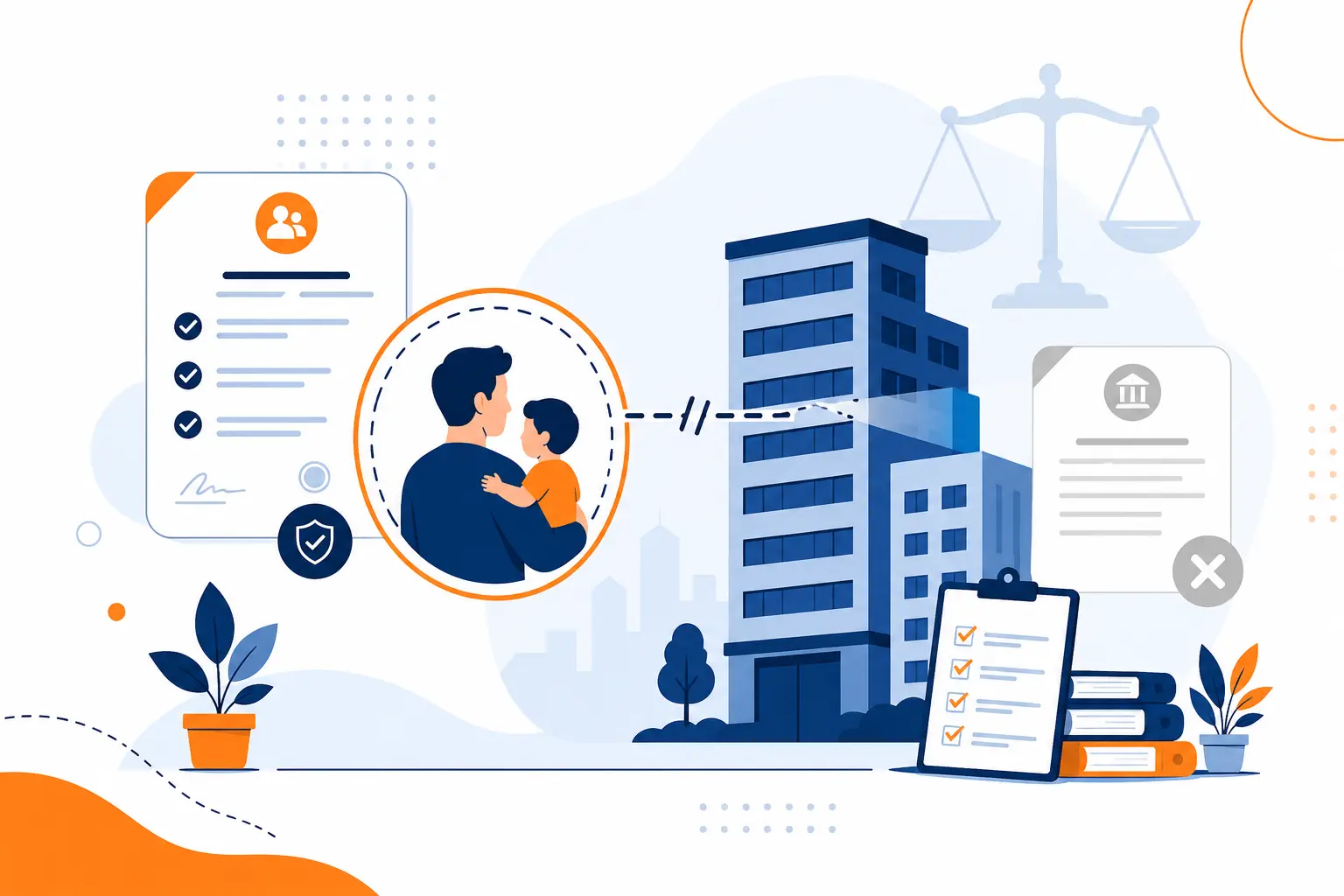
Indian labour law does not mandate paternity leave in India for private companies. There is no federal statute that forces private employers to offer it. Companies have the freedom to choose whether to include this benefit in their policies. Many do offer it voluntarily to attract talent, but they are not legally obliged to do so.
The Supreme Court has recently called for mandatory, comprehensive paternity leave law covering both private and public sectors. But until that legislation passes, private sector paternity leave policy in India remains optional and varies by employer.
Key Paternity Leave Rules in India You Must Know
Paternity leave in India differs by sector, duration, timing, and documentation requirements. You cannot overlook the rules surrounding it.
Paternity Leave Rules for Central Government Employees
The central government's rules for paternity leave in India follow strict specifications:
| Aspect | Rule |
|---|---|
| Leave duration | 15 days exactly |
| Timing window | Before birth OR within 6 months of delivery |
| Child limit | Only for employees with fewer than 2 surviving children |
| Service requirement | Minimum 80 days in the 12 months before expected delivery |
| Payment | Full salary equal to pay drawn before leaving |
| Adoption coverage | Applies to children under 1 year old |
| Lapse condition | Leave not taken within 6 months expires completely |
| Cannot be denied | Employers cannot refuse eligible employees |
Rules for Private Companies
Private sector rules for paternity leave in India depend exclusively on the company policy. Common patterns include:
| Aspect | Typical Private Company Practice |
|---|---|
| Duration | 5 to 15 days (some offer 3-5 weeks) |
| Timing | Usually immediately after birth |
| Payment | Varies - paid or unpaid based on policy |
| Service requirement | Often 80-90 days minimum tenure |
| Adoption | Many companies include adoption coverage |
| Carry forward | Most policies do not allow carry forward |
Universal Paternity Leave Rules Across All Sectors
Certain principles of paternity leave apply regardless of employer type. Let's discuss about them below.
- Paternity leave cannot be deducted from your casual leave, privilege leave, or sick leave balance. It has to remain separate.
- If you proceed on paternity leave, you receive guaranteed pay at government employers. Private companies set their own payment terms.
- Employers cannot normally refuse paternity leave to eligible government employees. Private sector employees must check their specific company policy for denial conditions.
Eligibility Criteria for Paternity Leave for Fathers
Knowing who qualifies is essential to prevent paternity leave application rejection. There are specific eligibility gates that you must clear before applying.
Primary Eligibility Requirements
You qualify for paternity leave if you meet these conditions:
- Gender requirement: You must be a male employee. Some progressive companies extend this to adoptive fathers regardless of gender or to LGBT parents.
- Event type: Your child arrives through birth or adoption. For adoption, the child must be under one year old.
- Service tenure: You must have worked at the organisation for at least 80 calendar days in the 12 months before the expected delivery date or adoption date. This rule applies strictly to government employees and most private companies.
- Number of children: Central government employees may only avail paternity leave if they have fewer than two surviving children. This restriction does not apply uniformly in the private sector.
Special Cases and Exceptions in Paternity Leave in India
- Adoption scenarios: Paternity leave applies when you adopt a child under one year old. The same 15-day rule applies for government employees. Private companies set their own adoption leave duration.
- Late applications: If your child arrives earlier than expected, inform HR immediately. You can submit a paternity leave application after delivery within the allowed timeframe (6 months for government employees).
- Multiple births: Twins or triplets do not extend the leave duration (paternity leave how many days). The same 15 days apply.
- Probationers: Apprentice and probationer employees qualify if they meet the 80-day service requirement.
How Many Days of Paternity Leave Can You Take?
Paternity leave how many days remains the most frequently asked question by new fathers. The answer varies by employer type.
Government Sector Duration
Central government employees receive 15 days of paternity leave. The duration is fixed by law. There is no provision to extend it through negotiation. The 15 days can be taken consecutively or split. But prior to taking, the employee has to get the employer approval.
State government employees receive at varying durations. In Kerala, it is 10 days within 3 months. Tamil Nadu follows more or less the same pattern that the central government follows, which is 15 days. Employees in other states are advised to check their respective state civil service rules.
Private Sector Duration
Private companies offer diverse duration ranges.
- Minimum common offering: 5 working days
- Standard offering: 10-15 working days
- Progressive companies: 3 weeks to 5 weeks
- Top multinationals: Some organisations offer 16 weeks (around 4 months) of paid parental leave. Vodafone's global parental leave policy, for example, provides 16 weeks of paid leave for eligible non-birthing parents.
It is common in most organisations to provide paid paternity leave ranging from 1 to 2 weeks. TCS does not offer dedicated paternity leave; employees must use their regular leave balance instead. Google India offers 18 weeks, excluding weekends, for fathers.
When Can You Take Paternity Leave in India?
The timing window to make a paternity leave application determines your flexibility:
Government employees
Take leave before the baby's birth OR anytime within 6 months after delivery. If you miss this 6-month window, the leave lapses completely.
Private employees
Most companies expect you to take leave immediately after birth. Some allow flexibility within 3-6 months. Check your employee handbook for exact timing rules.
Why Private Companies Should Offer Paternity Leave in India?
If you are an HR leader considering paternity leave policy design, you should weigh these benefits as they are increasingly shaping employee expectations.
Talent attraction and retention
Candidates prefer employers offering paternity benefits. Existing employees stay longer when they feel supported during major life events.
Gender equality promotion
Shared parenting responsibility reduces the motherhood penalty in workplaces. Allowing fathers to take leave and support their partners during the recovery period is a gesture against the gender divide and helps new mothers return to work faster.
Brand image enhancement
The very decision to offer paternity leave in India for private companies positions the organisation as an employee-centric one. This will help attract quality talent in competitive markets.
Productivity gains
Employees returning from paternity leave show higher engagement because of their family's stability. They experience less workplace distraction and do not cause absenteeism.
If you manage leave policies manually, it is sure to create unnecessary administrative load for your HR team. Many organisations these days use HRMS leave management systems like Mewurk to automate paternity leave requests and their overall coordinated management.

How to Design a Healthy Policy for Paternity Leave in India?
When crafting paternity leave rules and policies, make sure that these core elements are addressed.
- Clear duration specification
- Eligibility criteria (service days, number of children)
- Application timeline and process
- Documentation requirements
- Payment structure (fully paid, partially paid, or unpaid)
- Adoption coverage terms
- Flexibility options (split leave, work from home)
- Manager communication protocols
Companies using advanced leave management software such as Mewurk report a greater level of convenience and consistency in the application of leave rules across their departments, locations, and employee categories.
How to Apply for Paternity Leave?
Instruct your employees on writing a paternity leave application correctly and educate them about the importance of using the correct paternity leave format. Follow this step-by-step guide. Whether it is a paternity leave application for govt employees or private, these steps work.
Step 1: Check Your Eligibility Before Applying
Verify you meet all criteria:
- Minimum 80 days of service completed
- Fewer than 2 surviving children (for the government)
- Within a 6-month window from birth/adoption
- Gather required documents before writing your application.
Step 2: Prepare Required Documents
Standard documentation includes:
- Medical certificate from your partner's doctor confirming pregnancy or birth date
- Birth certificate of the child (or hospital discharge certificate)
- Family declaration form (for government employees)
- Certificate regarding birth issued by a medical authority or the government (government employees)
- Doctor's certificate if applying before birth (for government leave taken 15+ days before delivery)
Some employers request a paternity leave form specific to their organisation. Download from the HR portal or request from the HR department.
Step 3: Write Your Paternity Leave Application Email or Letter
A proper paternity leave email or paternity leave letter includes these elements:
Subject line format: Paternity Leave Request - [Your Name] - [Employee ID]
Body structure:
- State the purpose clearly
- Mention the expected or actual delivery date
- Specify the leave duration requested
- Indicate start and end dates
- Mention the handover plan for your work
- Attach supporting documents
- Provide emergency contact information
Paternity Leave Format For Email:
Step 4: Submit Through Proper Channel
Submit your paternity leave application following company protocol:
- Email to HR and CC your manager
- Or submit through the HRIS / leave management system
- For government employees, forward through the proper channel to the immediate supervisor
- Keep copies of all submissions for your records
Step 5: Wait for Approval and Plan Handover
HR processes your application within 3-7 working days. During this time:
- Complete pending work assignments
- Prepare handover documentation for colleagues
- Set email auto-responder with backup contact details
- Brief your manager on the coverage plan
Paternity leave request approval is nearly guaranteed for eligible government employees. Private sector approval depends on policy and operational needs.
How to Approach Paternity Leave in India: Best Practices for HR Decision Makers
If you handle leave management for your organisation, these best practices can significantly improve the proper and healthy implementation of paternity leave.
Build a Clear Written Policy
Document the paternity leave policy in India explicitly in your employee handbook. Include:
- Eligibility criteria
- Duration offered
- Application process
- Documentation requirements
- Payment terms
- Adoption coverage
- Manager responsibilities
Train Managers on Paternity Leave Handling
Managers may not have proper awareness about the leave policies. Conduct sessions covering:
- How to respond to a paternity leave application PDF received
- Work coverage planning
- Legal obligations (for government contractors)
- Sensitivity around new parenthood
- Avoiding retaliation or bias
Integrate Paternity Leave with Other Benefits
Connect paternity leave with:
- Flexible work arrangements (work from home post-return)
- Childcare support programs
- Health insurance covering the newborn
- Mental health support for new fathers
- Parenting workshops
Communicate Proactively
Don't wait for employees to ask. Notify expecting fathers about:
- Available paternity leave benefits
- Application timeline
- Correct paternity leave application format
- Paternity leave letter sample
- Required documents
- Point of contact in HR
Send automated reminders at 3 weeks before expected due date.
Track Policy Usage and Gather Feedback
Monitor:
- Percentage of eligible fathers taking leave
- Average duration taken
- Time to approval
- Employee satisfaction scores
Use data to refine policy and identify barriers to uptake.

Conclusion
You now have complete, verified information about paternity leave in India for 2026. We hope you now understand the rules, eligibility, duration, and application process for both government and private sectors.
Did this blog solve your questions about paternity leave in India? Share this with HR colleagues needing clarity or new fathers preparing for leave.
Want wants to manage paternity leave requests without spreadsheets, emails, or manual tracking? Mewurk leave management system can help you centralise your leave policies, approvals, balances, and employee records in one place. Get to know more by contacting us today.
Frequently Asked Questions
1. How many days of paternity leave in India?
The central government employees in India get 15 days of paternity leave. Private companies offer 5-15 days usually. Some progressive companies are providing up to 3 months. The decision depends on the company's policy.
2. Is paternity leave mandatory for private companies in India?
No. Private companies are not legally required to offer paternity leave. It remains optional under current Indian labour law.
3. When can I apply for paternity leave?
Apply before the expected due date or within 6 months after birth. Government employees must apply within 6 months, or the leave lapses completely.
4. What documents do I need for a paternity leave application?
Upload birth certificate, medical certificate, family declaration, proof of service and filled-out paternity leave form PDF or printed out and signed copy of the paternity leave letter. Government employees need additional formal certificates. Follow your department's instructions carefully.
5. Can my leave application for paternity leave be rejected?
Government departments cannot refuse the application if the employee has officially submitted the duly filled-out paternity leave form. Private companies may reject based on their policy and operational requirements.
6. Which leave management software is suitable for managing paternity leave?
Organisations handling different types of leaves like paternity leave and maternity leave prefer HRMS leave management systems to automate approvals and maintain complete records. Mewurk is one such platform. It allows employees to apply for leave online. Managers or HR teams can approve them instantly with tight accuracy compliance.
7. Which leave management software is suitable for managing paternity leave?
Organisations handling different types of leaves like paternity leave and maternity leave prefer HRMS leave management systems to automate approvals and maintain complete records. Mewurk is one such platform. It allows employees to apply for leave online. Managers or HR teams can approve them instantly with tight accuracy compliance.

Most Popular Post

Why Accurate Attendance and Leave Management Matters for Business Growth?
Read More →Why Accurate Attendance and Leave Management Matters for Business Growth?
How To Leverage Attendance Data For Better Workforce Management?
Read More →How To Leverage Attendance Data For Better Workforce Management?