Will AI Replace Human Jobs? 25 Jobs AI Will Replace, and 20 Jobs That AI Can't Replace
Summary
Will AI replace human jobs? This guide explores that question by examining 25 jobs AI may replace, 20 careers likely to remain human-led, and practical ways to prepare for the future. Discover how humans and AI can work together rather than compete in an evolving workplace.
For decades, people worried that machines would take over human work. Factory automation sparked those fears in the past. Today, artificial intelligence has brought the same question back into the spotlight.
This guide explores the question 'Will AI replace human jobs?' and which jobs AI is likely to replace first, which professions remain deeply human, and how people can prepare for the changing world of work.
Interested in how artificial intelligence is changing human resources? Read our complete guide on AI in HR.
Will AI Replace Human Jobs?
It is one of the most common questions people ask in 2026. Employees wonder about their careers. Students think about their future. Business owners are seeking ways to maintain competitiveness in their fields. Nobody wants to wake up one day and discover that their profession no longer exists or is in demand.
The answer is neither as alarming nor as rosy as it seems.
AI is already changing the way people work. Certain tasks have become faster and cheaper. Some roles are shrinking. Others are evolving. New opportunities are appearing at the same time.
So, will AI replace jobs completely? The short answer is no.
Human beings have adapted to every major technological shift in history. Artificial intelligence is designed to follow the same pattern. Some jobs will disappear. Many jobs will change. Quite a few occupations will remain deeply human. Let's look at both sides of the story.
Why Is AI Replacing Jobs?
Artificial intelligence excels at handling repetitive work. It can process huge amounts of data, recognise patterns, and complete routine tasks without getting tired.
Businesses are embracing AI because it can:
- Reduce operating costs
- Speed up routine processes
- Improve accuracy
- Handle large workloads
- Operate around the clock
As a result, AI replacing jobs has become a reality in certain sectors.
Still, replacing an entire profession is much harder than replacing specific tasks.
A customer service representative does more than answer questions. A teacher does more than explain lessons. Human work involves empathy, judgment, and creativity. Those qualities are harder to automate.
How Many Jobs Will Be Replaced by AI?
One of the most searched questions today, after 'will AI replace human jobs' is how many jobs will be replaced by AI.
Experts have different estimates. Some studies suggest that millions of roles worldwide will be affected over the next decade. Many analysts believe AI will change jobs more than it eliminates them.
So, how many jobs is AI expected to replace?
Nobody has a precise answer.
Economic conditions, government policies, and the pace of technological progress will all influence the outcome. Some industries will experience rapid changes. Others may see only modest shifts.
A better question might be this: Which jobs will AI replace first?
25 Jobs AI Will Replace or Significantly Transform
Not every role on this list will disappear entirely. Many jobs will evolve rather than vanish.
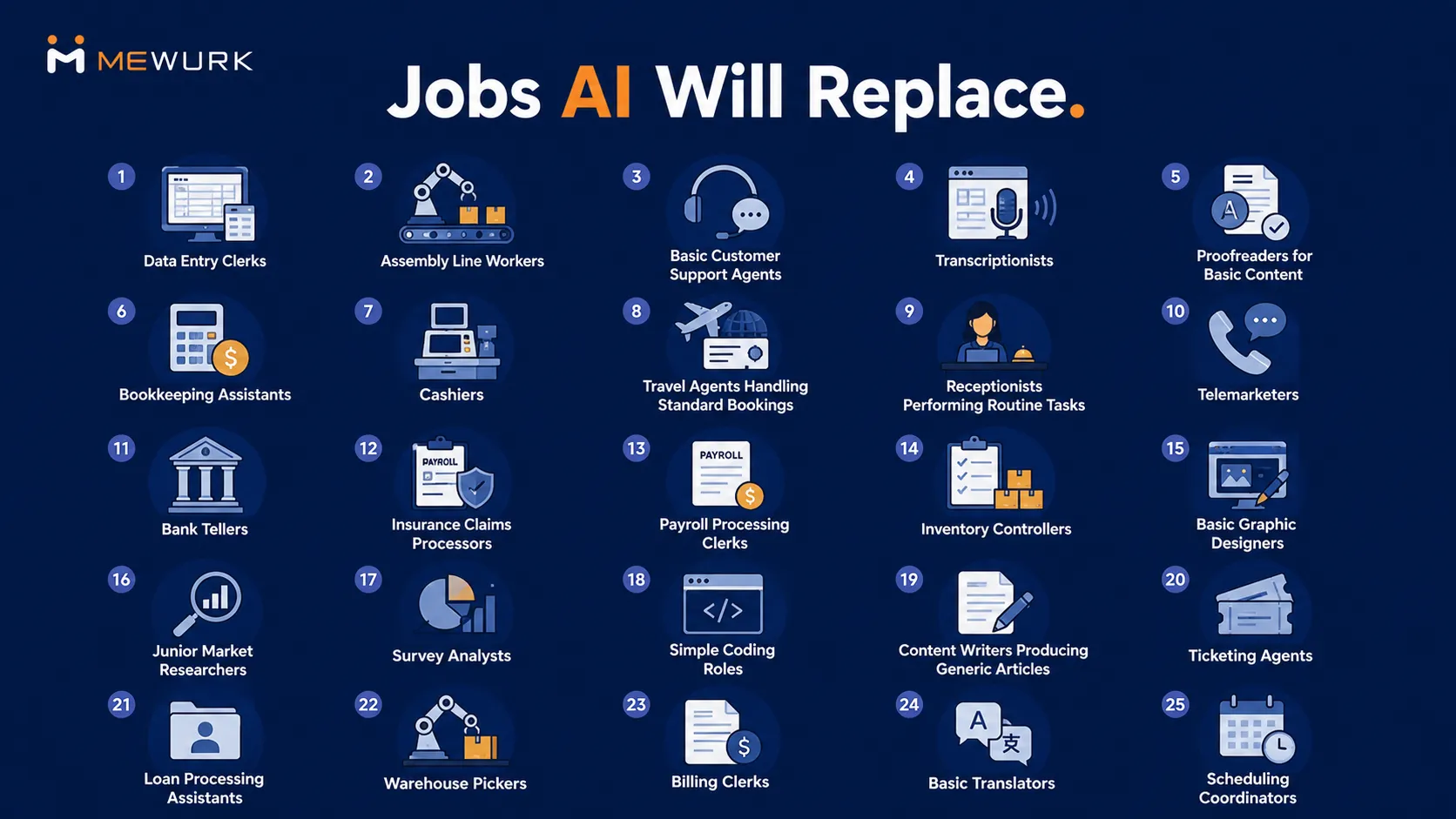
- Data Entry Clerks - Jobs centered on repetitive data entry are among the first to feel the impact of AI-powered automation. Will AI replace human jobs of data entry clerks? There is a greater chance of automation here than in many other professions.
- Assembly Line Workers - Factories around the world are introducing robotics to perform repetitive production tasks.
- Basic Customer Support Agents - Many routine support questions that once required human agents are now answered by chatbots.
- Transcriptionists - What used to take hours of manual typing can now be completed in minutes with speech recognition tools.
- Proofreaders for Basic Content - Simple grammar and spelling corrections are increasingly being handled by intelligent writing software.
- Bookkeeping Assistants - A growing number of accounting tasks no longer require the same level of manual effort as before.
- Cashiers - Retailers are steadily expanding self-checkout systems, reducing dependence on traditional cashier roles.
- Travel Agents Handling Standard Bookings - For everyday bookings, most travelers now prefer the convenience of online platforms.
- Receptionists Performing Routine Tasks - Scheduling appointments and answering common questions can often be managed by virtual assistants.
- Telemarketers - Traditional telemarketing roles are shrinking as conversational AI handles more customer interactions. If you ask, "Will AI replace human jobs?" telemarketing is one area where the risk is relatively high.
- Bank Tellers - As digital banking becomes more common, fewer customers rely on branch visits for basic transactions.
- Insurance Claims Processors - Document reviews that once demanded extensive manual work are increasingly being automated.
- Payroll Processing Clerks - Today's payroll software can complete calculations and compliance tasks with remarkable speed.
- Inventory Controllers - Real-time tracking systems are changing how businesses monitor stock and warehouse operations.
- Basic Graphic Designers - Creating simple visuals is becoming easier thanks to the rapid progress of AI image tools.
- Junior Market Researchers - Organizations are using data platforms to gather insights faster than traditional methods allowed.
- Survey Analysts - Spotting patterns in large datasets is an area where machine learning excels.
- Simple Coding Roles - Not every programming task requires extensive human input anymore, especially repetitive ones.
- Content Writers Producing Generic Articles - Generic, information-based articles are proving easier for AI to generate than expert or creative content.
- Ticketing Agents - The rise of online booking services has reduced the demand for many traditional ticketing jobs.
- Loan Processing Assistants - Banks and financial institutions increasingly rely on automated systems to assess applications.
- Warehouse Pickers - Warehouses are adopting robotics at a pace that would have seemed unrealistic a decade ago.
- Billing Clerks - Invoice processing and payment tracking are tasks that software now performs with little intervention.
- Basic Translators - Will AI replace human jobs completely in this profession? There is a greater chance for routine translation tasks than many people once imagined. Routine translations have become significantly faster with the arrival of advanced language models.
- Scheduling Coordinators - Managing calendars and appointments is one of the many areas where AI assistants are proving useful.
What Jobs Will AI Replace Completely?
In most cases, complete replacement is unlikely. Jobs AI will replace tend to involve repetitive and predictable work. Human oversight still plays an important role. People tend to focus only on the risky sides. Another side, which is the opportunities created by AI, deserves equal attention too.
Which Jobs Will Not Be Replaced By AI?
Just like the question 'Will AI replace human jobs?', the question of which jobs will not be replaced by AI matters even more for students and professionals planning their future.
New technologies change the nature of work, but they do not entirely remove the need for human beings.
So, which jobs will not be replaced by AI? The answer comes down to three things:
- Human relationships
- Creativity and judgment
- Physical skills in unpredictable environments
Those qualities remain difficult to replicate. Below are some jobs AI can't replace easily.
20 Jobs AI Can't Replace
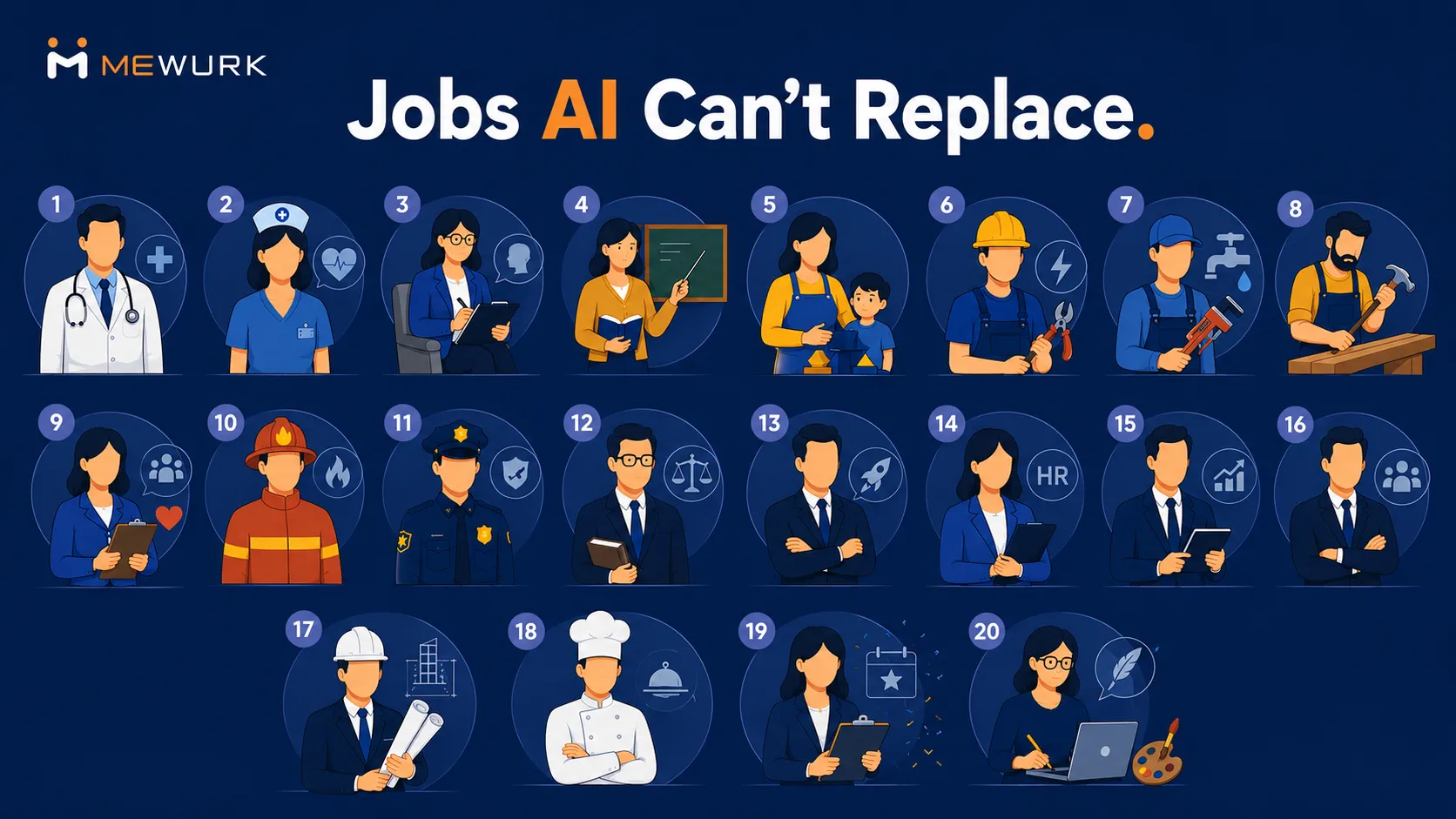
- Doctors and Surgeons - While AI can support diagnosis, patients still depend on experienced doctors to make difficult decisions and provide reassurance. Will AI replace human jobs in medicine? That remains highly unlikely.
- Nurses - Few professions combine medical expertise and compassion the way nurses do. They are incredibly difficult to replace with AI.
- Psychologists and Therapists - People rarely seek therapy for information alone; they seek empathy, trust, and genuine human understanding.
- Teachers - Education is about inspiring curiosity and adapting to students, something technology alone cannot accomplish. Will AI replace human jobs in teaching? The likelihood remains extremely low.
- Childcare Professionals - Young children thrive on emotional bonds and personal attention that no machine can truly replicate.
- Electricians - From old wiring to unexpected faults, every job presents challenges that demand human judgment.
- Plumbers - No two repair jobs are exactly alike, which makes plumbing surprisingly resistant to automation.
- Carpenters - Skilled carpenters combine craftsmanship and practical problem-solving in ways machines still struggle to match.
- Social Workers - Supporting vulnerable people requires compassion and trust, qualities that cannot be programmed into software.
- Firefighters - In life-threatening emergencies, courage and split-second decisions matter just as much as technical training.
- Police Officers - Law enforcement often involves communication and judgment, areas where human interaction remains essential.
- Lawyers Handling Complex Cases - Although AI can assist with research, experience and negotiation still decide many legal battles.
- Entrepreneurs - Building successful companies demands vision, creativity, and a willingness to embrace uncertainty.
- HR Professionals - Managing people involves emotions and workplace relationships, not just policies and paperwork. To explore the growing role of AI in human resources, read our detailed guide on the benefits of AI in HR.
- Sales Leaders - Strong relationships and trust continue to matter far more than automated sales scripts.
- Managers - Great leaders do much more than assign tasks; they motivate teams and resolve conflicts.
- Architects - Designing buildings requires balancing technical requirements with creativity and human needs.
- Skilled Chefs - Behind every memorable dish lies creativity and personal expression that machines cannot easily reproduce.
- Event Planners - When plans suddenly change, experienced event planners know how to adapt under pressure.
- Artists and Writers with Unique Perspectives - Original ideas and authentic voices remain among the most valuable strengths human beings possess. Will AI replace human jobs performed by artists and writers? The chances are far lower than many fear.
These are jobs that AI can't replace because they depend heavily on emotional intelligence, creativity, and human judgment.
Which Jobs Will AI Replace First?
Many people searching for which jobs will AI replace are worried about immediate risks. Jobs involving repetitive and rule-based activities are usually the first to experience change.
Examples include:
- Data entry
- Routine customer support
- Basic bookkeeping
- Simple coding tasks
- Generic content creation
- Transcription work
Those roles are already evolving. Still, AI should not be viewed as an enemy. Calculators did not eliminate accountants. Computers did not replace teachers. The internet did not destroy businesses. Technology changes how people work rather than removing the need for workers altogether.
How to Future-Proof Your Career
Nobody can predict the future perfectly. Some occupations will change more rapidly than others. Here are a few ways to stay valuable in an AI-driven world.
- Keep Learning: Skills become outdated faster than before. Lifelong learning is the only way to stay relevant.
- Develop Communication Skills: Strong communication remains one of the most valuable qualities in any profession.
- Build Emotional Intelligence: Empathy, leadership, and collaboration are difficult to automate.
- Learn How to Work With AI: People who understand AI tools will have an advantage over those who ignore them.
- Focus on Creativity: Original ideas and critical thinking will continue to matter.
Will AI Replace Human Jobs Completely?
Probably not. Artificial intelligence is transforming industries, and certain occupations will shrink. Some jobs AI will replace are already changing right in front of us.
At the same time, new opportunities are emerging. Entire industries that exist today were unimaginable a few decades ago. The same pattern is likely to continue. Human beings have adapted to agricultural revolutions, industrial revolutions, and the digital age. Artificial intelligence represents another chapter in that story.
The future belongs to people who know how to work alongside technology rather than compete against it.
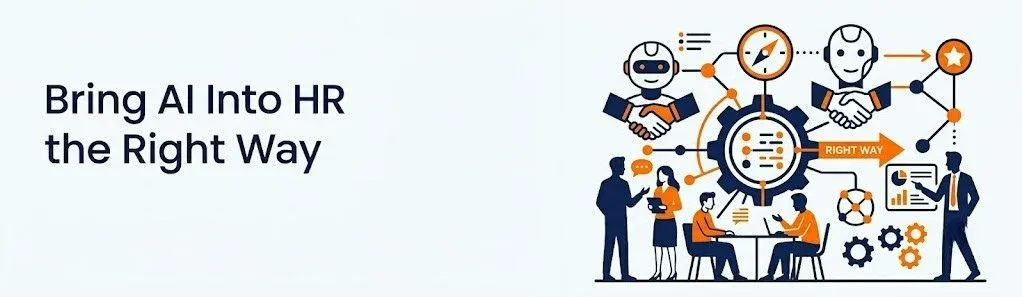
Final Thoughts: The Future of Work Is Human and AI Together
For those still wondering, "Will AI replace human jobs?", the answer is more nuanced than many headlines suggest. Artificial intelligence will undoubtedly change the way people work, but technology delivers its greatest value when it complements human abilities rather than replacing them.
That philosophy is shared by companies like Mewurk. Its AI Assessments and AI Video Interviewer help recruiters screen candidates faster and bring greater consistency to the hiring process, while keeping people at the centre of every decision.
The goal of AI is not to make humans irrelevant. It is to remove repetitive work so professionals can spend more time doing what humans do best.
FAQs
1. Will AI replace human jobs completely?
No. AI will automate certain tasks and transform many occupations, but complete replacement across all industries is highly unlikely. Human creativity, empathy, and judgment remain essential.
2. Will AI replace jobs in the future?
Yes, some roles will change or disappear. Many new jobs will also emerge as businesses adopt new technologies.
3. Which jobs will not be replaced by AI?
Healthcare professionals, teachers, skilled tradespeople, managers, therapists, social workers, and creative professionals are among the careers expected to remain heavily dependent on human skills.
4. What jobs will AI replace first?
Jobs involving repetitive and predictable work are the most vulnerable. Examples include data entry, telemarketing, basic customer support, and routine administrative tasks.
5. Which jobs will AI replace over the next decade?
Analysts expect AI to affect roles related to bookkeeping, transcription, inventory management, scheduling, and other process-driven work.
6. How many jobs will be replaced by AI?
There is no universal estimate as to how many jobs is AI expected to replace. Studies suggest millions of jobs worldwide will be affected, but many experts believe AI will transform work more than eliminate it.
7. How does Mewurk use AI to support HR teams?
Mewurk is an AI-powered HRMS software that combines artificial intelligence with human decision-making to help recruiters and HR teams work more efficiently. Its unique features, such as AI Assessments and the AI Video Interviewer, reduce repetitive tasks and bring greater consistency to the hiring process. As a result, HR professionals can keep their focus on people rather than paperwork.

Most Popular Post
Why Accurate Attendance and Leave Management Matters for Business Growth?
Read More →Why Accurate Attendance and Leave Management Matters for Business Growth?
How To Leverage Attendance Data For Better Workforce Management?
Read More →How To Leverage Attendance Data For Better Workforce Management?