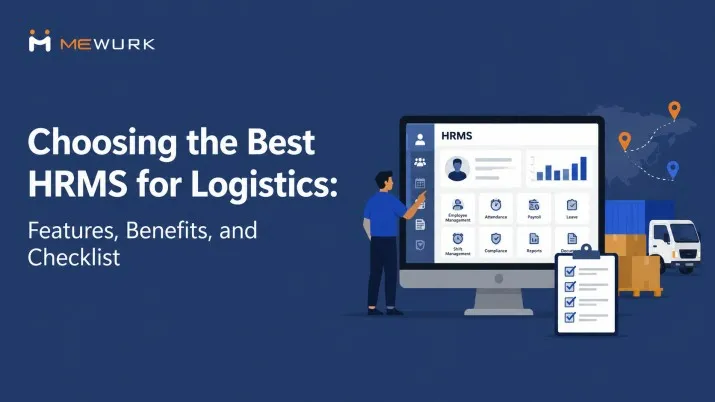
Choosing the Best HRMS for Logistics: Features, Benefits, and Checklist
Summary
This blog explains what HRMS for Logistics is and why logistics companies need purpose-built software for workforce operations instead of generic HR tools. It covers the key features to look for, the benefits of using a logistics HRMS, common mistakes to avoid, and a practical checklist for choosing the right solution.
A truck can leave the warehouse on time and still arrive late if the driver behind the wheel was never marked present. The gap between people data and fleet data is, in fact, where most logistics HR headaches begin.
If you are evaluating HRMS for Logistics options right now, this guide will walk you through what the software should do and why generic HR tools fall short. We have also included a checklist you can use before signing a contract with an HRMS software vendor.
What Is HRMS for Logistics?
HRMS for Logistics is human resource management software built specifically for the operational realities of transport, warehousing, and delivery businesses.
Different from standard office-focused HR tools, a Logistics HRMS should account for a workforce that rarely sits at a desk: drivers on the road, pickers on warehouse floors, and dispatch staff working rotating shifts across multiple locations.
At its core, a Logistics HR Solution needs to answer three questions at any given moment. Who is on duty, where are they, and are they within their legal working hours? Most generic HR platforms are not designed to answer the second question at all.
Some HR managers working in logistics firms still think that HR software for Logistics is something they need to upgrade if they are too keen. It is not true. HRMS for logistics is a core operational tool. The trivialisation tends to change fast after firms encounter a compliance audit or a payroll dispute.
A driver clocking in from a depot 40 kilometres away needs a very different kind of record than an office employee swiping a card at reception, and the software has to reflect that difference by design.
Why Logistics Firms Can't Run HR on Spreadsheets Anymore
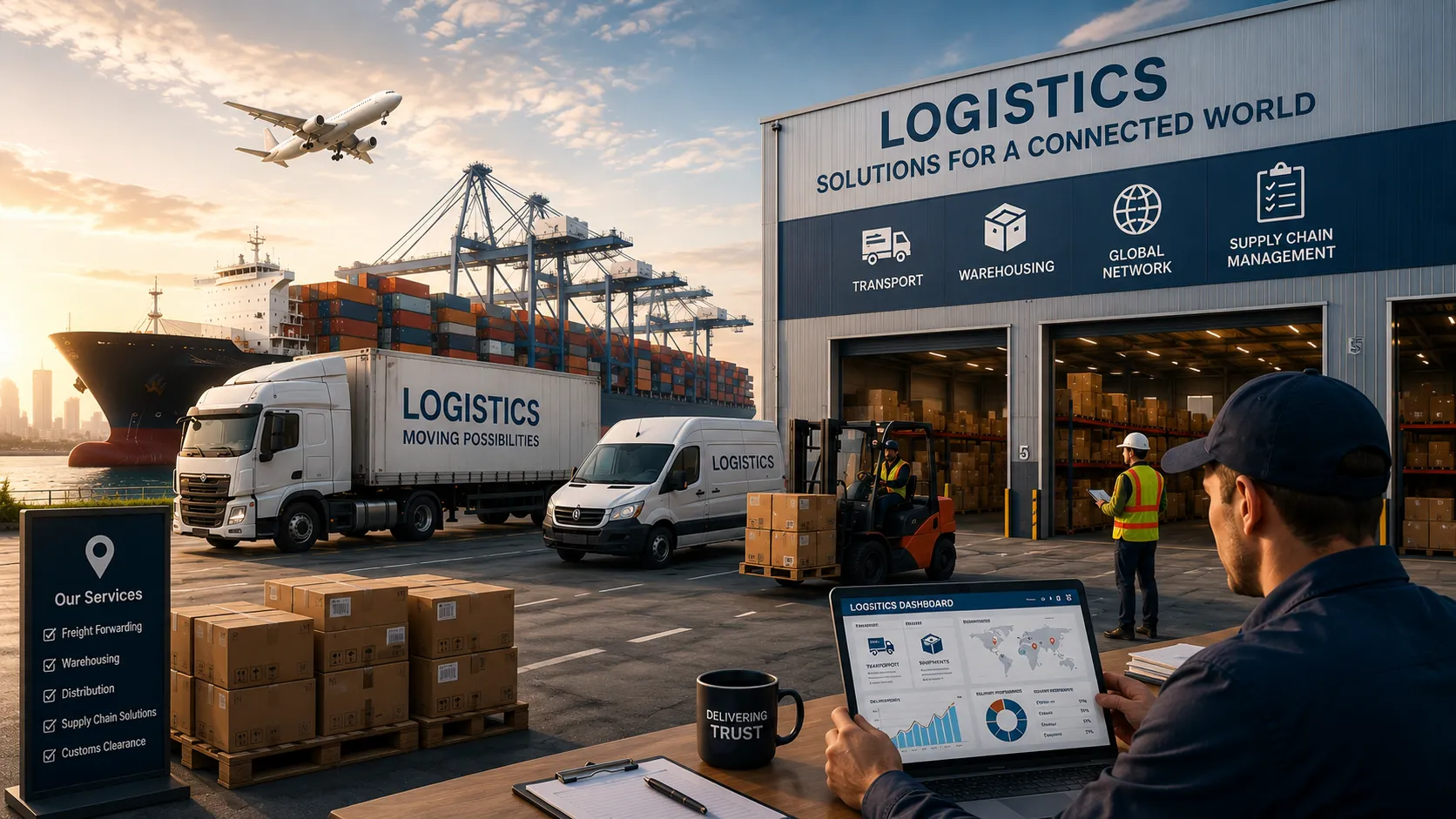
India's logistics workforce has grown past 22 million people, and the sector keeps adding jobs faster than most others. The growth is driven by e-commerce expansion and infrastructure push under policies like the National Logistics Policy. That scale alone makes manual HR processes unworkable in the logistics sector. But there are sharper reasons too.
- Fleet management and driver management involve constantly changing rosters. A fixed nine-to-five attendance system does not fit.
- Warehouse workforce numbers swing seasonally, especially around festive sales, and hiring or reassigning staff manually eats up days.
- Last-mile delivery personnel operate across pin codes, which makes GPS attendance and geofencing attendance almost mandatory for verification.
- Overtime tracking gets complex when drivers cross state lines or warehouse shifts overlap, and errors here directly affect driver payroll accuracy.
- Compliance reporting under India's labour codes requires documented proof of attendance. A paper register cannot reliably produce such proof during an audit.
On top of these, attrition adds pressure. Nationally, attrition hovers between 14 and 18 per cent depending on the year, and logistics roles, particularly driving and warehouse work, see higher churn because the jobs are physically demanding with long hours.
If you were to lose a trained forklift operator or a route-familiar driver, the financial loss it creates is huge. You will have to find someone and invest in training time. HRMS for Logistics is designed to close such delays and gaps.
Core Features to Look for in Logistics HR Software
Not every HR platform markets itself correctly, so it helps to know precisely what to check under the hood before you commit budget.
Driver Attendance Software with GPS and Geofencing
You need attendance capture that works from a moving vehicle in addition to a fixed office terminal. Look for check-in and check-out via mobile app, geofenced zones around depots and delivery hubs, and location logs. With these features, you can easily hold up the logs as proof of attendance if a dispute occurs.
Shift Scheduling and Employee Rostering
Dispatch operations depend on having the right number of drivers and loaders available at the right hour. Good shift scheduling tools let you build rotating rosters, swap shifts without breaking compliance rules, and forecast staffing gaps.
Logistics Payroll Software with Automated Calculations
Driver payroll may not always be a flat salary. It usually blends base pay, trip allowances, overtime, and sometimes fuel or halt incentives. Payroll software built for this sector should calculate all of it automatically. When you need it, it should allow you to factor in attendance and trip data rather than requiring a spreadsheet reconciliation every month-end.
Trip Management and Vehicle Allocation Visibility
While payroll and attendance form the backbone of logistics HRMS software, the better platforms also let HR teams see trip management and vehicle allocation data. One great advantage of this would be that they could line up staffing decisions with route demand.
Field Employee Management for Multi-Location Teams
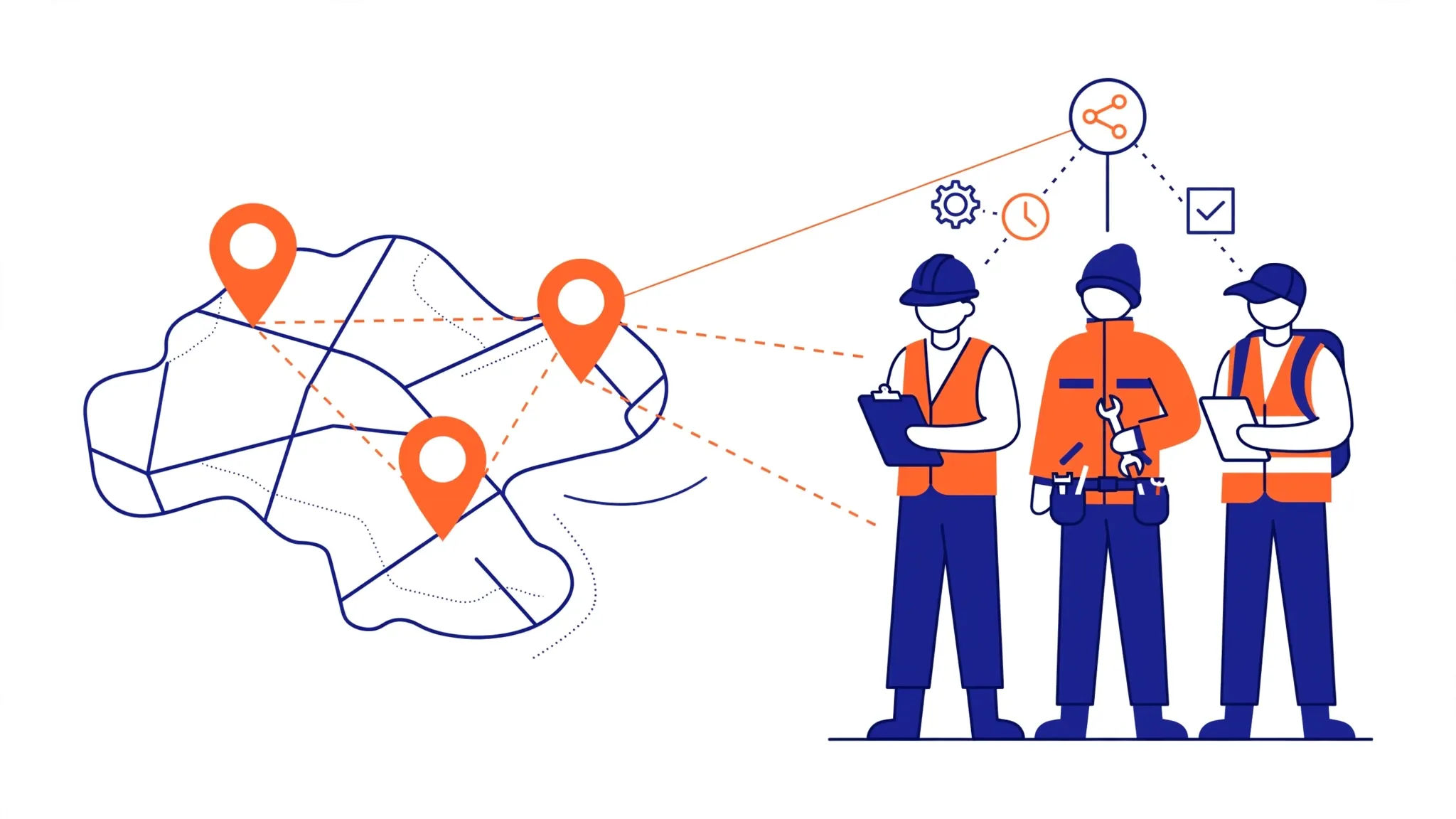
If you run distribution centres in five cities or serve as a third-party logistics (3PL) provider managing client sites, field employee management tools give HR one dashboard instead of five disconnected systems.
Compliance and Document Storage
Freight operations operate under strict regulatory standards. Critical documents such as driving licenses, vehicle permits, and medical fitness certificates require continuous renewal tracking.
Rather than relying on human memory to catch these dates, a robust HR Management Software designed for logistics should automatically issue renewal alerts to ensure nothing falls through the cracks.
Supply Chain Workforce Reporting
Beyond managing day-to-day operations, executives need a comprehensive view of the entire workforce. The system must unify warehouse staff, dispatch teams, and drivers into one clear picture. An effective logistics HR software should provide these accurate numbers automatically. This will ensure that headcount planning is grounded in actual data and no rushed estimates are pulled together just before a board meeting.
HRMS for Logistics vs Generic HR Software: A Side-by-Side Look
| Requirement | Generic HR Software | HRMS for Logistics |
|---|---|---|
| Attendance capture | Fixed biometric or web login | GPS and geofencing attendance for field staff |
| Payroll structure | Flat salary components | Trip-based, overtime, and incentive payroll |
| Workforce spread | Single office location | Multi-location workforce across depots, warehouses, routes |
| Shift handling | Standard fixed shifts | Rotating rosters for drivers, warehouse, and dispatch |
| Compliance focus | General labour law | Licence renewals, driver-specific compliance reporting |
| Document tracking | Basic HR files | Vehicle permits, driving licences, fitness certificates |
The comparison makes it fairly obvious why a Logistics HRMS earns its own category.
Benefits of Implementing Purpose-Built HRMS for Logistics
Snapshot: Firms that switch from manual or generic systems to purpose-built Logistics HR Software typically report faster payroll cycles, fewer compliance penalties, and noticeably better workforce productivity within the first two quarters of use.
Here is what changes in practice once you adopt a proper Employee Management System for Logistics:
- Payroll processing time drops because attendance, trips, and overtime feed directly into salary calculation.
- Compliance reporting becomes audit-ready at any point, since driver documents and attendance proof sit in one searchable system.
- Dispatch teams get real-time visibility into who is available. This will cut down the need for last-minute rushing before a delivery window.
- HR staff would spend less time following up paperwork and more time on people management, which matters given how tight the driver talent pool has become.
- Warehouse Employee Management Software features reduce shift clashes and give supervisors a clearer picture of daily headcount versus order volume.
Several logistics firms have already moved toward all-in-one platforms instead of using separate tools for attendance, payroll, and compliance.
Mewurk is one such platform. It offers attendance, leave, shift planning, payroll, document storage, HR tasks, field visit tracking, and expense management under a single system. More than 98% of the logistics companies using it describe the shift as one of the more practical HR decisions they have made in recent years.
How to Choose the Best HRMS for Logistics: A Practical Checklist
Before you sign with any vendor, run through this list. It is built from what breaks down after go-live.
- Does the platform support GPS attendance and geofencing attendance without a paid add-on?
- Can it calculate driver payroll with trip allowances and overtime automatically, or will your finance team still be exporting to Excel?
- Does it handle multi-location workforce management across depots, hubs, and distribution centres from one login?
- Is there a mobile app that works reliably in low-network areas, since many routes pass through weak coverage zones?
- Does the vendor offer document storage with automatic renewal alerts for licences and permits?
- Can HR generate compliance reporting instantly if a labour inspector or client audit asks for it tomorrow?
- Is the pricing structure clear for a growing headcount, or does cost spike unpredictably as you scale?
- Does the platform include shift scheduling flexible enough for rotating drivers and warehouse staff, not just office hours?
- What does onboarding and support actually look like in the first 90 days, and is there a dedicated point of contact?
- Can the system scale if you expand into new cities or add a 3PL partnership next year?
If a vendor cannot give you a straight answer on more than two or three of these, keep looking for better options.
Common Mistakes Logistics Firms Make When Selecting HR Software
- Choosing a generic HR platform because it is cheaper upfront, then paying more later in integrations and workarounds.
- Ignoring mobile usability for field staff, which slows down adoption among drivers who never open a desktop dashboard.
- Underestimating how much time compliance reporting uses up manually, until an audit reveals the gap.
- Skipping a pilot run with one warehouse or one route before rolling the software out company-wide.
- Overlooking employee experience entirely. Workforce productivity is tied closely to how easy the tool is for drivers and warehouse staff to use.
Many firms serious about fixing this usually end up shortlisting platforms built for logistics from day one. Mewurk, for instance, adds AI-based assessment and AI interview tools alongside its core attendance, payroll, and shift features, along with HR trends and analytics, giving logistics HR teams a fuller picture without stitching together four or five separate vendors.
Conclusion
Our goal here was to help you separate real HRMS for Logistics capability from marketing gloss, and hopefully it did that job well. If you found it useful, consider sharing it with a fellow HR manager or logistics operator who is stuck comparing vendors right now. They will thank you for it.
Frequently Asked Questions
What is HRMS for Logistics?
HRMS for Logistics is HR software built specifically for transport and warehouse operations. It combines GPS attendance, driver payroll, shift scheduling, and compliance tracking into a single platform for field-heavy teams.
How is Logistics HR Software different from regular HR tools?
Logistics HR software supports field-based, multi-location teams through geofencing, trip-based payroll calculations, and automatic licence renewal tracking. These are features that most generic, office-focused HR systems cannot handle.
What features matter most in Logistics HRMS?
GPS and geofencing attendance, automated driver payroll, flexible shift rostering, secure document storage for licences and permits, and audit-ready compliance reporting matter most for logistics workforces across depots and delivery routes.
Can HRMS for Logistics handle multiple warehouses or depots?
Yes, a well-built Logistics HR Solution manages multi-location workforce data from one central dashboard. It could cover warehouses, depots, and delivery hubs together instead of separate, disconnected spreadsheets.
Is cloud HRMS for Logistics secure for sensitive driver data?
Reputable cloud HRMS for Logistics platforms rely on encrypted storage and role-based access controls. It will keep driver documents and payroll records protected. Moreover, it will remain easily accessible through a mobile app.

Most Popular Post
Why Accurate Attendance and Leave Management Matters for Business Growth?
Read More →Why Accurate Attendance and Leave Management Matters for Business Growth?
How To Leverage Attendance Data For Better Workforce Management?
Read More →How To Leverage Attendance Data For Better Workforce Management?