Summary
Talk to any HR manager at a construction or EPC firm for ten minutes, and you'll hear some version of the same story. A supervisor forgot to send the muster roll. Payroll closes tomorrow. The attendance numbers from the Pune site don't match what came in from Bengaluru. Nobody's panicking—this is just Tuesday.
Construction breaks the usual rules of HR, mostly because there's no single office to run it from. A contractor could be pouring concrete for a residential tower in Pune, pushing a highway stretch through Madhya Pradesh, and fitting out a warehouse in Gujarat—all in the same month. Different crew at each site. Different supervisor. Different shift pattern, because a highway crew doesn't clock in as a warehouse team does. Throw in contractor labour, seasonal hiring spikes, and workers who get pulled from one site to another mid-project, and HR isn't really "administration" anymore. It's closer to putting out the same fire every week.
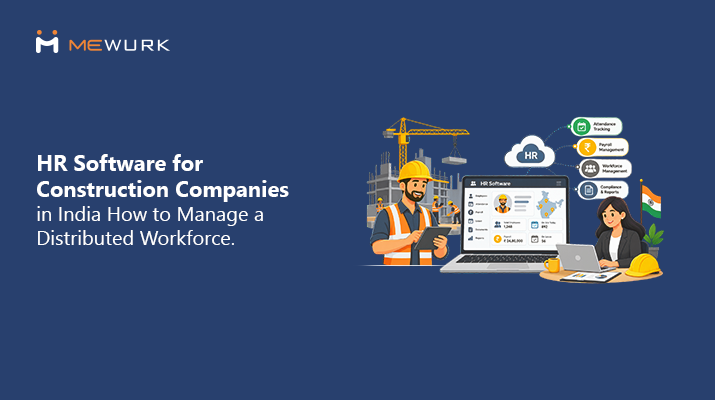
That's the gap HR software for construction companies in India is meant to close. A working HRMS pulls attendance, leave, payroll inputs, and employee records from every site into one place, so HR knows who worked where—and what they're owed—without waiting on a phone call from the site office.
This guide walks through why manual HR breaks down on construction projects, what a system built for this kind of work actually needs, how it stacks up against Excel, and what to check before you sign anything.
Why HR Management Is So Hard in Construction
It's not that construction HR teams are careless. The work itself resists the tools most companies reach for by default.
Sites open and shut on their own schedule, so nothing built around a fixed office survives once locations start appearing and disappearing every few months. Most hires last only as long as the project runs, which means onboarding and exit paperwork never really stops—there's no lull, no quiet season. Labour shifts between contractors depending on the phase of work too, so even getting an accurate headcount on a given day takes more effort than it should.
A lot of this still runs on paper. Muster rolls are slow to consolidate, easy to misplace, and a headache to produce during an audit. Shift patterns don't make it easier—civil work, finishing work, and machinery operations often run on completely different schedules, and each needs its own tracking. Direct payroll staff and contract labour also need separate handling, but somebody still has to see both groups in a single view when it's time to pay people.
Site supervisors are focused on getting the work done, not on paperwork, so whatever data reaches HR usually arrives late, or half-complete, or both. And wages are rarely straightforward—they depend on attendance days, overtime, shift type, and site allowance, which is a lot to calculate by hand without something slipping through. Throw in employee records scattered across registers, spreadsheets, and paper folders at five different sites, and it's easy to see how this gets messy fast.
Any one of these problems is manageable on its own. All of them together, across several live sites, are what turns HR into a full-time firefighting job—and it's exactly the gap that HR software for construction companies in India is built to close.
What HR Software for Construction Companies Actually Is
An HRMS centralises employee information, attendance, leave, and payroll inputs instead of leaving them scattered across sites.
For a construction company, that means every active site feeds into the same system regardless of where it is on the map. A supervisor in Nagpur and an HR manager in Mumbai end up looking at the same numbers as the day unfolds, instead of one of them waiting for a spreadsheet to land in their inbox by Friday evening.
Put simply: instead of running separate attendance registers, leave applications, and payroll sheets per site, construction workforce management software keeps it all in one place—accessible from a phone, a tablet, or a desktop, whether you're on-site or at head office.
9 Features Construction Companies Should Actually Look For
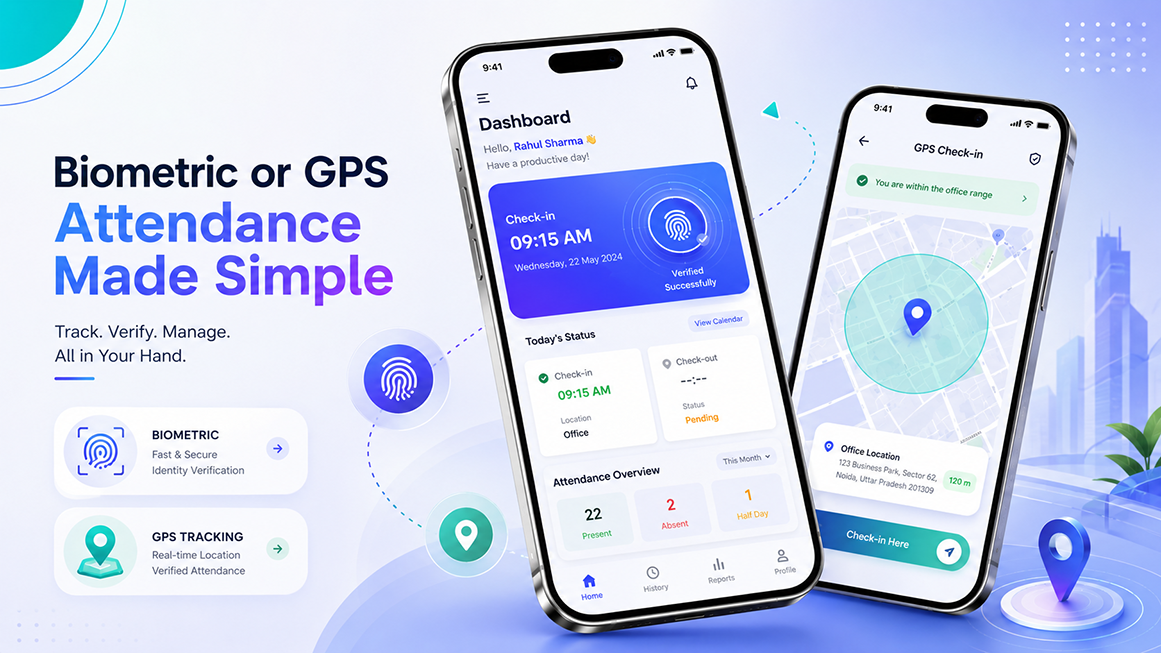
Managing a workforce across multiple sites comes with its own HR challenges. Here are some HRMS options worth considering.
1. Multi-Site Attendance Management
This is the baseline requirement: handling multiple sites without turning into five separate systems. Employees are tied to a specific location, but HR still needs to pull attendance data from every site into a single dashboard, rather than chasing down five sheets before payroll runs.
2. Face Recognition & Biometric Attendance
Manual attendance registers can lead to proxy attendance, entry errors, and confusion about working hours. Face recognition and biometric attendance solve this by tying attendance to the actual employee, at the actual time, at the actual site. For construction companies, this is one of the fastest ways to bring accuracy and accountability to daily headcounts, without adding extra work for site supervisors.
3. GPS & Mobile Attendance
Not everyone works near a biometric device. Supervisors, engineers, and field staff are constantly moving between locations, and GPS-based mobile attendance lets them mark their own attendance on a phone, with their location captured automatically. This matters most for site engineers and project managers who split their day across multiple locations.
4. Shift & Overtime Management
Deadlines push construction sites into multiple locations, often overlapping shifts. The software needs to define shift patterns per site, calculate overtime based on actual hours worked, and flag anything that looks off—otherwise someone ends up over- or underpaid because of a manual miscalculation.
5. Leave Management
Leave requested over a phone call to a supervisor rarely makes it into an official record on time. Move it online, and the picture changes—employees apply digitally, approvals happen from wherever the supervisor is standing that day, and HR has an accurate leave balance without chasing anyone for it.
6. Payroll Integration
Payroll here depends on attendance days, overtime, site allowances, and leave—and all four vary by employee and by site. Feeding attendance and leave straight into payroll cuts down the reconciliation work considerably, and it means workers actually get paid what they're owed on time.
7. Employee Database & Documents
Between ID proofs, contracts, and safety certifications, there are a lot of documents attached to each employee. Keep everything in one place, and it's easy to find no matter which site they're working at that week.
8. Workforce Tracking & Field Employee Management
Field-employee tracking matters more in construction than in most industries, simply because so much of the workforce operates away from a desk. Managers get a real read on where staff are working and whether site-level headcounts actually match what the project needs.
9. HR Reports & Workforce Analytics
Attendance summaries, leave trends, overtime patterns, and headcounts by site are readily available in one place rather than being prepared manually for the review meeting.
Benefits of Using HR Software in Construction Companies
The shift to one platform changes daily work more than most teams expect going in. Manual entry drops sharply once attendance, leave, and payroll inputs are captured digitally instead of being retyped at every site. Attendance itself gets more reliable—biometric and GPS checks cut down on disputed hours and proxy punching, and paperwork stops piling up since digital records replace registers that can get lost or ruined on a job site.
Payroll moves faster too, because teams aren't reconciling numbers from scratch before every cycle. Management gets a clearer picture of headcount and site-wise attendance without waiting for someone to compile it, and location or biometric verification makes it much harder to mark attendance for someone who isn't actually there.
There's a knock-on effect on approvals too. Leave requests don't stall waiting for someone to be physically present to sign off, and keeping records in one system means HR isn't tracking down documents from a supervisor three sites away. Reporting stops being a manual Excel exercise before every review.
Maybe the biggest shift, though, is simpler than any of that: HR teams spend more time on people and less on paperwork.
HR Software vs. Excel for Construction Companies
Excel sticks around because it's free and familiar. The cracks show once a company crosses the threshold of a handful of active sites.
| Aspect | Excel / Manual Registers | HR Software / HRMS |
|---|---|---|
| Attendance | Recorded manually per site, prone to errors and delays | Captured digitally via biometric, face recognition, or GPS in real time |
| Employee records | Scattered across files and physical registers | Centralized and accessible from anywhere |
| Leave | Applied verbally or on paper, easy to lose track of | Applied and approved digitally, with live balances |
| Payroll data | Manually compiled before every pay cycle | Linked automatically to attendance and leave |
| Multi-site management | Requires consolidating files from each site | All sites visible from one dashboard |
| Reports | Built by hand, often outdated by the time they're used | Generated in real time, on demand |
| Data accuracy | Depends on manual entry, higher error risk | Fewer errors through automated capture |
| Accessibility | Limited to whoever holds the file | Available to authorized users from anywhere |
| Automation | Little to none | Attendance, leave, and payroll workflows run automatically |
| Scalability | Gets harder to manage as sites and headcount grow | Built to scale as the company adds sites and employees |
How HR Software Helps Manage Multiple Construction Sites
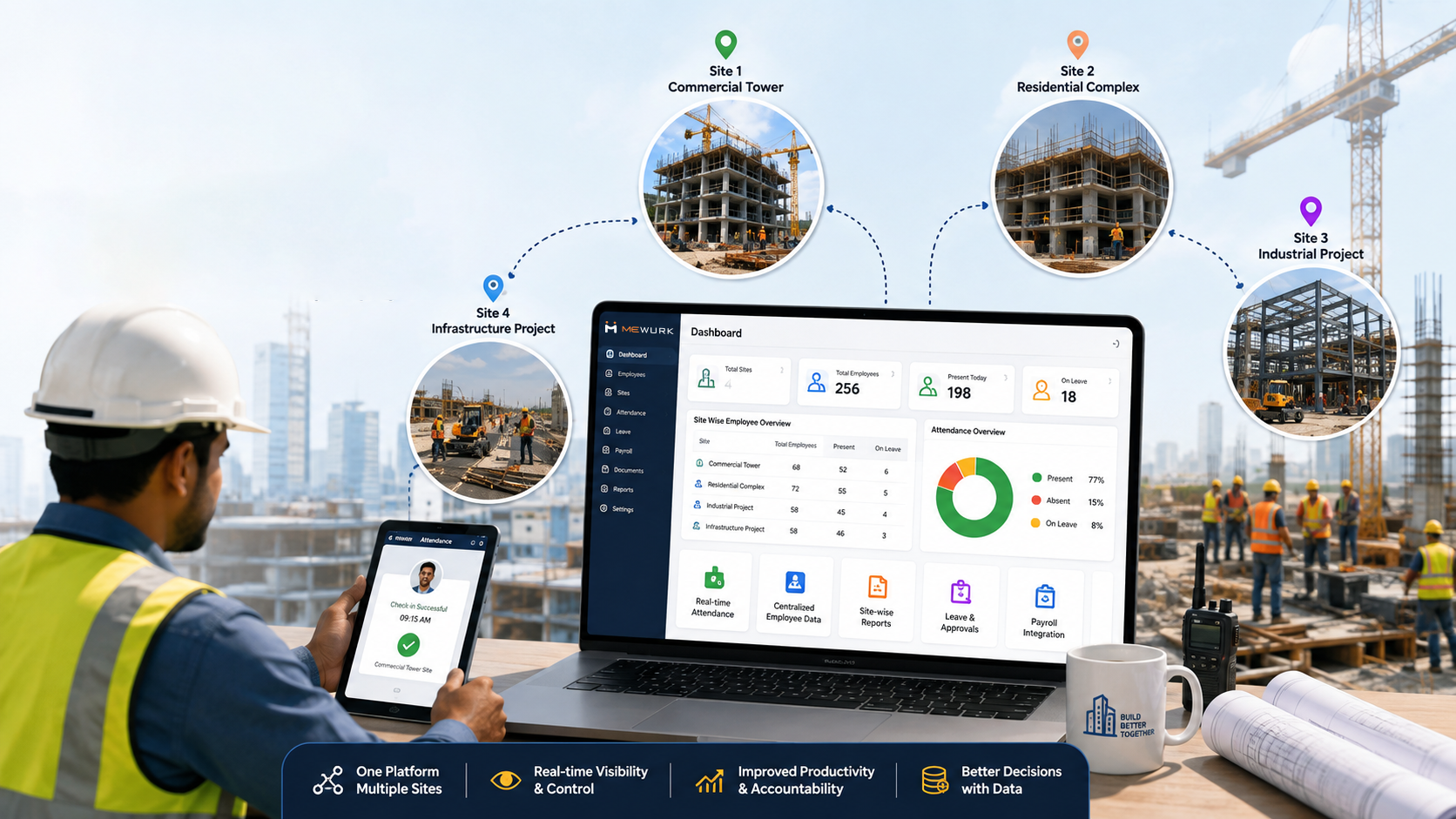
Consider a mid-sized construction company managing three projects—Bengaluru, Hyderabad, Coimbatore—while HR and payroll are managed from the head office.
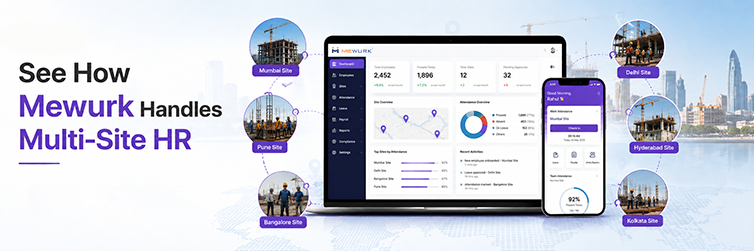
At each site, a supervisor logs attendance through a biometric device or a mobile app, and it goes straight into the central HRMS instead of sitting in a register waiting to be picked up. HR, working from the head office, opens a single dashboard and watches attendance across all three sites update throughout the day, rather than being compiled once a week.
Say a worker at the Hyderabad site puts in for leave. It routes to their supervisor for approval, and the balance updates the moment it's signed off—no separate phone call to HR required.
By the time payroll runs, nobody's emailing each site asking for attendance sheets. Days worked, overtime, and approved leave for every employee across all three locations are already sitting in the system, ready for salary calculation.
This, more than the attendance capture itself, is what construction site workforce management software is actually for—connecting what's happening on-site to what gets decided at head office, without a two-week lag in between.
How to Choose the Best HR Software for a Construction Company in India
A handful of questions are worth running through before signing anything.
Running through these before choosing saves a lot of rework later, especially once the software is live across active project sites.
Why Construction SMEs Should Automate HR Processes
Bigger construction firms tend to staff HR at every site. Growing SMEs usually don't have that luxury—sometimes there's no dedicated HR person at all, and more often a small team is stretched across two or three sites at once.
As the company takes on more projects, that small team feels it first: more attendance data to pull together, more payroll complexity, more records to keep straight—all with the same headcount they started with. This is where automation pays off the most. It takes the repetitive parts off a small team's plate—chasing attendance sheets, building reports, cross-checking leave balances—so they can manage a growing, spread-out workforce without needing to hire just to keep pace.
How Mewurk Can Help Construction Companies
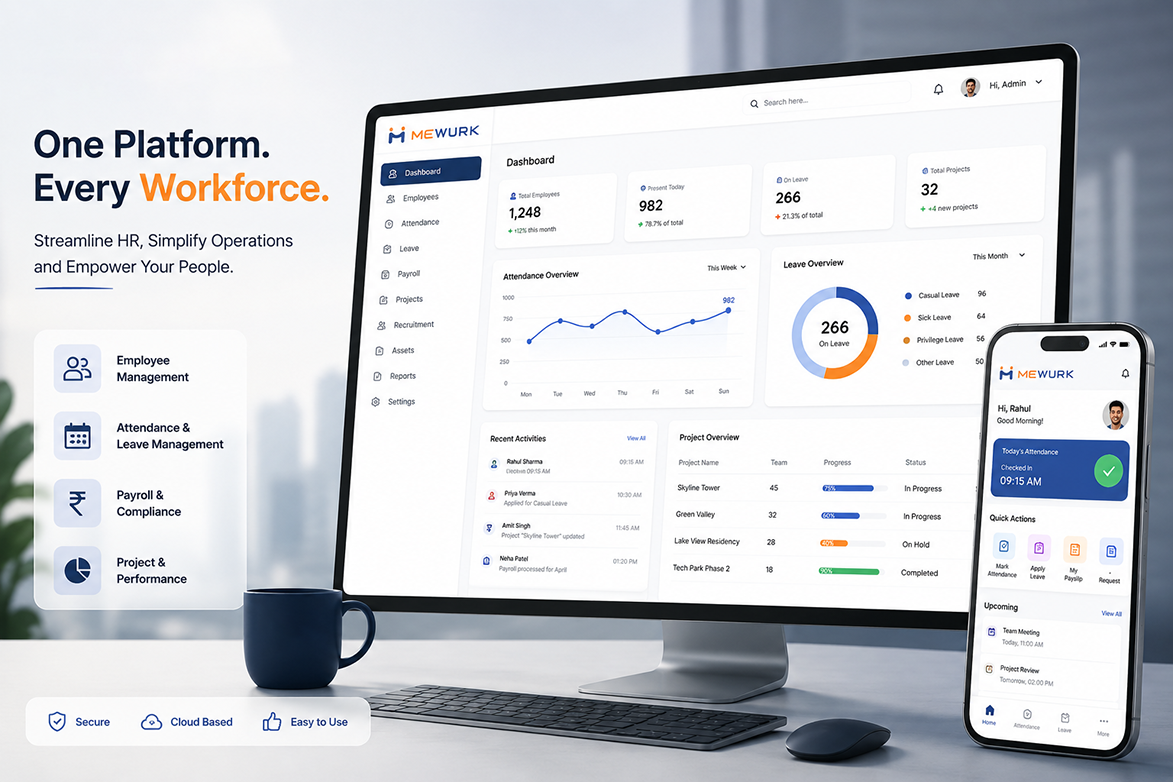
Mewurk brings attendance, leave, payroll, and employee data into one system, which matters most for construction companies managing people across multiple sites.
Attendance runs through biometric and face-recognition options, plus GPS-based mobile attendance for site engineers and field staff who move between locations regularly. Leave management is centralised, so approvals don't depend on a supervisor being physically present at a given site.
Employee records and documents live together instead of being scattered across sites, and attendance and leave data feed directly into payroll, reducing the manual reconciliation before every pay cycle. Managers also get visibility into field staff and workforce distribution across projects, along with reports that support faster decisions rather than slower ones.
If your company is ready to move past registers and spreadsheets, it's probably time to see how Mewurk handles it.
Frequently Asked Questions
What's the best HR software for construction companies in India?
One that handles multi-site attendance, biometric and GPS tracking, leave management, and payroll integration—built around a workforce that's project-based and spread across locations, not one that assumes a single office.
Why do construction companies need HR software in the first place?
Because operations span multiple sites with a workforce that's constantly changing. Centralizing attendance, leave, payroll, and records replaces manual systems that get harder to manage as the company grows.
Can it actually manage employees across several construction sites at once?
Yes, that's the point of it. HR gets attendance, leave, and workforce data for every site from a single dashboard instead of five separate ones.
Do construction companies really use biometric attendance?
A growing number do, mainly because it cuts down on buddy punching and manual entry errors—attendance ends up reflecting who was genuinely on-site.
What about tracking field employees specifically?
That's handled through GPS-based mobile attendance. Site engineers and project managers mark attendance from wherever they're working, and managers can see where teams actually are, not just where they're supposed to be.
Does this kind of software help with payroll too?
It does. Once attendance, overtime, and leave are captured digitally, the data flows directly into payroll, reducing reconciliation work and helping ensure people are paid accurately and on schedule.
How much manual work does it actually remove?
Quite a bit—automating attendance capture, leave approvals, and payroll inputs takes out the repetitive stuff: compiling registers, cross-checking spreadsheets by hand, chasing signatures.
Is this worth it for small construction companies, or just large ones?
If anything, smaller companies running multiple sites with a thin HR team benefit more. Automation lets a small team keep pace with a workforce that's growing faster than they are.
What features matter most when evaluating options?
Multi-site attendance, biometric or face-recognition support, GPS-based mobile attendance, shift and overtime management, leave management, payroll integration, employee self-service, and reporting that doesn't require a manual pull.
Does an HRMS actually change how workforce management works day-to-day?
Mainly by pulling data from every site into one system. HR and management stop waiting on a weekly report to know what's happening—they can just look.
Conclusion
Construction companies in India are managing more sites, more workers, and more moving pieces than manual HR processes were ever built to handle. Registers and spreadsheets might work fine for one site. They start falling apart once projects multiply and teams spread across the map.
HR software for construction companies in India fixes that by pulling attendance, leave, payroll, and employee records into one connected system—so HR and management get the visibility they need without relying on phone calls from every site.
If your construction company is managing a distributed workforce across multiple project sites, it's probably time to move past registers and spreadsheets. See how Mewurk can bring your site-level workforce management into one connected system.