Summary
This is a practical HR guide to handling out-of-policy expense claims—what they are, why they happen, and a clear, consistent framework for deciding which exceptions to approve. You'll learn how to separate genuine exceptions from expense fraud, how to build an exception policy with an escalation matrix, and how software makes the whole process fair and auditable.
Your travel policy caps hotel costs at ₹6,000 per night. A sales manager closing a big deal in Mumbai submits a ₹9,500 hotel bill—because every hotel near the client's office was sold out during a conference, and this was the cheapest room left within 2 km. Technically, it breaks policy. Practically, it was the right call.
Now what? Approve it, and you've set a precedent. Reject it, and you've penalized someone for doing their job well. This is the daily reality of expense policy exceptions—and how HR handles them quietly shapes whether employees trust the whole reimbursement system. Out-of-policy claim aa gaya—ab kya karein? Here's a framework that keeps you fair and firm.
What Is an Out-of-Policy Expense Claim?
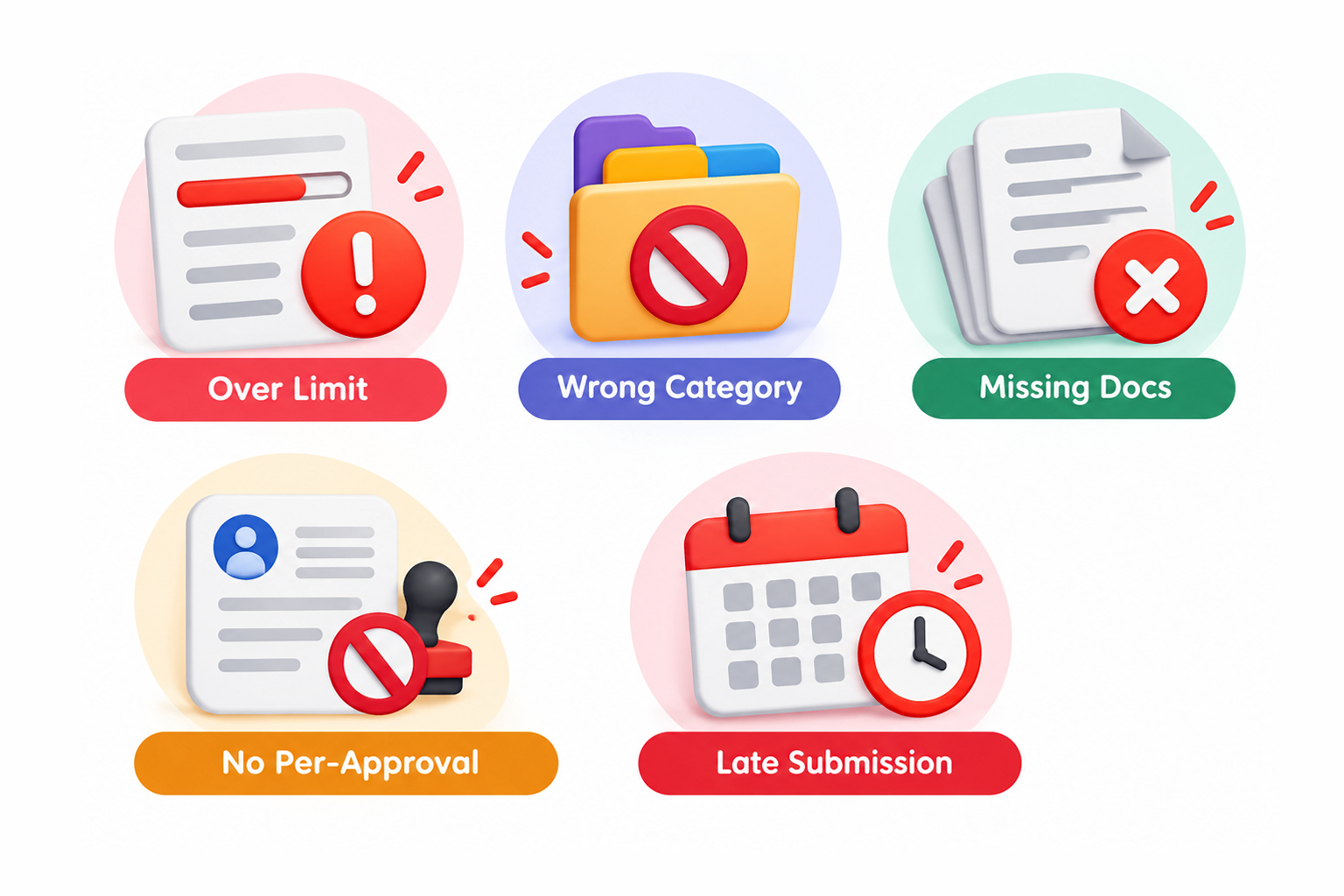
An out-of-policy (or "out-of-policy exception") expense claim is any reimbursement request that doesn't comply with the organization's expense policy because it exceeds a limit, falls in a non-reimbursable category, lacks a required receipt, or skips a required pre-approval.
An expense policy exception is a claim that breaks one or more rules of your expense policy but is submitted anyway, with the expectation that HR or finance will make a judgment call on whether to reimburse it. The exception isn't the problem—how consistently you decide it is.
Common forms an out-of-policy claim takes:
- Over the limit—a hotel, meal, or cab that exceeds the category cap
- Wrong category—an expense the policy simply doesn't cover
- Missing documentation—no receipt, or an incomplete bill
- No pre-approval—a spend that policy required to be approved before it was incurred
- Late submission—a claim filed after the policy's cut-off window
Why Out-of-Policy Claims Happen
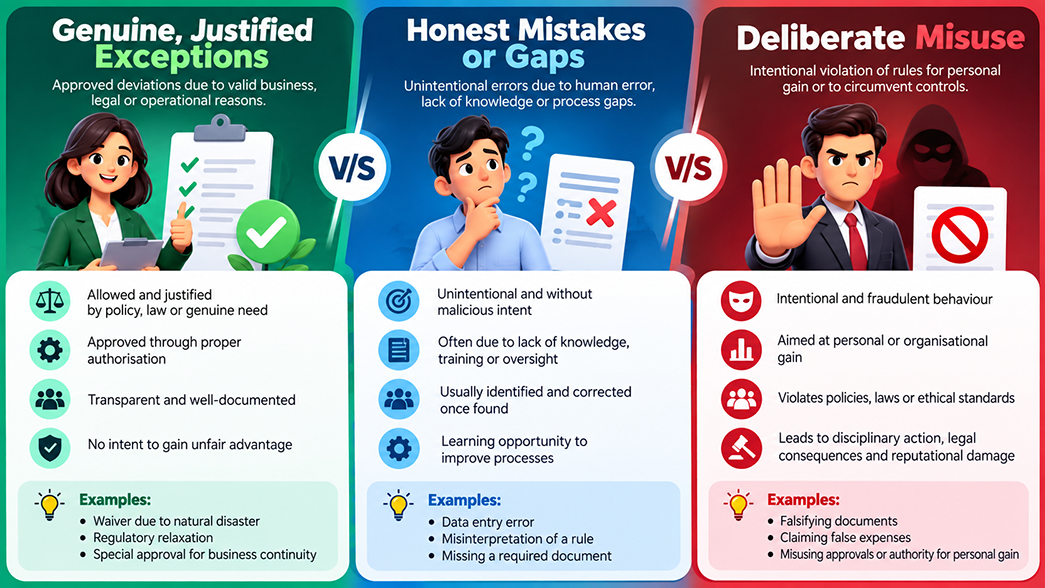
Not every exception is someone trying to game the system. Most fall into three buckets, and telling them apart is the whole skill:
- Genuine, justified exceptions—the sold-out-hotel scenario: circumstances forced a reasonable person to exceed the rule. These should usually be approved.
- Honest mistakes or gaps—the employee didn't know the limit, lost a receipt, or the policy didn't anticipate the situation. These need a decision plus a fix (better communication, a policy update).
- Deliberate misuse—padded amounts, personal expenses disguised as business, or repeat "exceptions" that are really a pattern. These need scrutiny, not approval.
A good exception process is really a triage process: quickly sorting which bucket a claim belongs to, then applying the right response.
The Real Risk: Inconsistency, Not the Exception Itself
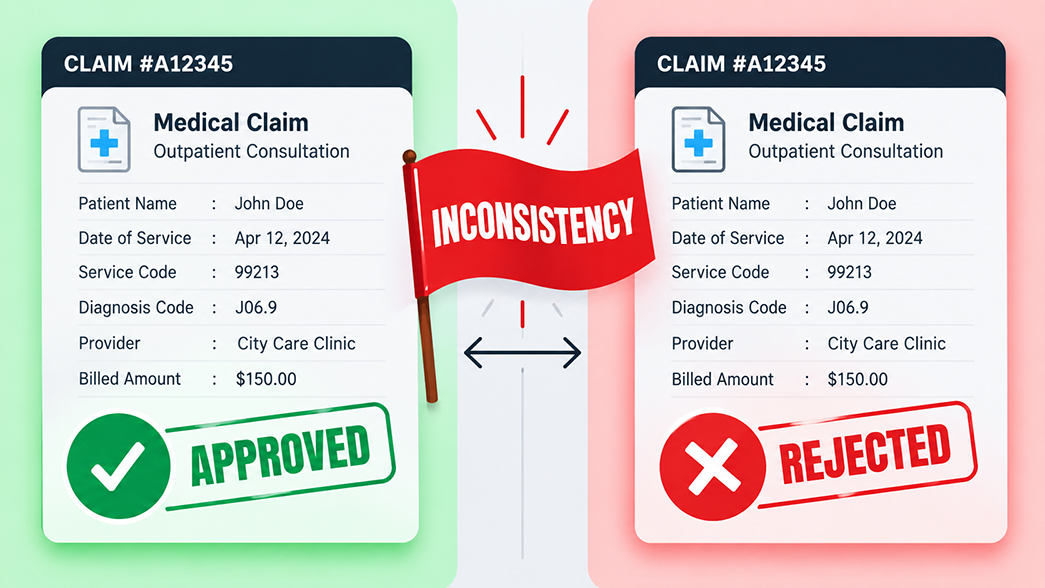
Here's what most HR teams get wrong. They treat each out-of-policy claim as an isolated yes/no. The actual risk isn't any single approval—it's inconsistency across approvals:
- Approve one person's over-limit hotel and reject another's identical claim, and you've created a fairness grievance
- Let exceptions flow through informally, and they quietly become the new norm, eroding the policy entirely
- Handle exceptions on gut feel, and you have no defense when finance, an auditor, or a disgruntled employee asks, "Why was that approved?"
Consistency is the currency of a trusted expense process. The goal isn't zero exceptions—it's exceptions decided the same way every time, by clear rules, with a documented reason.
A Framework for Handling Out-of-Policy Claims
Use this five-question framework for every exception. It turns a gut call into a defensible decision:
If a claim clears these questions, approve it and record why. If it fails, reject it with a clear reason so the employee learns the boundary. Either way, the decision is consistent and explainable.
Building an Expense Exception Policy
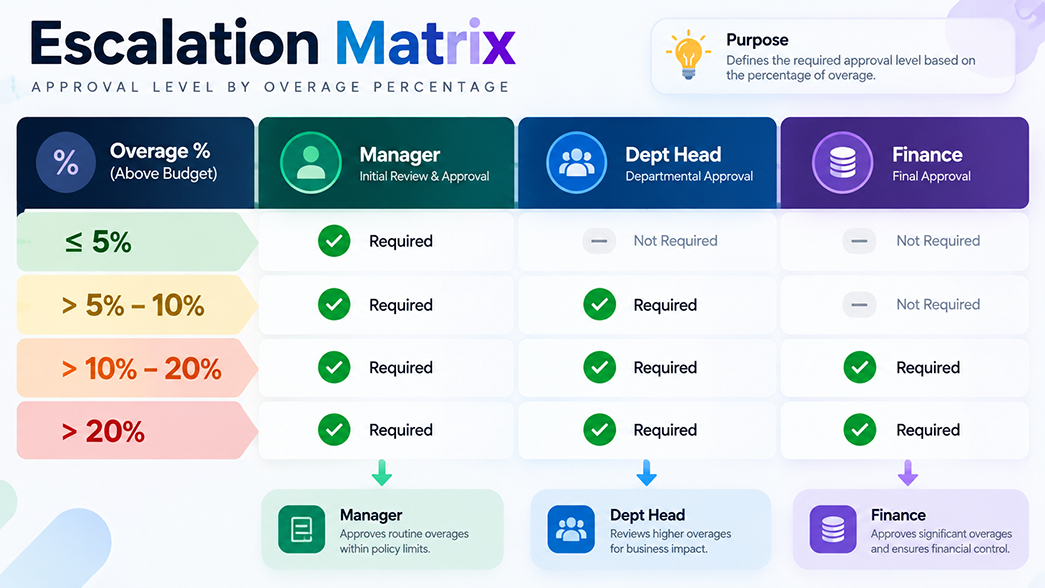
Ad-hoc exception handling is exhausting and unfair. Bake the rules into your policy itself so exceptions have a defined path:
- Define an exception threshold—e.g., overages up to 10% approved by the reporting manager; 10–25% escalated to the department head; above 25% to finance
- Set an escalation matrix—who can approve what level of exception, in writing
- Require a justification field—no exception approved without a stated reason attached to the claim
- Distinguish pre-approval from post-approval—encourage employees to seek approval before an unavoidable over-limit spend, not after
- Define non-negotiables—categories or behaviours that are never reimbursable, no matter the reason
- Review exceptions quarterly—if the same exception recurs constantly, the policy is wrong, not the employees; update it
A starting template for both the base policy and its exception rules is in our expense reimbursement policy guide and the free HR Templates library.
Genuine Exception or Expense Fraud? The Red Flags
Most employees are honest, but an exception process is exactly where misuse hides. Watch for:
- Round-number claims with no receipt ("approx ₹2,000 for cab")
- Repeat just-under-threshold spends designed to stay below the approval line
- Duplicate submissions—the same bill claimed twice across months
- Consistent limit-maxing—every single claim lands exactly at the cap
- Altered or mismatched receipts—dates, amounts, or vendor names that don't add up
- A pattern of "exceptions" from one person that others never seem to need
One red flag is a question, not an accusation. A cluster of them is a signal to review that employee's claims more closely—calmly, and based on the data, not a hunch.
How Expense Management Software Handles Exceptions
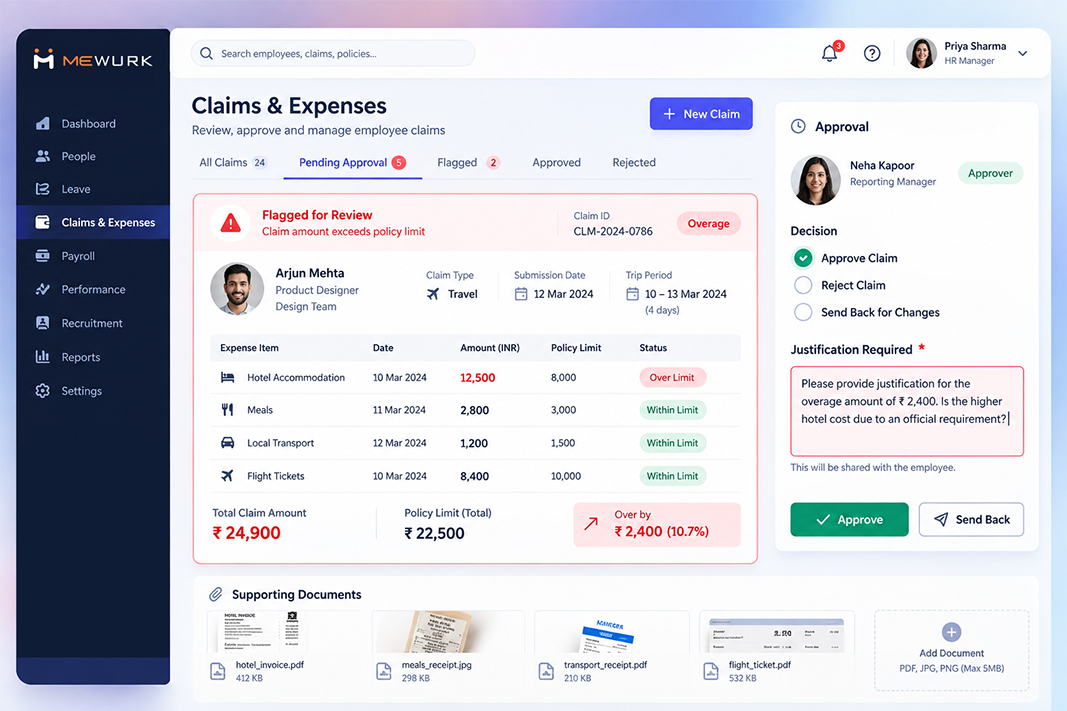
Consistent, fair, auditable exception handling is almost impossible in email and spreadsheets—and almost automatic with the right system. Mewurk's expense management module builds the framework into the workflow:
- Policy rules built in—category limits, receipt requirements, and submission windows configured once, so the system flags an out-of-policy claim the moment it's submitted, not weeks later
- Automatic exception routing—claims that breach a limit escalate to the right approver per your escalation matrix, with the overage amount highlighted
- Mandatory justification—an out-of-policy claim can't proceed without a reason attached, so every exception is documented by design
- Receipt capture and matching—employees upload bills from the mobile app at the point of spend, cutting missing-receipt exceptions and making duplicates easy to catch
- Full audit trail—who claimed, who approved, the exception reason, and the timestamp—all recorded, so any approval is explainable later
- Direct payroll/finance sync—approved reimbursements flow straight into payroll, with the exception history intact
The result: genuine exceptions get approved fast, misuse gets flagged early, and every decision is consistent and defensible.

Conclusion
Out-of-policy expense claims aren't a failure of your policy—they're an inevitable part of real business, where sold-out hotels and unplanned situations happen. What matters is handling them consistently: a clear framework, a defined escalation path, documented reasons, and a calm eye for the red flags that separate a genuine exception from misuse. Do that, and exceptions stop being a source of friction and favoritism, and become just another well-run part of your expense process.
Found this useful? Share it with your finance team and approving managers—they're the ones making these calls every week.
Frequently Asked Questions (FAQs)
Q1. What is an out-of-policy expense claim?
It's a reimbursement request that breaks one or more expense-policy rules, exceeds a category limit, falls in a non-covered category, is missing a required receipt or skips a required pre-approval, but is submitted for a judgment call on whether to reimburse.
Q2. Should HR approve out-of-policy expense claims?
Sometimes. Genuine, justified exceptions (like a sold-out hotel forcing a higher rate) should usually be approved with a documented reason. The key is deciding consistently—using the same criteria for everyone—rather than case by case on gut feel.
Q3. How should a company handle expense policy exceptions?
Use a clear framework: check for a legitimate business reason, whether it was avoidable, whether it's proportionate, whether it's documented, and whether it's a one-off or a pattern. Back it up with an escalation matrix that defines who approves each level of exception.
Q4. How can HR tell a genuine exception from expense fraud?
Watch for red flags: round-number claims without receipts, repeat spends just under approval thresholds, duplicate bills, always maxing the limit, and altered receipts. One flag is a question; a cluster from one person warrants a closer, data-based review.
Q5. Can expense software manage policy exceptions automatically?
Yes. Expense management software flags out-of-policy claims on submission, routes them to the right approver per your escalation rules, requires a justification, captures receipts to prevent duplicates, and logs every decision for a complete audit trail.