Bereavement Leave in India: Complete HR Guide + Policy Template
Grief is not a disorder, a disease, or a sign of weakness. It is an emotional, physical, and spiritual necessity. Yet, when we look at the Indian employment landscape, this necessity often clashes with productivity metrics. As we navigate 2026, pushing empathy to the forefront of leave policy design will signal how progressive you are as an organisation.
This blog serves as your complete manual on bereavement leave. We will cover the legal landscape, standard practices, the latest 2026 trends, and how to write a compassionate bereavement leave policy. You will also get a ready-to-use policy template.
Bereavement Leave Meaning
Before we build a policy, let us look at the bereavement leave definition. In the Human Resources context, it is paid time off granted to an employee following the death of a close family member. It allows the individual to attend funeral rites, manage legal formalities, and begin the emotional healing process.
The bereavement leave meaning in Hindi can be understood as "शोक अवकाश" (Shok Avkaash). It is distinct from casual leave because it serves a specific psychological purpose. While the bereavement leave pronunciation (buh-reev-muhnt) might be a tongue twister, its application must be smooth.
What Is Bereavement Leave Used For?
Primarily, it covers three phases:
- Immediate logistics: Funeral arrangements and travel.
- Cultural rituals: In India, specific mourning periods (such as the 13th-day ceremony or Terahvin) are crucial.
- Initial grief management: Before an employee can focus on work, they need time to process the shocking fact that their loved one is no more.
What Does the Law Say about Bereavement Leave Entitlement?
We might as well address the obvious question first. Bereavement leave India is currently not a statutory mandate under central labour codes like the Factories Act or most State Shops and Establishments Acts.
However, the landscape is shifting. In March 2026, a political leader (Member of Parliament in Rajya Sabha Mr Dinesh Sharma) demanded 13 days of mandatory paid leave for parents' death, citing religious scriptures (Garuda Purana) and the fundamental right to perform last rites under Article 25.
While this is not yet law, it signals a growing legislative and social expectation, especially among younger professionals who value empathetic workplaces.
Who Qualifies for Bereavement Leave?
Since there is no law, the employer has got the complete freedom to define the eligibility for Bereavement Leave Entitlement. Usually, it covers permanent employees.
Some companies extend it to probationers; some do not. Bereavement leave eligibility is entirely policy-driven.
Bereavement Leave Vs Statutory Leave: Key Differences in a Snapshot
| Feature | Statutory Leave (Earned/Sick) | Bereavement Leave |
|---|---|---|
| Legal Requirement | Mandatory by law | Voluntary (Corporate practice) |
| Leave Bank | Accrues over time | Lump sum on occurrence |
| Carry Forward | Usually allowed | Not applicable (Use it or lose it) |
How Many Days of Bereavement Leave Are Allowed?
How many days bereavement leave should you offer? Data from corporate India shows a trend toward standardisation.
Most organisations offer 3 to 5 days of paid leave. However, progressive firms are expanding this. Deutsche Bank India recently expanded from 3 to 5 days based on employee feedback. Some policies offer up to 7 days, particularly if travel is involved.

Interestingly, there is no rigid 3-day rule now or is slowly fading. Companies like Optum India and Acko are leading an empathy-driven trend. They realise that 3 days bereavement leave might work for a local death, but if an employee loses a parent in Kerala while working in Gurugram, the travel and rituals (often 10-13 days) cannot be squeezed into a long weekend.
Snapshot: Days Based on the Relationship
- Immediate Family (Spouse, Child, Parent): 5 to 7 days (Industry standard).
- Grandparents / In-laws: 3 to 5 days.
- Siblings: 3 to 5 days.
Note: We cannot copy the 13 day ritual request into policy yet, but you can consider allowing combining bereavement leave with Sick Leave or Earned Leave to accommodate it.
Understanding the Boundaries: Bereavement Leave for Aunts, Uncles, and Cousins
One of the biggest administrative headaches for HRs when dealing with bereavement leave policy is defining immediate family.
What is the meaning of bereavement leave if you have a joint family structure? Most standard policies cover spouse, children, parents, and siblings.
But what about bereavement leave for uncle or bereavement leave for aunt?
- Standard Approach: Paternal/Maternal uncles and aunts are usually excluded from paid bereavement leave.
- Best Practice Approach: Allow bereavement leave for cousin or uncles by tapping into casual leave or one day of paid leave, because in many Indian contexts, an uncle holds a parental role.
When Loss Falls Outside Standard Bereavement Rules
We also need to address bereavement leave for miscarriage. This is a grey area. Many firms are now adding pregnancy loss to the compassionate leave policy. It is a loss, and therefore it has to be treated as one.
Similarly, bereavement leave for friends. Although it is not usually covered, it is something that requires an empathetic approach. If a friend lived with the employee as family and expired, it is a very painful loss for that employee. That requires managerial discretion.
Bereavement Leave Application and Communication
When an employee faces a loss, writing a formal letter is the last thing they want to do. However, HR needs a record.
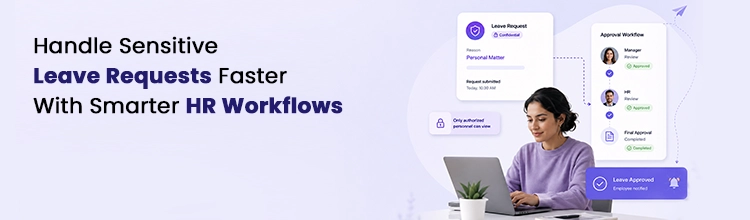
These days, organisations use digital leave management software like Mewurk to record leave requests, as it helps them keep employee records accurate and well organised. These tools are also known for their capability to streamline the approval workflows during sensitive situations.
Bereavement Leave Email Sample:
Subject: Application for bereavement leave - [Your Name] - [Date]
Dear [Manager Name],
I am writing to inform you that my [Relationship, e.g., mother] has sadly passed away. I request you to please grant me bereavement leave for [Number] days, from [Start Date] to [End Date].
I will be unreachable during the funeral rites, but I will share the necessary documentation upon my return. Thank you for your understanding.
Regards,
[Your Name]
Pro Tip: Keep your bereavement leave email subject line clear: "URGENT: Bereavement Leave Request - [Employee Name]".
How to ask for bereavement leave (The Manager's Role)
If you receive a call at 2 AM from your employee for a bereavement leave, do not ask them for a written application for bereavement leave immediately. Grant verbal approval first. The paperwork can wait. The bereavement leave request letter can be signed upon return. Here too, the role of digital leave management systems like Mewurk is quite adorable.
Bereavement Leave Letter Sample (Formal):
To The HR Manager,
Subject: Application for Bereavement Leave
Respected Sir/Madam,
This is to bring to your notice that I have lost my father last night. Therefore, I request you to sanction my leave for 5 days. I shall resume duty on [Date]. The bereavement leave form will be submitted on my joining.
Yours sincerely,
[Employee Signature]
How to Draft a Bereavement Leave Policy (Template Included)
Now, let's understand the structure to implement bereavement leave. Having a robust policy is essential to prevent confusion. Likewise, if employees were to search their handbook for ‘what is bereavement leave policy,’ they should find this easily. The process becomes much easier with a modern leave management software like Mewurk.
Policy Template: Bereavement Leave (BL)
1. Objective
To provide employees with paid time off following the death of an immediate family member to grieve, attend funeral ceremonies, and manage estate matters without financial worry.
2. Eligibility
All confirmed employees are eligible from the date of their joining. Probationers may avail of this leave, but it will be deducted from their Casual Leave quota at the manager's discretion.
3. Entitlement (How many days of bereavement leave)
| Relationship | Leave Days |
|---|---|
| Spouse / Child / Parent | 5 working days |
| Sibling / Parent-in-Law / Grandparent | 3 working days |
| Miscarriage/Stillbirth (Mother) | 5 days (Separate category) |
Note: If rituals exceed these days, employees may utilise accrued Sick or Earned Leave to extend the leave without pay.
4. Application Process
- Notification: Employee must inform their reporting manager telephonically or via message within 24 hours.
- Documentation: A death certificate or obituary may be requested for HR files upon return. No doctor's note is required.
- Approval: Leave is deemed sanctioned immediately without a formal approval chain delay.
5. Special Cases
- Travel Time: If the funeral is in a different state or country, one additional day is granted for travel.
- Distant Relatives: Bereavement leave for aunt or uncle is not covered under this paid policy. Employees may use Casual Leave for 1 day to attend the funeral.
Bereavement Leave vs. Compassionate Leave
Are they the same? Not exactly. Bereavement leave strictly follows a death.
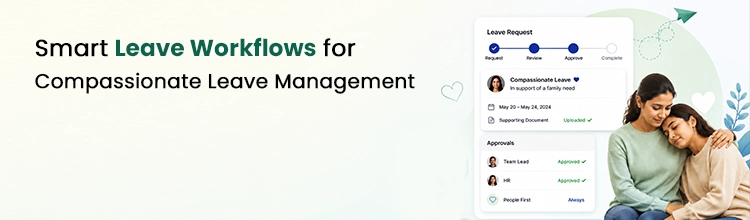
Compassionate leave is a broader HR term. It might cover bereavement, but it can also cover time off to care for a critically ill family member.
In your handbook, keep the bereavement leave definition tight to the death of a family member to avoid scope creep.
Why Bereavement Leave Policies Need an Update in 2026
Why should you care about a non-statutory leave? Because the war for talent is won on empathy.
- Retention: The Economic Times reported that over 80% of organisations are looking to increase flexibility in benefits. If your employee feels supported during a life crisis, they will be loyal for life.
- Productivity: An employee distracted by unfinished rituals or unpaid leave is a liability. Giving 5 days of paid leave returns a focused employee sooner.
- Employer Branding: Before deciding to join an organisation, candidates check Glassdoor and AmbitionBox. Policies that lack humanity are red flags.
Conclusion
We set out to decode bereavement leave in India for you. We have covered the legal gaps, the ideal number of days, and a ready-to-use policy template. Did you find this guide useful? If you know a colleague struggling to draft a bereavement leave policy, please share this blog with them. Wishing you strength in building empathetic workplaces.
Frequently Asked Questions (FAQ)
1. What is bereavement leave meaning in simple English?
Bereavement leave meaning in English, in simple words, is paid time off given to an employee after a close family member dies. The time off allows them to grieve and arrange funerals without losing salary.
2. How many days of bereavement leave is standard in India?
Most companies in India offer between 3 to 7 days of paid leave, with 5 days being the most common figure for immediate family.
3. Can I take bereavement leave for a friend or pet?
Generally, no. Standard policies limit who qualifies for bereavement leave from work to immediate family. However, you can request casual leave or unpaid leave.
4. What is the bereavement leave policy if I have to travel?
Check your handbook. Progressive policies allow extra travel time (1-2 days) on top of the standard mourning period if the funeral is in another city.
5. How do I write a bereavement leave email to my manager?
Keep the bereavement leave email example simple: State the relationship, the date of passing, and the days you need off. Do not overexplain tragic details.
6. How can companies manage bereavement leave requests efficiently?
Managing bereavement leave manually through emails or with the help of an Excel sheet will cause unnecessary delays. During sensitive situations like the death of a family member, such delays cannot be tolerated. A well-integrated leave management system can be a great relief for both the employees and employers. Mewurk is one such platform. It allows HR teams to manage bereavement leave alongside all other types of leave.

Most Popular Post

Why Accurate Attendance and Leave Management Matters for Business Growth?
Read More →Why Accurate Attendance and Leave Management Matters for Business Growth?
How To Leverage Attendance Data For Better Workforce Management?
Read More →How To Leverage Attendance Data For Better Workforce Management?