Summary
Pune’s growing SME sector - spanning IT, manufacturing, pharma, and retail - needs HR software that handles Maharashtra-specific compliance (PT, PF, ESIC, LWF) alongside payroll, attendance, and leave management. This guide breaks down the must-have features, compares top platforms such as Mewurk, Keka, and greytHR, and walks through the process of choosing and implementing the right HRMS for a growing team.
Pune’s SME scene has changed shape fast. IT parks in Hinjewadi and Kharadi sit a short drive from the factories of Chakan and Talegaon.
Pharma units near Bhosari pull from the same hiring pool as fintech startups in Baner. That overlap creates a very Pune-specific problem - a shift worker on a factory floor, a developer working from home, and a field sales rep on the road all end up on the same payroll, and none of them is managed the same way.
Most SMEs still run this the old way - spreadsheets, WhatsApp leave requests, a payroll consultant who drops by once a month. It works fine until a PF filing slips through, a notice arrives from the Labour Commissioner’s office, or an employee questions their salary slip. That’s usually the moment a founder starts Googling “HR software in Pune.”
This guide covers why Pune SMEs are switching to HRMS platforms, what Maharashtra compliance actually demands, which features are worth paying for, and how the major players stack up. There’s a compliance checklist near the end, an implementation checklist, and answers to the questions SME owners tend to ask before signing anything.
Why SMEs in Pune Need HR Software
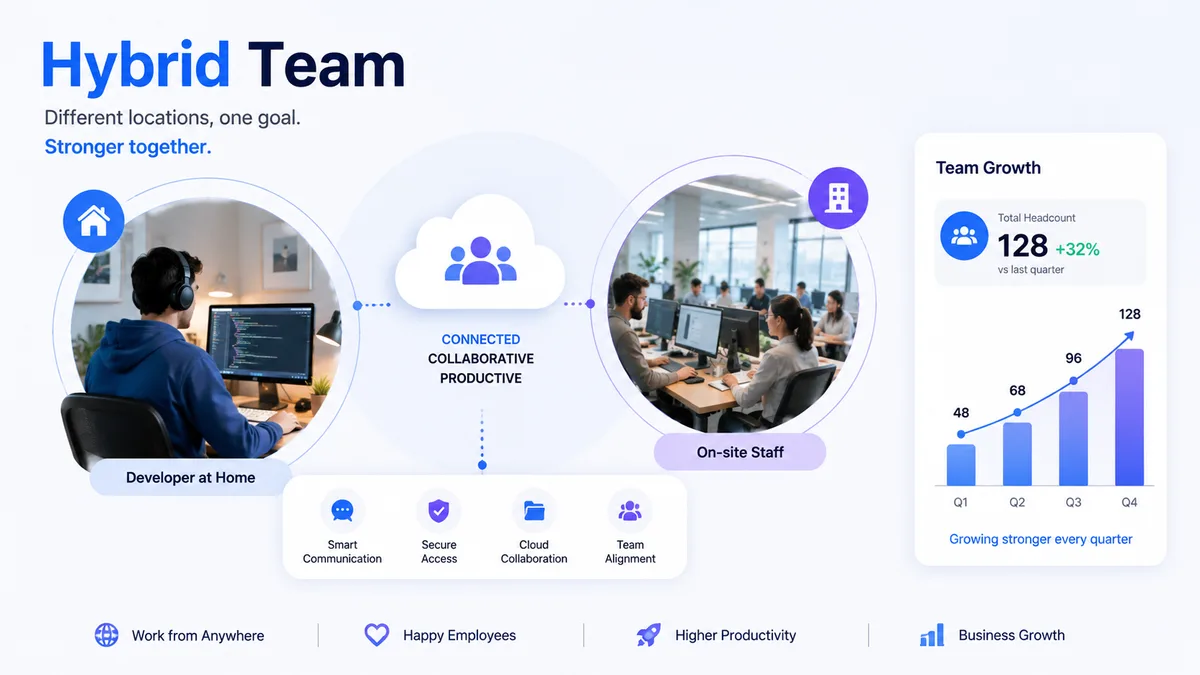
Growth here rarely feels gradual. A company can double in headcount within a year and a half without anyone quite noticing it happen - until the systems that worked fine at a smaller size start quietly falling apart.
Hybrid work is part of the problem. Plenty of Pune companies now run mixed schedules - developers in two or three days a week, support staff on-site daily - and paper attendance just can’t keep pace with that. Multi-location operations add another layer: a Pune office paired with a Chakan warehouse, or a Pune HQ with a Nashik or Mumbai branch, needs one system applying the right leave and PT rules to each site, not three spreadsheets that never quite match.
Then there’s payroll. Maharashtra’s slab-based Professional Tax, PF ceilings, and ESIC thresholds are genuinely hard to get right by hand every month, especially once you factor in mid-cycle joiners and exits. Compliance adds its own weight. A missed Shops & Establishments renewal, a skipped LWF contribution, a statutory filing that slips through - any one of these can trigger a penalty, and manual tracking is exactly how they get missed.
Attendance accuracy matters too. A biometric scan or a GPS check-in settles an argument a paper register never could - who was actually on the factory floor at 9 a.m., or whether the field rep really visited that client site. Founders who could once eyeball attendance by knowing everyone’s face lose that shortcut somewhere past 60 or 70 people, and that’s usually when performance reviews go from “we’ll get to it” to something HR actually has to run properly.
An HRMS built for Pune’s SME mix isn’t just cutting admin work. It becomes the system of record for compliance - so when a labour inspector or auditor asks a question, the answer is a report, not a scramble through old spreadsheets.
Challenges Faced by Pune Businesses
Before comparing software, it’s worth being honest about what’s failing today.
Payroll run in Excel is error-prone almost by design - Professional Tax slabs, PF contributions, and TDS all need recalculating for new joiners, exits, and salary revisions, often in the same month.
Attendance is its own mess: paper registers and basic biometric machines that don’t talk to payroll create constant reconciliation work, and disputes over late marks eat into HR’s week more than anyone admits. Shift management gets harder in manufacturing, where two or three shifts need to be planned by hand, along with overtime and Maharashtra’s daily working-hour limits.
Compliance penalties are the ones that actually hurt - a missed PT payment, a late PF filing, an expired Shops & Establishments license; any of these can trigger a notice or fine a growing SME can’t easily absorb.
Turnover is harder to diagnose without exit data; is it pay, a manager, or something else entirely? Leave tracking over WhatsApp leads to arguments over balances, especially around festival and casual leave - common flashpoints in Maharashtra workplaces.
Paper personnel files are slow to retrieve and a real liability if an audit asks for documents on short notice. And without an applicant-tracking layer, hiring managers lose candidates in email threads, slowing hiring in a market as competitive as Pune’s IT and manufacturing sectors.
Maharashtra Compliance Every SME Must Know
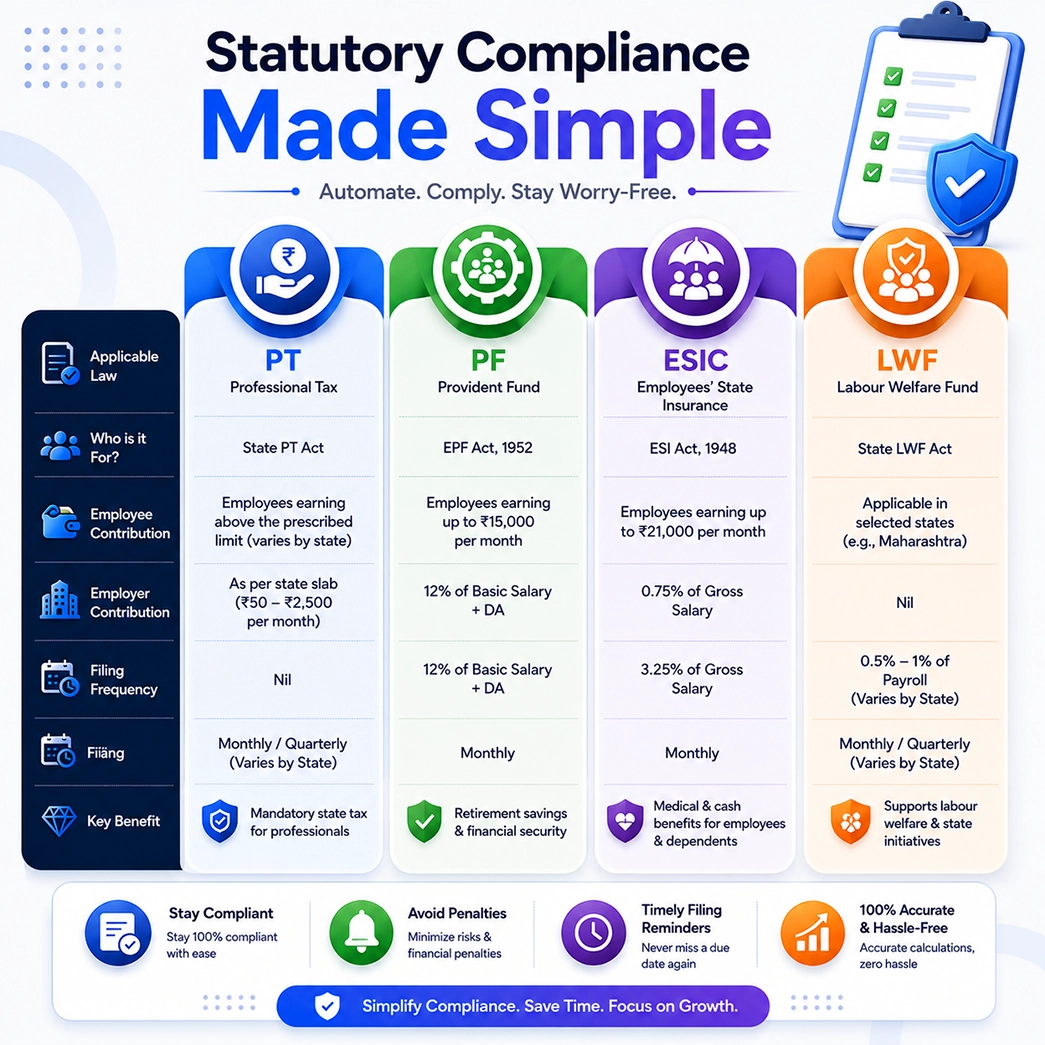
Compliance is the part of HR software Pune SMEs most often underestimate - right up until it becomes urgent. Maharashtra has its own set of statutory obligations layered on top of central labor laws, and getting them wrong is expensive.
Professional Tax (PT)
Maharashtra charges Professional Tax on salaried employees on a slab basis, deducted monthly and deposited with the state. Employers need both a PT Enrolment Certificate and a PT Registration Certificate, with returns filed monthly or annually depending on liability.
Provident Fund (PF)
Any establishment with 20 or more employees must register under the EPF Act. Both employer and employee contribute a share of basic wages, and monthly ECR filings with the EPFO are mandatory; late payments incur interest and penalties.
ESIC
Employees earning up to the ESIC wage ceiling at eligible establishments need coverage under the Employees’ State Insurance scheme. That means monthly contributions from both sides and half-yearly returns.
TDS
Employers deduct tax at source based on each employee’s declared investments and tax regime, deposit it monthly, and issue Form 16 at year-end. Variable pay and mid-year joiners complicate this fast.
Labor Welfare Fund (LWF)
Maharashtra requires periodic LWF contributions from both the employer and the employee, with the amount and frequency set by the state. It’s a small sum, and precisely because of that, it’s the one that gets forgotten most often.
Shops & Establishments Act
Every commercial establishment in Maharashtra must be registered under this Act and renewed, as it governs working hours, leave entitlements, and record-keeping.
Bonus Act, Gratuity Act & Minimum Wages
The Payment of Bonus Act requires a statutory bonus for eligible employees, tied to company profitability and wage thresholds. The Payment of Gratuity Act kicks in after five years of continuous service. Minimum wages get revised periodically and vary by zone and skill category, so payroll can’t stay static.
Leave Policies & Overtime
Maharashtra’s Shops & Establishments rules set minimums for earned, casual, and sick leave, with overtime pay beyond statutory daily and weekly limits. Both need to be configured correctly in any HR software Maharashtra SMEs pick.
A quick reference, for whenever this needs double-checking:
| Compliance Area | Applies To | Frequency | Key Risk if Missed |
|---|---|---|---|
| Professional Tax (PT) | All salaried employees | Monthly/Annual | Penalty + interest on late deposit |
| Provident Fund (PF) | Establishments with 20+ employees | Monthly | EPFO penalty, employee grievances |
| ESIC | Employees under wage ceiling | Monthly + half-yearly returns | Loss of employee medical cover, penalty |
| TDS on Salary | All taxable employees | Monthly + annual Form 16 | Interest, notices from Income Tax dept. |
| Labour Welfare Fund | As per state schedule | Half-yearly | Non-compliance notice |
| Shops & Establishments | All commercial establishments | One-time + periodic renewal | Fine, license issues |
| Bonus Act | Eligible employees | Annual | Statutory dispute, penalty |
| Gratuity Act | Employees with 5+ years’ service | On exit/retirement | Legal claim, penalty |
| Minimum Wages | All employees | Ongoing (revised periodically) | Underpayment claims |
Essential Features of HR Software in Pune
Not every HRMS on the market is built the same way, and it’s easy to pay for modules you’ll never touch. At minimum, look for a single employee database holding personal details, documents, salary structure, and employment history in one place - the core HR layer everything else sits on.
Attendance matters more than most SMEs expect going in. Biometric, GPS, or face-recognition check-ins that sync directly with payroll remove the manual reconciliation that otherwise eats a chunk of HR’s month. Pair that with a leave management system offering configurable leave types and approval workflows that actually reflect Maharashtra’s statutory minimums, not generic defaults.
Payroll is where this pays off most. PF, ESIC, PT, and TDS get calculated automatically instead of by hand; payslips generate themselves each cycle; and the bank file comes out ready to upload - no one’s re-checking the numbers before it goes out the door.
Performance management earns its place, too, once headcount grows beyond the point where a quick hallway chat used to suffice. Goals get set formally, review cycles happen on a schedule, and feedback stops being something that only happens when someone’s already unhappy. Hiring benefits the same way - a proper pipeline from job posting to offer letter means candidates don’t get lost in someone’s inbox, and AI-assisted screening earns its keep once a company’s fielding fifty applications for one warehouse role.
Employee self-service is one of those features that quietly pays for itself: a portal where staff apply for leave, download payslips, and update their own details without emailing HR for every small thing.
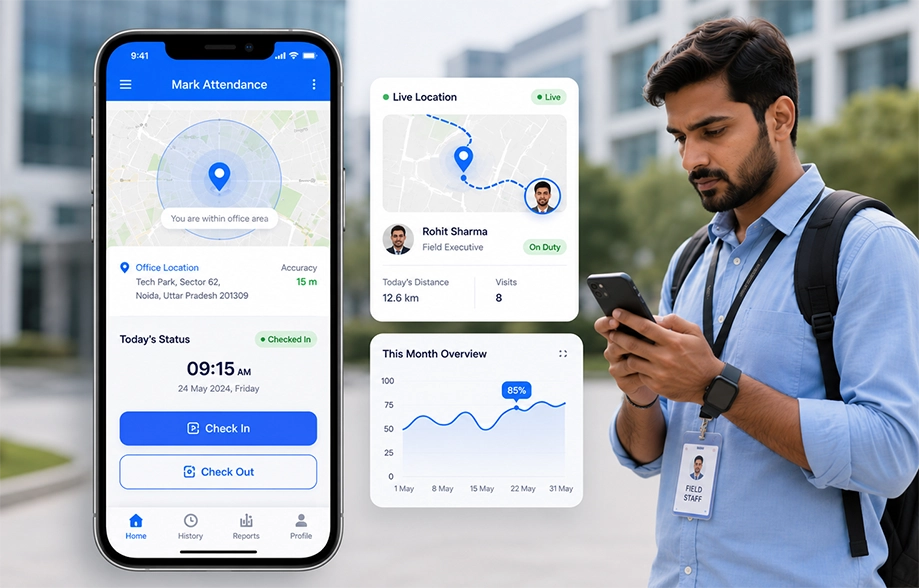
A mobile app isn’t optional for field sales, delivery, or multi-location manufacturing teams who aren’t at a desk all day, and geofencing confirms people are checking in from where they’re supposed to be - useful for warehouse and field roles around Pune’s outskirts. Face recognition attendance cuts down buddy punching on factory floors far more reliably than card-based systems ever did.
Round things out with shift scheduling for rotating rosters (standard in Pune’s manufacturing and logistics operations), expense management that routes mileage and travel claims through approval workflows instead of paper vouchers, asset management for laptops and ID cards, and document management for offer letters, ID proofs, and compliance paperwork.
A good dashboard tells you why attrition spiked last quarter or where payroll cost is creeping up before finance asks about it - that’s a different job than just keeping records. AI is starting to earn its place here too: screening resumes before a recruiter opens them, answering the same three leave questions employees always ask, and flagging an attendance pattern that looks off before it turns into an argument over a payslip.
Industry-wise HR Software Requirements
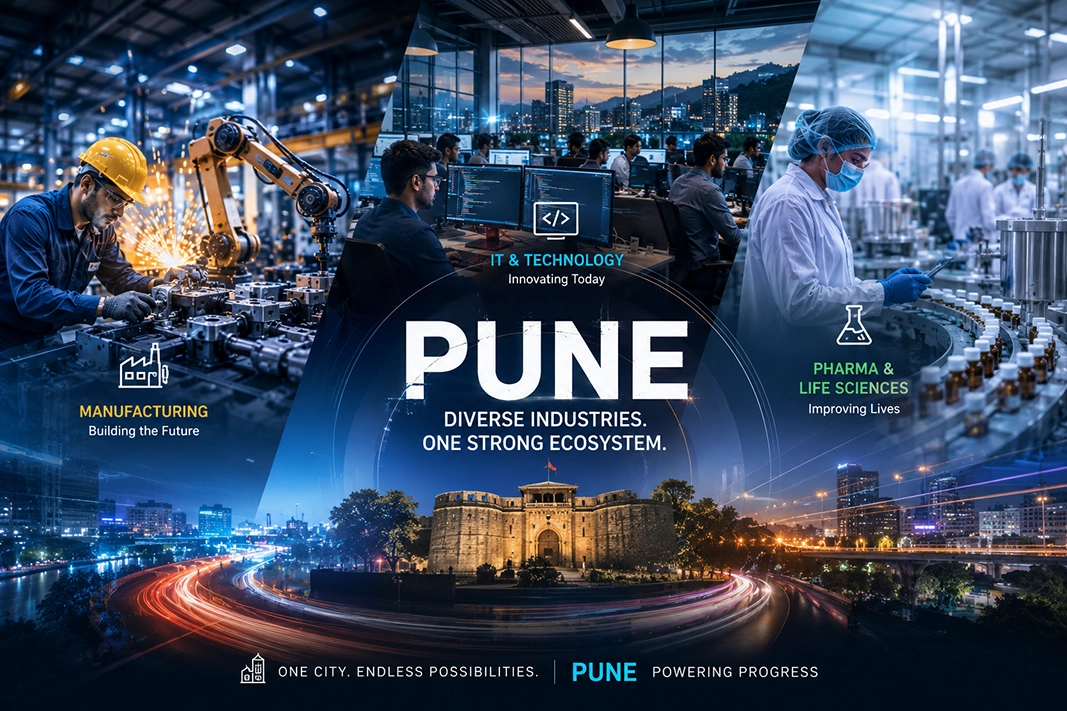
Pune’s SME base spans several distinct industries, and each has slightly different priorities regarding employee management software.
IT Companies
IT firms in Hinjewadi and Kharadi need hybrid attendance tracking, project-based time logging, and self-service portals that developers can use without friction. Integration with tools like Slack or project trackers is a common ask.
Manufacturing
Shift scheduling, biometric or face-recognition attendance on the shop floor, and overtime calculation matter most. HRMS for manufacturing companies also needs to handle contract labor records separately from permanent staff, which is a common compliance requirement.
Pharma
Pharma units around Bhosari and Chakan need tight document management for regulatory audits, plus shift-based attendance similar to manufacturing, given round-the-clock production lines.
Retail
Retail chains with multiple outlets across Pune need multi-location leave and attendance policies, along with quick onboarding workflows for the relatively high turnover typical of retail staffing.
Education
Educational institutes need HR software india that separates teaching and non-teaching staff policies, tracks academic-year-based leave cycles, and manages part-time faculty payroll.
Logistics
Logistics and warehousing operations around Pune’s ring road require GPS-based attendance for field and driver staff, as well as expense tracking for fuel and travel claims.
Healthcare
Hospitals and clinics need round-the-clock shift management, tracking of credential and license documents, and compliance with healthcare-specific labor norms.
Startups
Early-stage startups usually want a lean, affordable HRMS that covers core HR, payroll, and leave without the overhead of an enterprise system - something that can scale as headcount grows from 10 to 100.
Top HR Software in Pune (2026)
Here’s how the leading HR software options available to Pune SMEs compare on the essentials. Ratings reflect general market positioning as commonly reported by review platforms such as SoftwareSuggest and should be verified on the vendor’s current listing before you decide.
| Software | Best For | Payroll | Attendance | Compliance | Mobile App | Rating |
|---|---|---|---|---|---|---|
| Mewurk | Pune SMEs wanting AI-powered, affordable HRMS | Yes | GPS + Face Recognition | Strong (PF/ESIC/PT/TDS) | Yes | 4.5/5 |
| Keka | Mid-size companies wanting a polished UI | Yes | Biometric + GPS | Strong | Yes | 4.6/5 |
| greytHR | SMEs wanting a long-established, India-focused platform | Yes | Biometric | Strong | Yes | 4.5/5 |
| Zoho People | Companies already using the Zoho suite | Add-on (Zoho Payroll) | Biometric + GPS | Moderate | Yes | 4.4/5 |
| factoHR | Large SMEs needing deep customization | Yes | Biometric + GPS | Strong | Yes | 4.4/5 |
| Darwinbox | Larger enterprises needing full-suite HR | Yes | Biometric + GPS | Strong | Yes | 4.3/5 |
| Spine HR | Traditional SMEs preferring on-premise options | Yes | Biometric | Moderate | Limited | 4.1/5 |
| HROne | Mid-market companies wanting workflow automation | Yes | Biometric + GPS | Strong | Yes | 4.3/5 |
| Pocket HRMS | Budget-conscious small teams | Yes | Biometric | Moderate | Yes | 4.2/5 |
| QkrHR | Small teams wanting a simple, no-frills tool | Yes | Basic | Basic | Yes | 4.0/5 |
Why Mewurk is Ideal for Pune SMEs
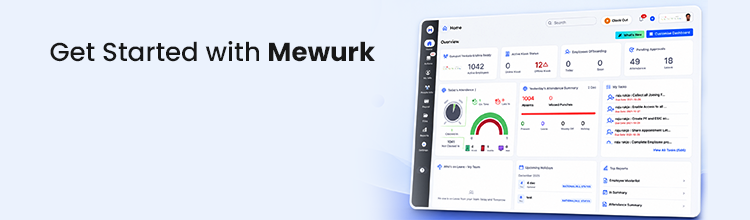
Mewurk is built as a cloud HRMS specifically for the SME segment, and a few things make it a particularly good fit for Pune’s mix of IT, manufacturing, and services companies:
- AI-powered HR: from resume screening to attendance anomaly detection, Mewurk uses automation to reduce the manual work that eats up an HR team’s week.
- Payroll automation: PF, ESIC, PT, and TDS are calculated automatically, with payroll runs that account for Maharashtra’s specific slabs and thresholds.
- Attendance and leave management: GPS attendance and face recognition handle attendance for both office-based and field staff, syncing directly with payroll.
- Mobile app and GPS attendance: field sales teams and multi-location staff can check in from wherever they’re working, with geo-fencing to confirm location.
- Compliance support: statutory rates and filing formats are kept up to date, reducing the manual tracking burden on HR.
- Employee self-service: staff can apply for leave, view payslips, and raise queries without routing everything through HR.
- Reports and analytics: dashboards give founders and HR managers a real-time view of attendance trends, payroll cost, and attrition.
- Affordable pricing: priced for the SME budget rather than enterprise contracts, which matters for a 30-150 employee company.
- Easy implementation and local support: onboarding is built to be fast, with support that understands the Pune SME context rather than a generic enterprise rollout.
Benefits of Using HR Software
- Save time: automating attendance, leave, and payroll frees up hours every week that HR can spend on people, not paperwork.
- Reduce payroll errors: automated statutory calculations eliminate the manual calculations that cause most payroll disputes.
- Better compliance: built-in statutory logic reduces the risk of missed PF, ESIC, or PT deadlines.
- Employee satisfaction: self-service access to payslips and leave balances builds trust and cuts down HR queries.
- Faster hiring: applicant tracking shortens time-to-hire, which matters in Pune’s competitive IT and manufacturing job markets.
- Productivity: less time on admin means more time on the work that actually grows the business.
- Paperless HR: centralized digital records replace filing cabinets and reduce the risk of lost documentation.
- Cost savings: automation reduces the need for a large back-office HR team as the company scales.
- Real-time reporting: dashboards give leadership visibility into workforce costs and trends without waiting for a monthly report.
How to Choose the Right HR Software
Use this checklist when comparing HR software Pune vendors offer:
- Budget: Does the pricing model (per-employee or flat) align with your current headcount and growth plan?
- Employees: is the platform designed for your company size, or will you outgrow it in a year?
- Features: does it cover core HR, payroll, attendance, and leave out of the box, without expensive add-ons?
- Integrations: can it connect with your accounting software, bank for salary disbursal, and any tools you already use?
- Support: Is local support available, and how fast do they respond to payroll-cycle issues?
- Security: Is employee data encrypted, and does the vendor follow data protection practices aligned with India’s DPDP Act?
- Mobile app: Does it work well for field staff and multi-location teams, not just desk-based employees?
- Scalability: Can it handle you going from 50 to 200 employees without a platform migration?
- Compliance: Does it stay current with Maharashtra-specific PT slabs, minimum wages, and LWF schedules?
- Ease of use: Will HR and employees actually adopt it, or will it sit unused after onboarding?
Implementation Checklist
Once you’ve picked a platform, a structured rollout avoids the common go-live headaches:
- Data migration: move employee records, salary structures, and leave balances accurately from your existing system or spreadsheets.
- Employee onboarding: get every employee set up with login access and a quick walkthrough of the self-service portal.
- Payroll setup: configure salary structures, statutory deductions, and pay cycles before the first live run.
- Attendance policies: set shift timings, grace periods, and geo-fencing boundaries to match how your teams actually work.
- User training: run a short session for HR and managers so approvals and reports are used correctly from day one.
- Testing: run a parallel payroll cycle alongside your existing process before fully switching over.
- Go-live: switch fully to the new system once test results match expected numbers.
- Ongoing support: keep a channel open with your vendor for the first few payroll cycles, since edge cases tend to surface early.
Frequently Asked Questions
Which is the best HR software in Pune?
It depends on company size and industry. For SMEs specifically, Mewurk, greytHR, and HROne tend to offer the best balance of compliance coverage, price, and ease of setup; larger enterprises often lean toward Keka or Darwinbox.
Which HRMS supports compliance in Maharashtra?
Most established HR software vendors in Maharashtra - including Mewurk, greytHR, and factoHR - support PT, PF, ESIC, TDS, and LWF calculations specific to the state. However, depth of coverage varies, so it’s worth confirming during a demo.
How much does HR software cost?
Pricing is typically per employee per month, ranging from budget-friendly plans for small teams to higher tiers with advanced analytics and AI features. Exact pricing is best confirmed directly with each vendor, as it varies by company size and selected modules.
Can HR software automate payroll?
Yes. Good payroll management software automatically calculates PF, ESIC, PT, and TDS, generates payslips, and creates bank-ready disbursal files, significantly reducing manual effort in the payroll cycle.
Is cloud HR software secure?
Reputable cloud HR software Pune vendors offer encrypted employee data storage, role-based access controls, and data protection practices aligned with India’s DPDP Act. It’s worth asking any vendor directly about their security certifications before signing up.
Is HR software good for startups?
Yes - lean HRMS platforms like Mewurk or Pocket HRMS give startups a core HR, payroll, and leave management system at an affordable price point, without the complexity of enterprise-grade systems.