8 Powerful Ways Employee Wellbeing Is Achieved Through HRMS
We’ve crossed the point where employee wellbeing could be brushed off as a meeting-room talking point. In most organisations today, it’s a serious business priority tied directly to productivity and workplace culture.
When people talk about employee wellbeing today, they’re referring to a mix of physical health, mental stability, financial security, psychological safety, and overall work experience. HR leaders have always championed this, but the scale of modern work makes it impossible to manage. This is where an HRMS starts to matter. In this blog, we’ll explore eight solid ways HRMS pushes employee wellbeing forward.
What Is Employee Wellbeing?
To define employee wellbeing, you should view it as more than just perks like gym memberships. It is a holistic approach to supporting individuals across their physical, emotional, financial, and social needs.
Traditional employee well being meaning focused on health programs or occasional workshops, but the modern meaning of employee wellbeing covers day-to-day experiences: workload balance, workplace interactions, recognition, transparency, and psychological comfort. Companies increasingly see well-being as part of the core employee experience rather than a periodic campaign.

Why Does Employee Wellbeing Matter?
The benefits of employee wellbeing are compelling from both human and business perspectives. Organisations with solid well-being programs for employees benefit from reduced absenteeism engagement and wellbeing outperform their competitors in various performance metrics like profitability, innovation, and customer satisfaction.
8 Ways an HRMS Strengthens Employee Wellbeing
HRMS isn't just software. It is a catalyst for cultural change. Here are eight transformative ways it supports employee wellbeing.
1. Streamlined Onboarding Processes
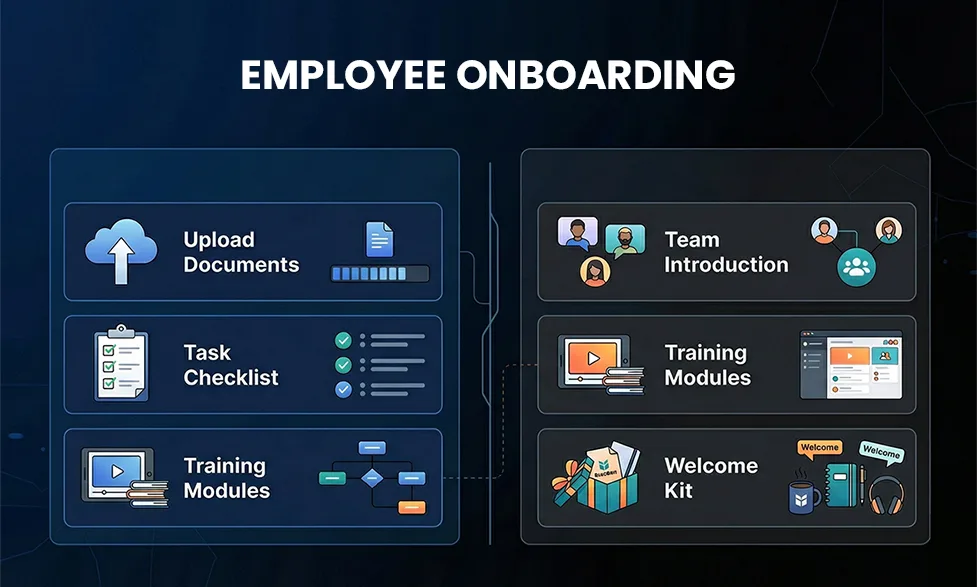
First impressions matter. HRMS automates the series of paperwork involved in the employee onboarding process, spread through orientation modules and buddy systems. New hires get anxious about the sheer volume of these. When people-dependent processes are replaced with simple automation, new employees settle in with far less friction.
If you are a company that wants to create a sense of belonging from day one, a stable HRMS system like Mewurk will directly boost employee well being and mental health. Studies show that well-supported employees during onboarding are 54% more productive.
2. Performance Management and Feedback Loops
Traditional review methods are known for their complex and stress-inducing style, but modern HRMS tools come bundled with continuous feedback tools, which are, in fact, smart growth opportunities in disguise. Goal-setting dashboards and 360-degree reviews encourage open dialogue and thereby make a positive impact on employee engagement and wellbeing.
In most teams, real-time analytics help identify burnout risks early so that companies can make timely adjustments like workload redistribution. These practices align closely with modern human resource management and performance strategies that prioritise continuous improvement over periodic reviews.
3. Learning and Development Modules
Ongoing learning opportunities contribute directly to how supported employees feel at work. Modern HR software companies have started adding features like personalised training paths, skill-building courses and wellness webinars via AI recommendations to support employee wellbeing in this manner.
As an employer, you are not only required to invest in the upskilling of your staff but also to intervene meaningfully to combat their stagnation, which is a common mental health detractor. Recent LinkedIn data shows that companies using such modules achieve 24% higher retention.
4. Health and Wellness Tracking
Modern HR management systems are now offering dedicated modules focused entirely on employee wellness. These tools track key metrics, ranging from personal fitness milestones to proactive mental health check-ins.
What makes this particularly effective is the integration with popular wearables, through which employees can share data they’re comfortable disclosing, which encourages a culture of self-care and proactive health management.
5. Time and Attendance Management
One of the biggest threats to employee wellness is burnout from overwork. Flexible scheduling through modern HR systems is a perfect solution to combat this. These tools prevent exhaustion by making sure everyone can easily manage their work-life balance.
Features like automated leave approvals and flexible shift swaps significantly reduce stress. In fact, there are verifiable reports available which show this strategy working firsthand at firms where it successfully cut unplanned absences by 30%. Stability in the operations not only benefits the businesses, but it can also directly improve an employee's financial well-being because they have reliable, consistent hours.
6. Payroll and Benefits Administration
According to PwC, financial stress impacts a significant 60% of employees. Fortunately, modern HR systems are designed to be capable of tackling this issue head-on.
It starts with ensuring accurate and timely payroll, which is the most foundational step to building immediate trust, especially in the context of payroll and compliance requirements in India. Beyond that, these systems provide self-service benefits portals where employees can log in to customise their financial plans, download payslips, review salary components, track deductions, and understand their benefits without asking HR for every detail.
Transparency and control are two sides of the same coin that contribute equally towards enhancing employee financial well being.
7. Employee Self-Service Portals
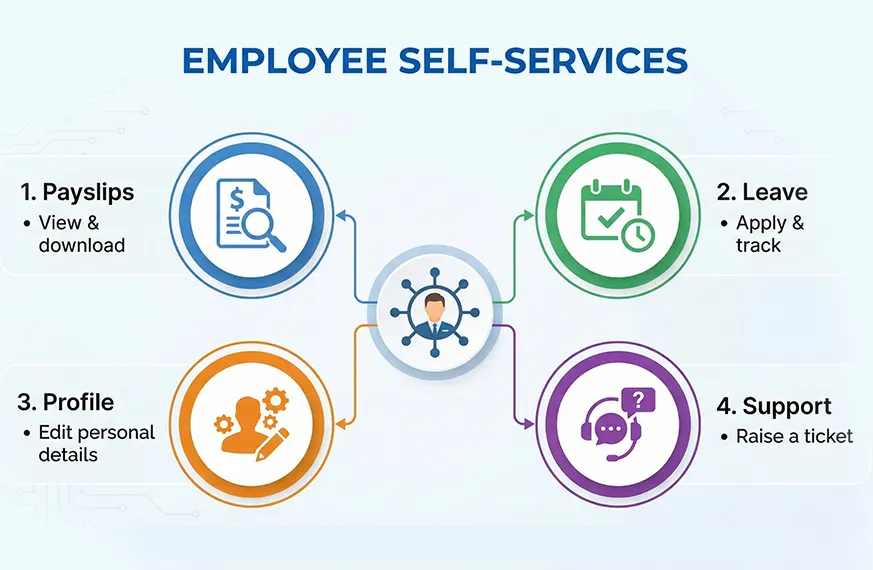
A crucial part of any successful employee well-being program is empowerment. The best way HR technology supports this is through Employee Self-Service (ESS) portals.
These portals cut the red tape by allowing staff to handle important tasks independently. For instance, updating personal information, accessing payslips, or submitting support requests.
Autonomy is something deeply engaging and is appreciated by employees irrespective of their levels, gender or age. If you let your employees feel in control of their own data and administrative tasks, it will align perfectly with the psychological principle of Self-Determination Theory, which basically says people thrive when three needs are met: autonomy, competence, and relatedness. The result is a more engaged workforce that feels respected and less reliant on constant HR intervention.
8. Analytics and Predictive Insights
The real power of modern HRMS comes from its ability to provide analytics and predictive insights. The system itself collects and analyses data and forecasts crucial well-being trends.
For example, sophisticated techniques like sentiment analysis can flag departments or teams that are showing signs of high stress before a major problem occurs. The HR people are the immediate beneficiaries of this because they can start proactive interventions, such as targeted employee well-being programs, exactly where they are needed most.
Once pressure points are addressed early, the financial picture will shift as well; many companies report healthcare expenses falling by close to 20%, as a result of early intervention.
How Mewurk HRMS Improves Employee Wellbeing?
Mewurk, our cutting-edge cloud-based HRMS, prioritises employee wellbeing through a combination of thoughtful design, structured processes, and day-to-day HR automation. It offers self-service portals for leave requests, payslips, and shift scheduling. Advanced attendance tracking and payroll automation features contribute to quick employee integration, engagement and their financial transparency.
With advanced HR task management, customizable modules, three-way clock-in options, flexible shift module and sophisticated live field tracking options, Mewurk creates a fully organised and amicable work environment for every employee, both at entry level and top management level.
Wrapping Up
Employee well-being is shaped by everyday work experiences rather than occasional initiatives. When you have stability in basic processes, for instance, fair attendance, accurate payroll, consistent feedback, and easy-to-access information, you will build a workforce that feels secure, focused, and supported. An HRMS plays a quiet but important role in creating this stability.

FAQ
1. How does employee wellbeing differ from employee wellness?
While often used interchangeably, employee wellness is different from employee well-being. The former focuses on the physical health initiatives like fitness programs, whereas the latter is broader. It covers mental, emotional, and social dimensions under its fold. Wellness is a subset, but wellbeing emphasises overall life satisfaction and work integration.
2. What metrics should you track to measure the success of employee well being programs?
Key indicators include employee net promoter scores (eNPS), absenteeism rates, healthcare utilisation trends, and voluntary turnover. Advanced HRMS can automate these via dashboards, but also consider qualitative feedback from pulse surveys to gauge subtle shifts in morale.
3. Can small businesses afford HRMS for employee well being programs?
Absolutely. Cloud-based HRMS solutions for small businesses like Mewurk offer scalable pricing, starting with affordable subscriptions. You can also get free trials to test the features before switching to the paid model.
4. Is employee self-service helpful for employee wellbeing?
Yes. Self-service portals in HRMS solutions are powerful in minimising employee frustration caused by delays, approvals, or dependency on HR for basic information. Employees love having control over simple tasks, which not only lowers their anxiety but also builds confidence.
5. What should companies focus on first when using HRMS for employee wellbeing?
Start with trust and fairness. Employees feel supported when their core work life is stable and reliable. Ensure your HRMS delivers consistent basics like reliable attendance tracking, transparent leave approvals, and most crucially, perfectly accurate, on-time payroll. Once that stable foundation of trust is established, you can leverage the HRMS's full potential: using insights and feedback tools to understand employee needs and rolling out targeted learning modules to improve deeper, sustainable well-being.
6. Which are some effective well being programs for employees?
Effective employee well-being programs include mental health support, flexible work policies, financial wellness initiatives, physical health programs, learning and development opportunities, employee assistance programs, recognition initiatives, and regular feedback or listening programs that address daily work stress.

Most Popular Post
Why Accurate Attendance and Leave Management Matters for Business Growth?
Read More →Why Accurate Attendance and Leave Management Matters for Business Growth?
How To Leverage Attendance Data For Better Workforce Management?
Read More →How To Leverage Attendance Data For Better Workforce Management?