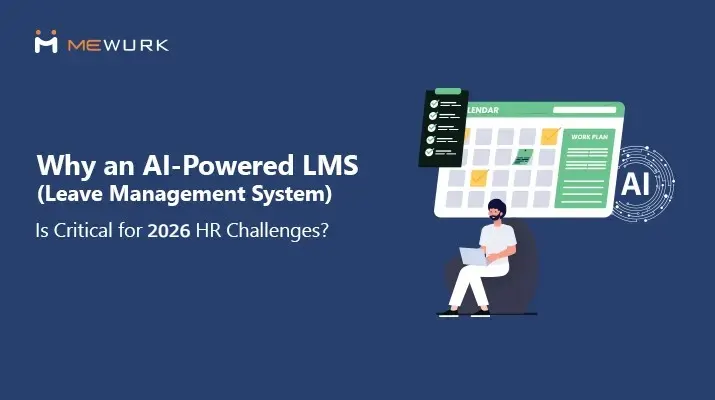
Why an AI-Powered LMS (Leave Management System) Is Critical for 2026 HR Challenges?
Although the concepts of AI (artificial intelligence) and machine learning were present long before, ordinary people probably started to pay attention to them in late 2022, when ChatGPT was officially launched, and began to experience AI firsthand. Until then, we all thought that AI was a sophisticated technology that only someone too tech-savvy would use.
Three years down the line, we now encounter elements of AI in almost every area of our lives. On websites we use daily, ecommerce platforms, social media, smartphone apps, and smart TVs. When AI is seemingly everywhere, why can’t it be on our LMS (leave management system)?
In this blog, let’s understand the importance of an AI-powered LMS leave management system for tackling HR challenges in 2026 or the fast-evolving time that we live through. For a foundational overview of a general leave management system, check our guide on streamlining leave processes.
The Unprecedented Pressure 2026 Brings to Leave Management
As we talk about the challenges of leave management in 2026, we can’t move on without considering factors like hybrid work models demanding flexible scheduling, stricter global compliance mandates, and a talent shortage amplified by skill gaps.
HR teams are struggling to handle these simultaneously while facing the pressure from their managers to bring efficiency and raise employee expectations for better workplace experiences. This is when one might wonder how AI helps HR handle complex leave policies.
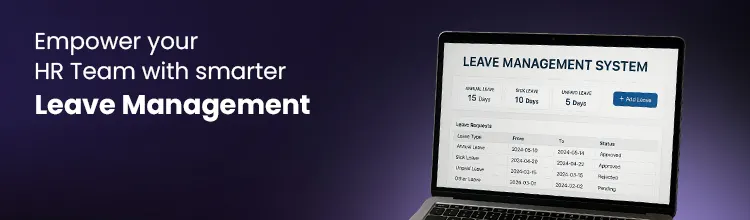
AI-based leave management software for enterprises does not fully stay limited to the conventional framework of a tool or software we normally see in day-to-day life. It acts more like a decision-making partner for HR. By leveraging predictive analytics and automation, HR challenges solved by AI-driven leave management tools range from inaccurate leave forecasting to uneven workload distribution and compliance lapses.
Why AI Is the Future of Employee Leave Management Systems?
Why is there a growing consensus among HR leaders that the future of leave management systems with artificial intelligence will shape workflow efficiency? The answer is very simple. Machine learning systems are capable of bringing speed, accuracy, and predictability to an increasingly complex and hybrid work world.
Automation Speeds Up Processing
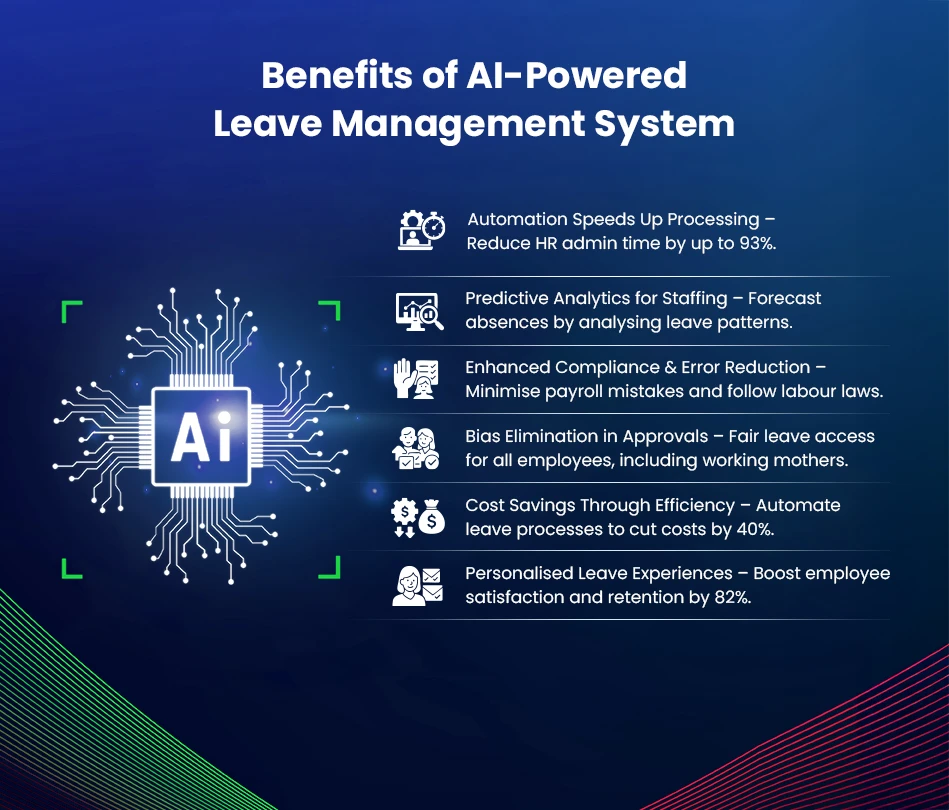
Cloud-based leave management software for HR teams with AI and automation capabilities can quicken the pace of leave requests, approvals, and tracking. Reports show it reduces the administrative time by up to 93% and thereby frees up time for HR to focus on strategic tasks.
Predictive Analytics for Staffing
Leave data is a goldmine for workforce planning. Using machine learning capabilities, AI-powered LMS leave management systems can accurately forecast employee absences by analysing patterns in leave data.
Enhanced Compliance and Error Reduction
AI ensures compliance with Indian labour laws like the Shops & Establishments Act, PF, ESI, and Maternity Benefits Act by minimising human errors in leave management. Not just that, it also lessens payroll mistakes by up to 90%, and makes sure that HR decisions remain unbiased for all employees.
Bias Elimination in Approvals
The best AI-powered leave management system in India, like Mewurk, does not allow any room for human biases in leave approvals. It especially benefits groups like working mothers in equitable access to paid leave and flexible working options.
Cost Savings Through Efficiency
Organisations using AI in HR report 40% cost reductions and 60% revenue increases. As far as leave management is concerned, the potential of machine learning algorithms is used to automate leave processes and cut manual tasks like approvals and record-keeping
Personalised Leave Experiences
Reports show firms that utilise AI in HR for tailored benefits, including leave, are ideally positioned to increase employee satisfaction and retention by 82% compared to traditional methods.

What Are the Core Capabilities of AI-Driven Leave Management Systems?
Modern AI leave tracking systems for remote and hybrid teams are moving beyond simple record-keeping. They are designed to be useful for people in much broader contexts, thanks to their reliance on advanced technology. Here are the key features that make them indispensable for HR and employees alike:
1. Unified HR Ecosystem Integration
AI in HR acts as the central intelligence connecting the leave management system directly with other critical HR platforms. The leave data is synchronised instantly and made available across payroll, scheduling, and team calendars. The fact that you have a single source of truth through an integrated workforce system drastically reduces any possible chances for admin errors.
2. Intelligent, User-Centric Self-Service
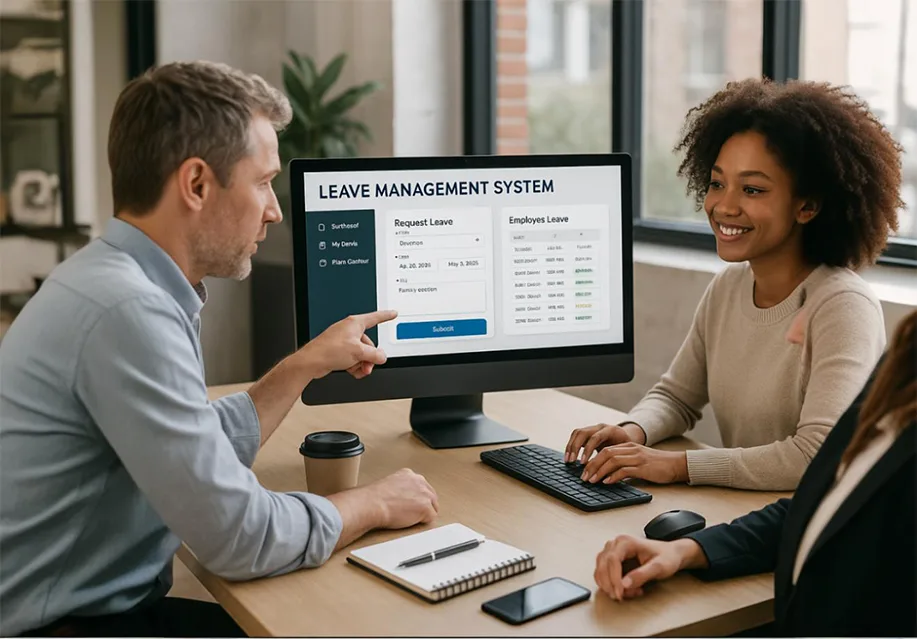
Employees have appreciated online leave management systems with intuitive mobile and web portals to submit requests or view status. When such an already convenient system is further enhanced by cognitive computing models to act as a personal assistant, it brings much more difference to the ecosystem. Say, for instance, employees getting data-driven recommendations for optimal leave dates based on current team availability and workload.
3. Conversational Interface and Automation
Modern LMS leave management systems could potentially leverage Natural Language Processing (NLP) to replace cumbersome forms with simple, conversational interactions via chatbots. Employees could then use these chatbots or voice assistants to submit requests or check the status of a leave application. What you can benefit from this is instant query resolution and automated request processing.
4. Strategic Data Visualisation and Reporting
AI leave approval and attendance integration system processes raw data and offers actionable business intelligence. On the interactive dashboards, managers can find dynamic trend graphs and heat maps that reveal leave patterns, accrual consumption, and peak demand periods. For leaders who have no choice but to quickly identify the underlying issues, these dashboards will make it immediate and intuitive.
5. Proactive Workforce Wellness Insight
One of the key benefits of using AI for leave and attendance tracking is its ability to anonymously and ethically analyse aggregated leave patterns. Even subtle shifts or spikes in absence rates across specific teams would make so much of a difference in managing teams.
The LMS leave management system, when equipped with cognitive intelligence, could identify potential indicators of employee stress or burnout from these patterns. It will then enable HR to act proactively, say, to offer support resources or interventions.
6. Automated Compliance and Document Validation
AI could proactively take on the role of a virtual compliance officer in a modern LMS leave management system to accelerate approval workflows, rapidly scan, verify, and authenticate uploaded supporting documentation (like medical certificates) using keyword detection and pattern recognition. Such a level of sophistication would not only speed up the entire application process but also make sure that all required paperwork is correctly submitted and verified.
How AI-Based LMS Leave Management Systems Differ from Traditional Ones?
Contrast today’s employee leave tracking system with AI analytics with a traditional one. Say the type of one you used to have a few years back, like in 2020. Most of those systems treated leaves as isolated events. 2026 AI LMS leave management systems view them holistically using machine learning and integrate more or less instantaneously with HRIS for real-time actions like payroll syncing or sentiment analysis on leave requests to detect burnout signals.
As AI automates what humans once struggled to achieve, we now have a drop in administrative errors in the range of 30% to 50% versus 2020 baselines. If the employees leave management systems of the 2020s focused on digitisation, 2026 demands intelligence. It has already turned LMS from a ledger into a predictive HR assistant.
Case Study: Surat-Based Construction Firm Wins Back Time with AI LMS Leave Management System

A mid-sized manufacturing firm in Surat, India, was finding it hard to manage seasonal labour turnover in 2024. Post-implementation of our smart LMS leave management system, they saw an improvement in their auditing process as the system provided better visibility into their leave accruals and approvals, which helped reduce manual errors in payroll calculations. Furthermore, the standardised leave tracking and reporting simplified the process of tracking employee attendance and leave during peak seasons. The HRs testify that it aided them in planning for temporary coverage.
The software’s features for tracking leave balances and customising weekly-off policies improved the approval process. The platform enabled them to auto-calculate balances and route requests instantly to managers. Within a few weeks after the implementation of the LMS leave management system, the overall absenteeism rate dropped by 28%.
These smaller but critical improvements started to mirror broader trends, particularly in improving the overall HR efficiency, echoing the wider HR digitalisation in hybrid-era resilience.
Conclusion
The days of purely record-keeping LMS leave management systems are over. The complexities of the time that we live in and the widespread adoption of AI in almost every realm of our lives call for a smarter, AI-driven approach to leave management. The bottom line is, you shouldn’t just focus on solving your HR challenges through digitalisation alone. It must harness the most advanced machine learning techniques and be primed for smarter HR workflows.

FAQs
What is an LMS leave management system (LMS) and why is it important?
A leave management system is software that helps you manage employee leave requests, approvals, leave policies, calendar and many more leave-related tasks. By automating these core tasks, employee leave management systems significantly minimise admin workloads and errors.
Having access to a reliable LMS leave management system is critical for every business today. Without it, HR teams can easily get bogged down in paperwork, payroll mistakes will become a common thing, and frankly, employees will get stressed and frustrated just trying to take a well-deserved day off.
What features should I look for in a modern leave management system?
If you are looking for a smart leave management system for your organisation, make sure you choose one that offers you the following fundamental features:
- Real-time leave tracking and approvals
- Employee self-service portals
- Integration with payroll and HR platforms
- Analytics dashboards for insights and trend visualisation
- Automated document validation
- Proactive notifications for potential staffing gaps
A system with these capabilities will guarantee that there is both efficiency and a better employee experience.
Does the leave management system influence employee experience?
Yes, the leave management system heavily influences employee experience. A modern, efficient, and transparent system can be a crucial component for building employee trust, saving them from the stress of administrative hurdles, and showing them that you're committed to their work-life balance and fair treatment.

Most Popular Post
Why Accurate Attendance and Leave Management Matters for Business Growth?
Read More →Why Accurate Attendance and Leave Management Matters for Business Growth?
How To Leverage Attendance Data For Better Workforce Management?
Read More →How To Leverage Attendance Data For Better Workforce Management?