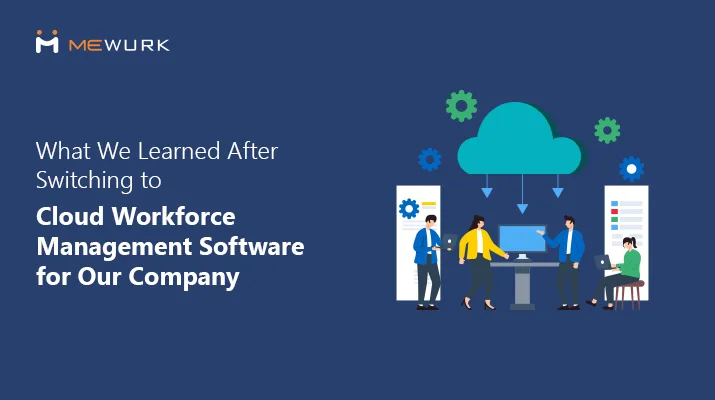
What We Learned After Switching to Cloud Workforce Management Software for Our Company
When we first moved to cloud workforce management software, we thought that it would be like another one of those tech rollouts that look shiny in a demo and turn into a slow-motion train wreck once it hits real life. If you’ve been part of any recent software ‘go-lives,’ you know the kind of ‘this will only take an hour’ promises that stretch into weeks. But this time was strangely different. For once, the thing actually worked the way it claimed to.
It wasn’t perfect on day one, yet it kept proving its value and giving exactly what we needed. What struck us right away was, in fact, not the absence of flaws in our cloud workforce management software but the absence of frictions.
What Problems Did We Face Before Switching To The Cloud Workforce Management Software?

Earlier, we used to have numerous registers, Excel trackers, biometric scanners, and manual cross-checks just to handle a simple function like attendance. Even then, we had to deal with a huge number of correction requests for missed punches and duplicate entries at the end of each month. Buddy-punching was another problem, never admitted out loud, but very much there.
Attendance challenges were only the most visible part of the problem. Underneath, critical HR functions were equally strained. Leave requests were mishandled as a result of not having a synchronised system in place, while shift scheduling lacked consistency and transparency.
With payroll processing, the main headache was reconciling attendance, leave, and shift data. A single oversight could throw off salaries.
Employee onboarding was another cumbersome process we were frequently running into. New hires faced avoidable administrative delays and confusion around required documentation. In addition, record-keeping suffered from duplication, incomplete data, and limited accessibility. Together, these issues created extra work and a poor experience for both employees and HR teams.
The irony is that nobody thought this was particularly unusual. Broken systems at work aren’t weird because they are so common that we stop noticing them.
Why We Decided to Move to SaaS Workforce Management Software?
Switching to HR workforce management software hosted in the cloud wasn’t exactly an inspired decision. It was more like a surrender. We had reached a point where the old systems or methods of employee management left us frustrated month after month. They were actively undermining the trust of our employees.
While employees dealt with delays, daily strains and a lack of clarity over processes, managers dreaded the inefficiencies piling higher.
The software was pitched as a cure for all this, but we were still sceptical. Most technologies, when they get introduced, have a history of overpromising and underdelivering. Still, we signed up, uploaded our data, and waited for the inevitable fallout. Only, the fallout didn’t happen. Instead, what we found was something close to relief and reassuring.
What the Switch to Cloud Workforce Management Software Taught Us
Looking back, we believe the decision to move to a global workforce management software was the smartest choice we made in the last few years. It didn’t just give us a new tool to manage people. It changed how we worked day to day. Here are five lessons we took from the switch.
Lesson One: Attendance Became Transparent
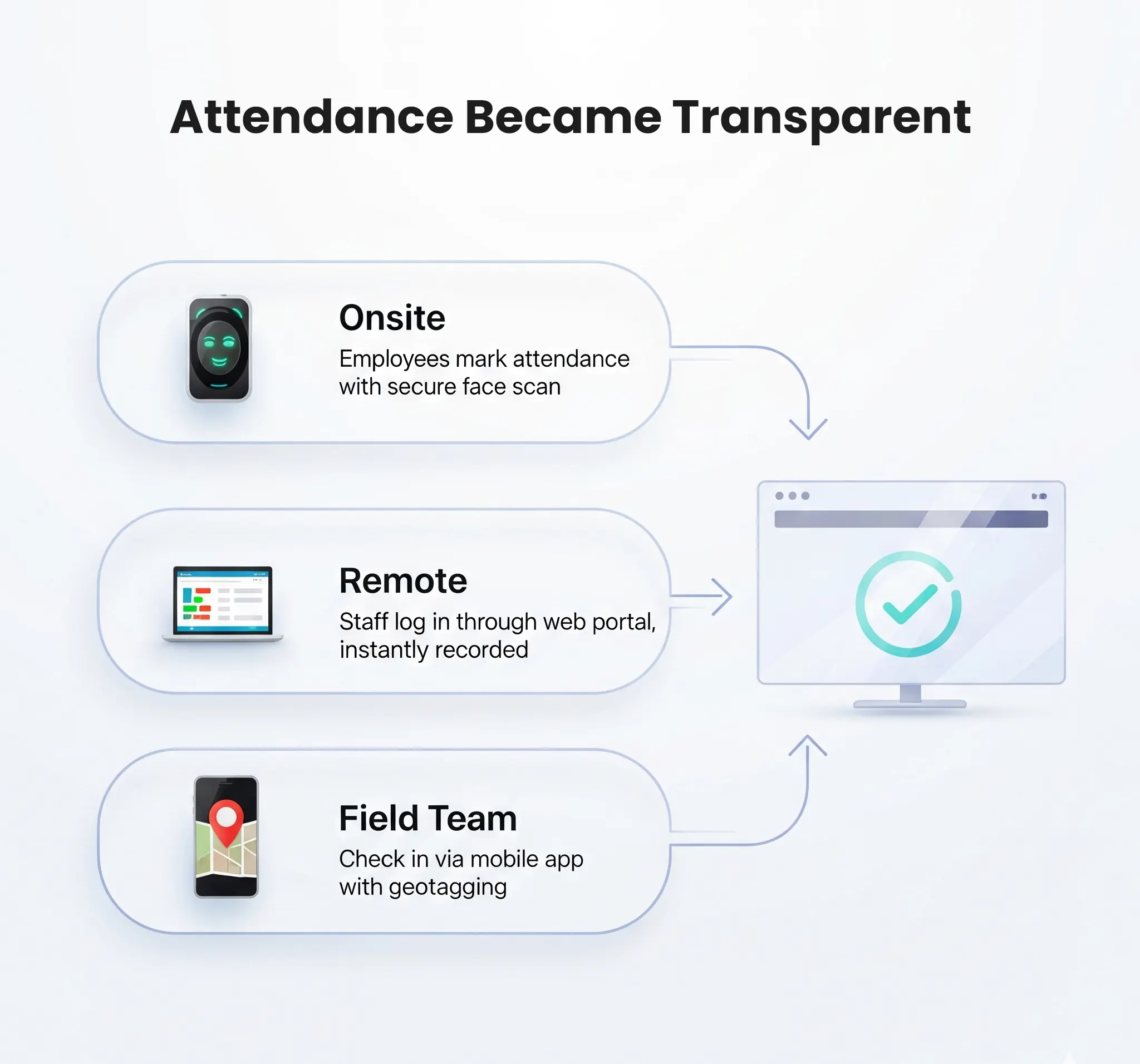
The first real change was attendance visibility. All of a sudden, we could find every check-in, every check-out, every half-day in the system, and it was available to both the employee and HR. There was no need to argue about whether someone had come in late on a certain day or whether an extra hour of overtime had been recorded. Instead of taking any side, the system presented the facts as they were.
In workplaces, attendance disputes often become proxy battles over fairness: “If mine got deducted, why didn’t theirs?” By making everything visible through smart timekeeping, the best workforce management software restored some faith in our processes.
Lesson Two: Leave & Shift Management Got Lighter
Previously, applying for leave was like sending a message into the void. You weren’t sure who had seen it, or if the approval would come in time, or if it would collide with another teammate’s leave. We had the best workforce management software India to sort that out.
Any leave approval or shift change appeared to managers, coworkers and the applicants themselves in real time. It became impossible to have overlapping requests, as before submitting a request, the employee can see if one already exists and make adjustments.
The same degree of convenience applies to shift management as well. Before, one person’s absence caused a domino effect by throwing off the entire schedule. Now, since the system can flag conflicts early, people can check their shifts on their phones.
Lesson Three: Payroll Processes Improved
Payroll processing used to be a dreaded task for everyone in the HR team. No employee would forgive a paycheck that misses even a few days’ wages. In the same way, no HR would want to deliberately underpay staff. But it happens frequently and inevitably when you depend on tools that aren’t designed for that, and when your data isn’t properly aligned.
After the switch to the cloud workforce management software, we could have its payroll module pull data directly from the saved attendance records. That meant zero manual entry for the payroll staff and zero errors.
Lesson Four: Data Became More Useful
This was an outcome we hadn’t expected. Before, data was something we collected only because we had to. It was gathered to meet compliance and then pushed into the archive. But once the software started generating real-time reports, data shifted from being a passive record to becoming an active resource. This quite reinforces what we recently learnt from an SHRM report that says 94% of business leaders believe people analytics is elevating the status of HR.
Managers were able to identify patterns such as consistent late arrivals, uneven workload distribution across teams, and the allocation of overtime. HR could recognise trends early on and stop their escalation into irreparable damage or breakdowns.
Lesson Five: Managing Remote Work Became Easy
When remote and hybrid work entered the scene, our old systems completely fell apart. We didn’t know how to track employee attendance when the workplace was no longer restricted to the office.
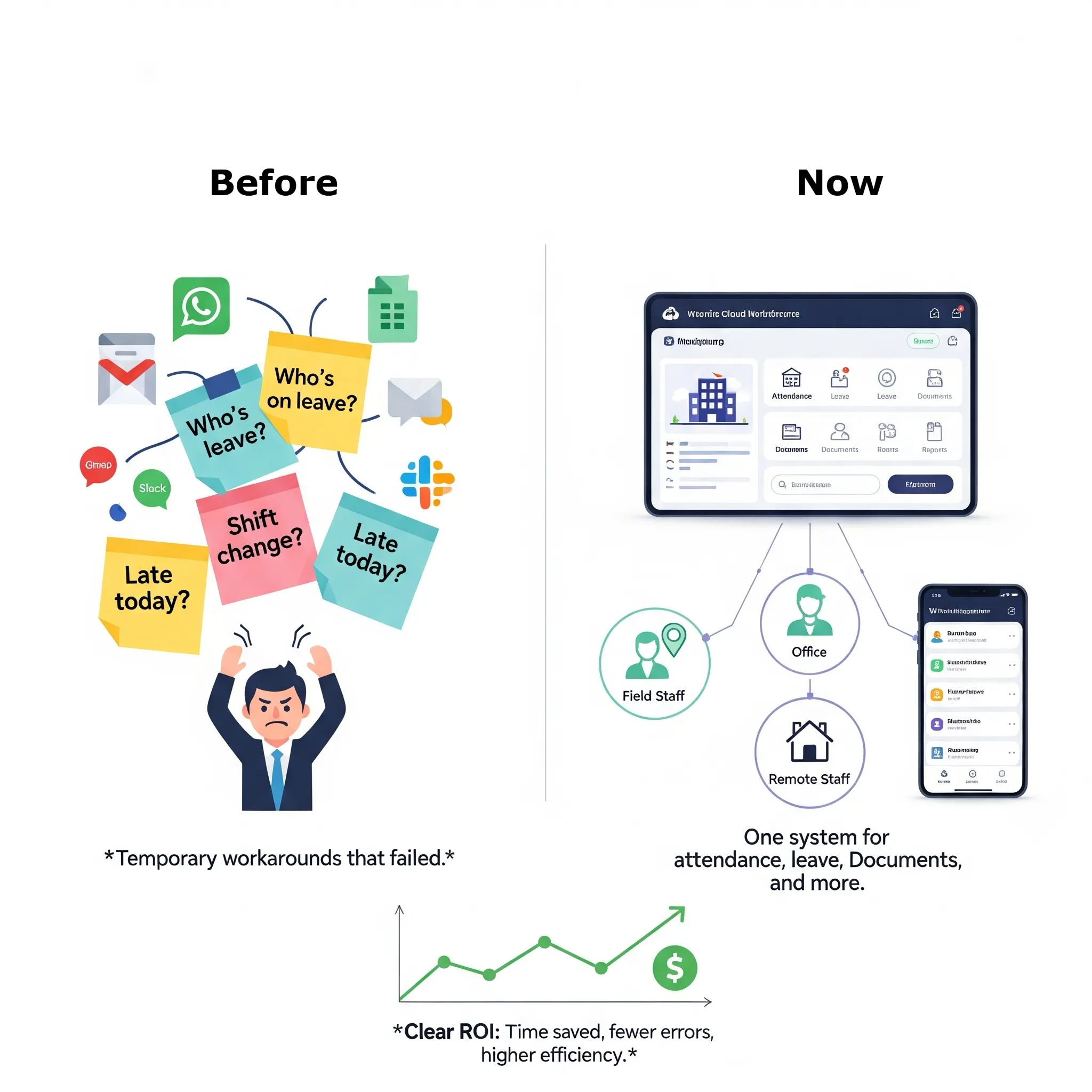
After trying out all the various methods like WhatsApp, Shared Google Sheet, Gmail Chat, and Slack, we found that cloud workforce management tools were the most reliable, long-term solutions to replace these temporary workarounds.
All employees, irrespective of where they work from: office, field or home, could log in, apply for leave, update work-related documents, stay updated on company policies, stay informed about team absences or daily spending at work, and do a lot more.
Interestingly, the few employees who had been cynical about our decision to switch to a SaaS workforce management software, dismissing it as ‘yet another system,’ ended up liking this one. They appreciated the mobile app, the instant notifications, and the fact that they wouldn’t be constantly bothered by HR for updates or the other way around.
The biggest relief for the managers was not having to remember every detail their team reported, like half-day leaves, shift changes, or late arrivals.
What sealed it for me was the ROI. Looking at the cost of workforce management software against the hours saved and errors reduced, the return on investment was very obvious.
Final Reflection
If I had known how much time and stress a switch to cloud workforce management software in India would save, I’d have done it years earlier. What felt like a complicated decision at the start now seems like the most obvious move we could have made.
At the very core, what I’ve learned is that a complete transformation of your workplace doesn’t come as a revolution. It comes through the right workforce management software.
If better visibility, fewer mistakes, and organised processes sound like what your workplace needs, cloud workforce management software is the way forward.
FAQ
What is cloud workforce management software?
Cloud workforce management software is a SaaS-based HR solution designed to bring order and visibility to everyday work. From tracking attendance, leave, shift scheduling, and payroll, it handles all routine workforce operations along with bringing together people, processes, and time so that organisations run more predictably and fairly.
How is cloud workforce management different from traditional HR systems?
Traditional HR tools are mostly on-premise, which means they are installed on particular systems and can be accessed only from there. On the other hand, cloud workforce management software runs on the internet and, therefore, is accessible to any system from anywhere. Also, they are easier to scale, can be made available for remote access for hybrid teams, and require no heavy IT infrastructure to maintain.
How do I choose between different workforce management software companies?
The best way is to look at a workforce management software comparison. By reviewing how different companies handle attendance, payroll, leave, and shift management, you can see which provider offers the right balance of features, usability, and value for your organisation.
What is the cost of cloud workforce management software?
The cost of workforce management software can vary greatly depending on the service provider, your company's size, and the features being opted for. Most SaaS-based models charge per module. Mewurk offers custom pricing along with a free trial period where you can explore all features firsthand and get convinced of the value before committing.

Most Popular Post
Why Accurate Attendance and Leave Management Matters for Business Growth?
Read More →Why Accurate Attendance and Leave Management Matters for Business Growth?
How To Leverage Attendance Data For Better Workforce Management?
Read More →How To Leverage Attendance Data For Better Workforce Management?