Our 5 Best Workforce Management Software Picks for 2025
In 2025, how efficient your workforce is, how well their individual and team contributions align, and how smoothly your day-to-day business operations run, all depend on one critical factor. Whether you are using the best workforce management software.
Nonetheless, it is very surprising that too many businesses still rely on disconnected tools. One for attendance, another for shift planning, and a third for payroll. Sure, they may get the job done, but at what cost? Understanding this very challenge, we have compiled this list of the 10 best workforce management software.
These platforms put everything in one place. That means you won't need to use many different systems or do things by hand anymore.
What Is a Workforce Management Solution?
Workforce Management (WFM) solution would mean a software platform designed with the core goals of coordinating when, where, how and how long employees work. So, essentially, HR teams can handle multiple employee operational aspects like attendance tracking, shift scheduling, leave management, and real-time workforce allocation by depending on these tools. What can one expect to find in the best workforce management software? Find out below:
- Employee scheduling: Automated optimal scheduling of shifts for employees based on their availability, workload and business demands.
- Time tracking: Among workforce management tools, time tracking software is a which helps monitor employee work hours and keep precise attendance records.
- Payroll automation: There is a close link between how long employees work and how much they get paid. Payroll integration is therefore an inseparable thing in workforce optimization.
- Compliance management: To verify and ensure that labour laws are correctly followed and to match operations with the predefined policies of the company and standards of the industry, you would need a proper compliance tracking mechanism in your workforce management tool.
- Employee self-service: ESS Portal lets workers apply for leave, check attendance, and update their personal info without needing to go through HR every time.
- Performance analytics: Modern cloud-based workforce management software is equipped with AI-powered performance analytics that offer quick insights into workforce productivity.
- Mobile accessibility: Managers and employees can access the best workforce management software on their mobile and enjoy key features like shift schedules, attendance logs, and leave status anytime, anywhere.
- Integration capabilities: Using a scalable workforce management system, businesses can integrate it with payroll, HR systems, and other business tools to keep everything in sync and reduce duplicate work.
- Leave management: Just like time and attendance tracking, a leave management system is also an integral capability of forward-looking workforce optimisation tools. You can have it to track different leave types, balances, and approval workflows.
- Task automation: Task automation is one of the most sophisticated benefits of workforce management software these days. It can handle your repetitive admin tasks like attendance reconciliation, shift notifications, and leave updates.
How Did We Select the Best Workforce Management Software?
It was very important for us to see to it that our selection of the five best workforce management software met varied business needs. Hence, we did the shortlisting, sticking to these five key criteria:
- Feature Set: Each software we selected offers a strong set of tools for scheduling, payroll, attendance tracking, and analytics.
- Ease of Use: We looked for platforms with interfaces that are easy for both HR teams and employees to navigate without much effort.
- Scalability: The software needed to work just as well for small teams as it does for growing or large-scale organisations.
- Integration: We gave higher value and priority to tools that could connect with existing HR, payroll, and time-tracking systems to avoid extra manual work during the migration.
- Customer Support: We only included software that offers responsive support, clear documentation, and helpful onboarding or training resources.
5 Best Workforce Management Software for HR Leaders in 2025
Here is a breakdown of 5 workforce management software examples which are shaping employee coordination efforts for businesses in 2025.
Mewurk
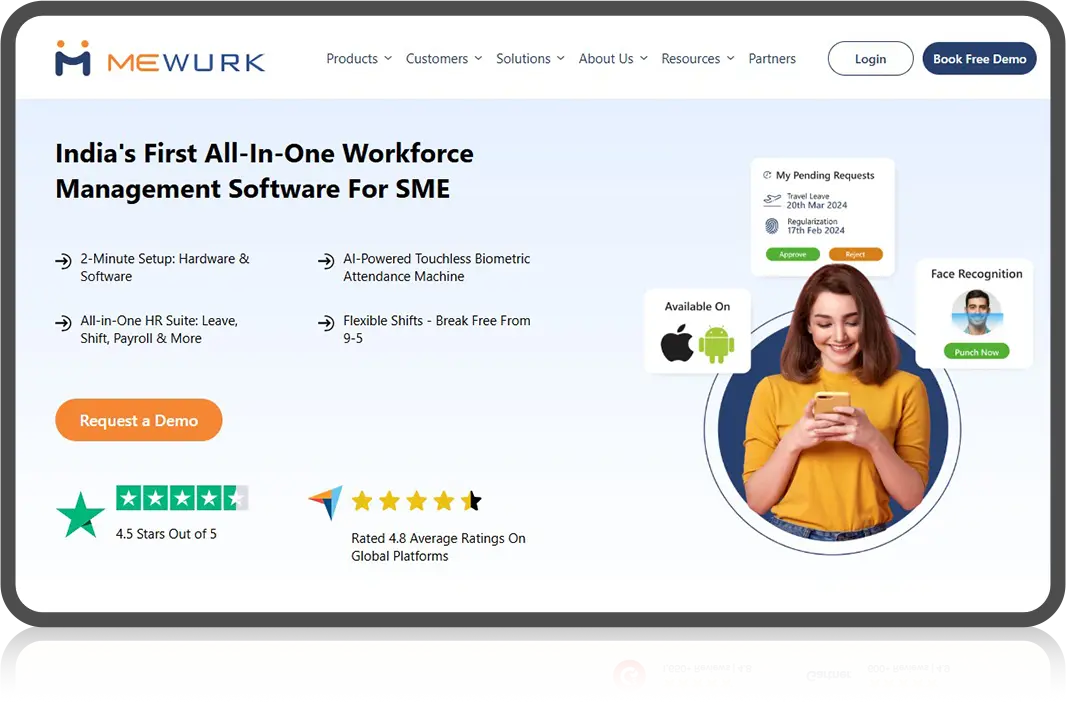
Mewurk can undoubtedly be regarded as the best workforce management software that puts HR at the forefront. Built from the ground up to solve day-to-day HR challenges, it is capable of covering attendance, shift planning, payroll, compliance, and analytics in its all-in-one platform. Its thoughtful design reflects real feedback from HR teams. You won’t find any bloated features or unnecessary clutter.
- Built-in biometric attendance tracking and real-time sync
- Visual shift planner with drag-and-drop scheduling
- Direct link between work hours and payroll calculations
- Full leave management, including approvals and balance tracking
- Task automation for daily HR admin work
- Integration-ready with existing HRMS or third-party tools
- Intuitive dashboards and performance analytics for managers
Ideal For
- Mid-sized to large enterprises with distributed teams
- HR teams looking for a unified attendance + payroll + shift tool
- Companies needing specific compliance (PF, ESI, etc.)
- Managers who want visibility without micromanaging
Price: Custom pricing based on business needs. No unnecessary bundles or rigid plans.
Deputy
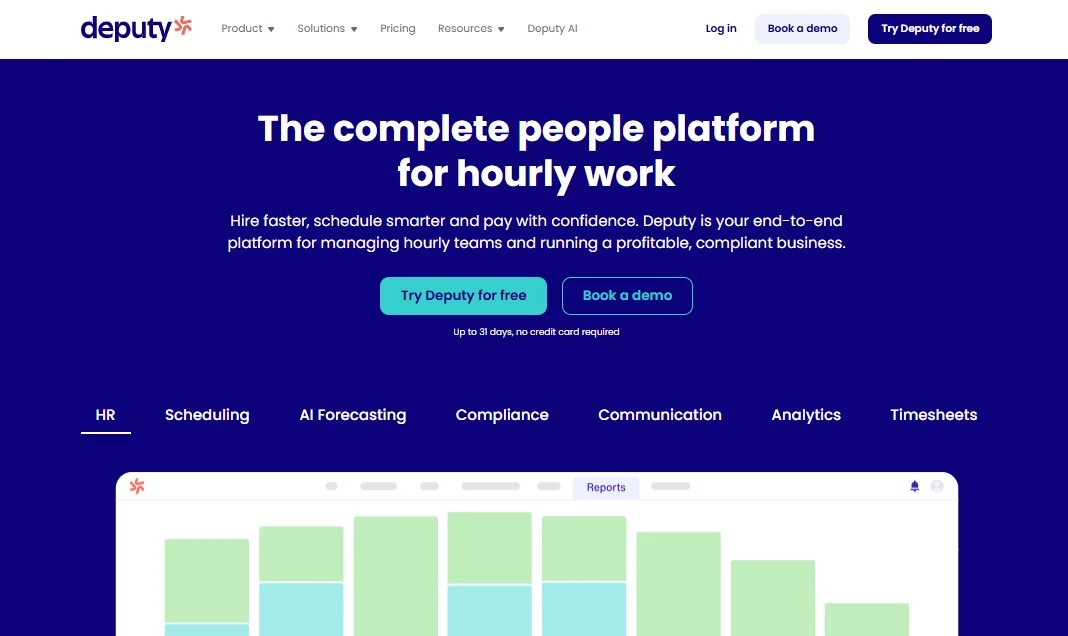
Deputy is a modern, cloud-based workforce management platform designed specifically for teams with hourly workers and shift-based schedules.
Instead of trying to be everything to everyone, Deputy focuses on what operations managers actually need every day. That is, smart scheduling, reliable time tracking, keeping labour costs under control, and staying connected with the team.
With AI-powered forecasting and smart scheduling employee features, Deputy helps you build compliant, cost-effective schedules in minutes.
What really makes Deputy stand out is how it connects your labour data with your business. By syncing with your POS and payroll systems, Deputy gives you a live view of how much you're spending on labour compared to what you're bringing in.
It's this frontline-first mindset that's made Deputy the go-to choice for hospitality, retail, healthcare, and franchise businesses around the world.
Key Features:
- AI-driven forecasting and scheduling that matches staffing levels with customer demand.
- Visual, drag-and-drop scheduling across multiple locations.
- Real-time labour cost tracking and wage compliance
- Built-in team messaging for quick announcements and shift coverage requests.
- Seamless connections with your payroll, HR, POS, and accounting software
Ideal For:
- Hospitality, retail, healthcare, and service businesses running on hourly or shift-based teams
- Multi-location and franchise operators who need a single view across all their sites
- Growing businesses looking to cut labour costs without drowning in admin work
Pricing: Deputy offers flexible, per-user per-month pricing with different tiers starting at ₹452 with the Lite plan. For advanced features business can also opt for Pro plan at ₹904 per user per month.
Keka
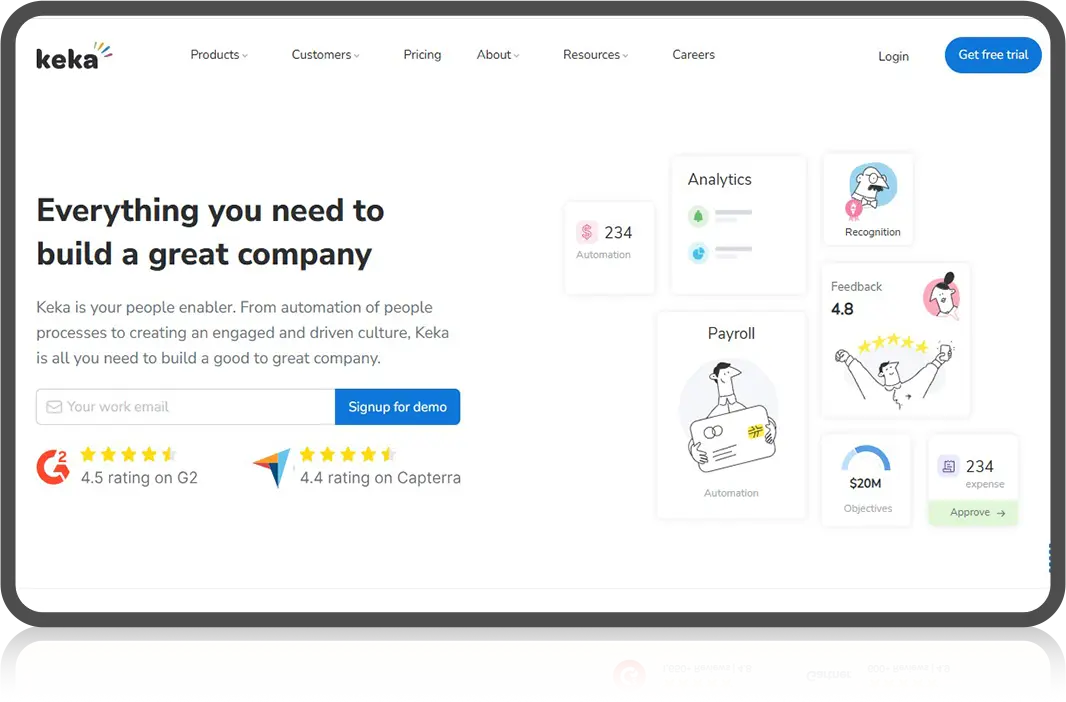
Keka is a cloud based HR software platform which is bundled with a number of capabilities, such as payroll, workforce scheduling solutions, real-time workforce analytics, and absence management, among others. Most users praise its clean design, strong automation, and solid support team.
Key features
- Web, mobile, and biometric time tracking
- Automated payroll with tax and compliance
- Employee self-service for leave, payslips, and profile updates
- Performance management, including goals, 1:1s, and reviews
- Recruitment features like ATS and interview scheduling
- Attendance validation via GPS or selfies
- Open API to link with accounting, HR, or other systems
Ideal for:
Small to mid-size businesses seeking end-to-end HR coverage
Pricing: Keka workforce management system pricing starts at ₹89–₹99 per employee per month when billed annually.
HROne
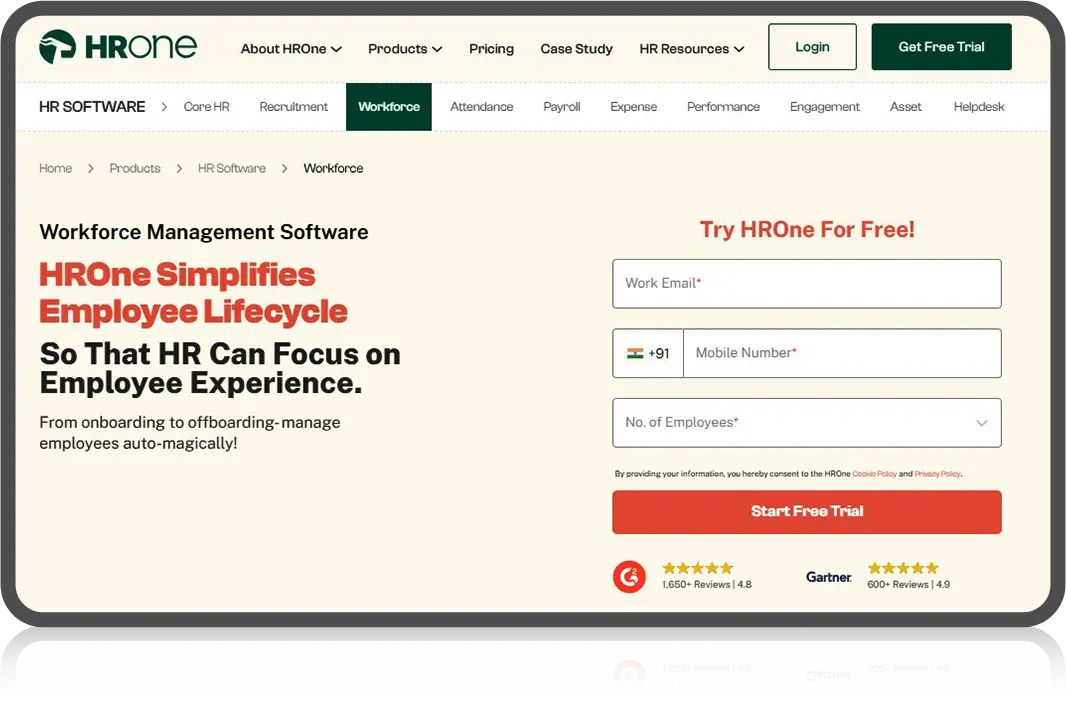
A well-deserving contender among the best workforce management software for businesses in 2025, HROne caters to about 400,000 people in India across tiny start-ups to big factories. The system hosts various capabilities and tools like shift planning software, labour management system, team scheduling app, demand forecasting, payroll, recruiting, leave, expenses, performance, and more. It has a mobile-first layout and friendly buttons.
Key Features
- Punch in with geo-tagging, selfies, and fingerprint scans
- Run payroll each month, conforming to accurate tax and PF rules.
- Get payslips, check leave, and update personal info through the self-service portal.
- Advanced ATS to manage hiring; straightforward tools to handle onboarding, and offboarding
- Serves as a hub to set goals, track progress, and gather 360° feedback
- Submit expense claims, track company assets, and fill help-desk tickets.
- Simple analytics dashboards let viewing compliance scores and key HR metrics
Ideal For:
- Indian firms that want mobile-based workforce management tools and require strong attendance and payroll integration.
- Mid-sized to large enterprises looking for diverse HR features in one spot.
Pricing: Plans begin at ₹4,950 a month for 50 users, with an extra ₹99 for each additional user.
Zoho People
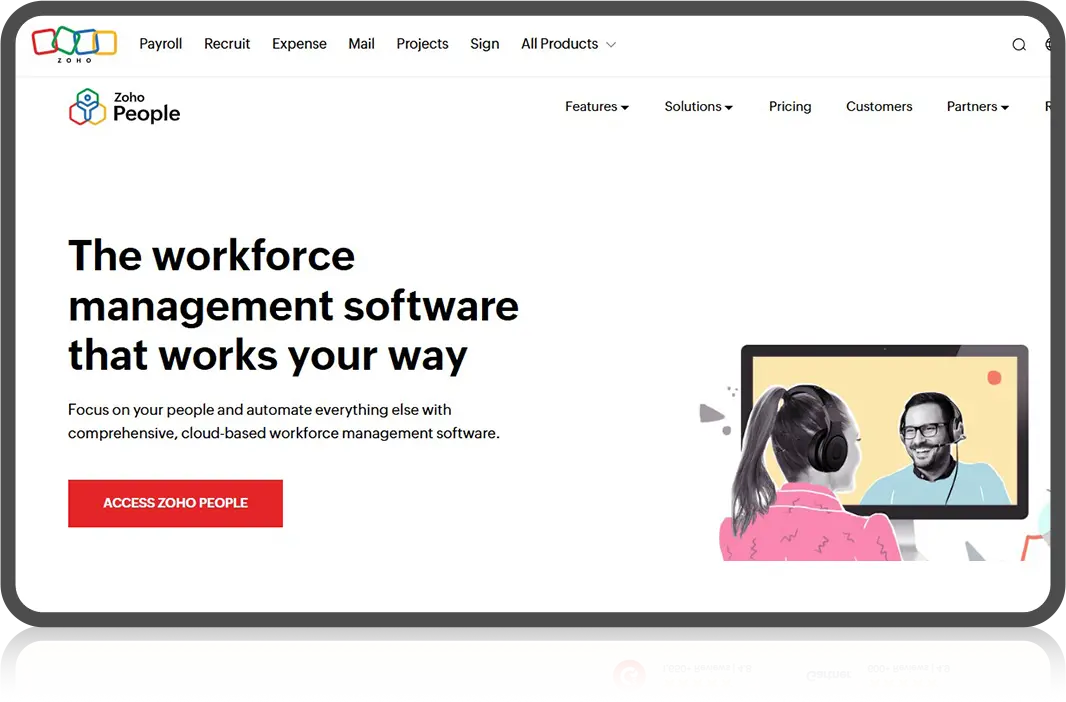
Zoho People is an easy-going HR tool that more than 750,000 companies - now including cafes, start-ups, and larger firms - rely on to keep their employee records straight, check attendance, track time off, and grade performance.
Key Features
- Central employee folder for onboarding, document storage, and leave requests
- Attendance log through web, mobile, face scans, or custom shifts
- Timesheets, pay-rate rules, overtime hours, and step-by-step approvals
- Performance planning with goals, 360-degree feedback, salary insights
- Mobile app and HR helpdesk answer questions anytime, anywhere
- SCORM-ready e-learning and Zia-AIs built-in analytics and alerts
Ideal for
Small or mid-size firms that want a full, flexible HR system as they grow. Teams already using other Zoho tools and craving one-click connections.
Pricing: Plans start at ₹48 per user/month on the monthly Essential plan.
How Do Workforce Management Tools Differ From HR Software?
For many people, even HR professionals themselves, the question of whether workforce management systems and HR software are the same comes up more often than you would think. To clear things up, here’s a simple table showing the key differences. It breaks down what WFM tools and regular HR software focus on, what they are designed to handle, and when each one is usually used in real-world situations:
Workforce Management System Vs HR Software Comparison Table
| Differential Aspect | Workforce Management (WFM) Tools | HR Software |
|---|---|---|
| Focus | Managing day-to-day workforce operations | Managing employee lifecycle and HR records |
| Primary Users | Operations, HR managers, team leads | HR departments, recruiters, payroll admins |
| Key Functions | Attendance, shift scheduling, time tracking, task allocation | Recruitment, onboarding, employee records, performance reviews |
| Time & Attendance | Central function - often with biometric or GPS integration | Available, but usually not as detailed or real-time |
| Payroll Integration | Links directly to hours worked for pay calculation | Focuses on salary structure, tax compliance, benefits setup |
| Scheduling Capabilities | Advanced - includes shift planning, workload balancing, conflict checks | Basic or absent in most general HR software |
| Compliance Tracking | Monitors labour law rules like working hours, breaks, and overtime | Focuses on statutory compliance (taxes, PF, ESI, etc.) |
| Real-Time Monitoring | Yes - often includes dashboards for daily workforce visibility | Limited real-time tracking |
| Use Case Fit | High-volume, shift-based, or field-based teams | Office-based or hybrid teams focused on HR processes |
| Integration Scope | Often integrates with payroll and HRMS | Often includes or integrates WFM modules |
Wrapping Up
We really hope this quick rundown of the five best workforce management software pointed you in the right direction. When you pick a tool, think about today but also where your team might be six months or a year from now. The goal is more than cutting hours off routine work; you want something that frees HR to think big, not just the tick boxes.
Is yours a small-to-medium-sized business which requires easy-to-scale and free workforce management software? Then Mewurk is a great choice worth considering. Designed with a user-friendly dashboard, built-in compliance checks, and friendly customer care help features, it is helping fast-growing teams to stay on track. Why not book a demo and see firsthand how Mewurk can make your people management hold up when nothing else does.
FAQ
What are the benefits of workforce management software for small businesses?
Small businesses don’t have the luxury of big HR teams. Workforce management software helps them big time. Tools like Mewurk make scheduling, tracking work hours, keeping compliance and doing payroll much easier. This means they are making smart use of limited resources, saving money and getting more done.
Which are the best workforce management software companies in India?
It depends on your business needs. For some companies, what they need could be simple workforce scheduling software, whereas for others with broader needs and growing teams, Mewurk is the best option thanks to its complete workforce management features, including payroll, compliance, and resource planning.
Is there any difference between on-premise vs cloud solutions for workforce management?
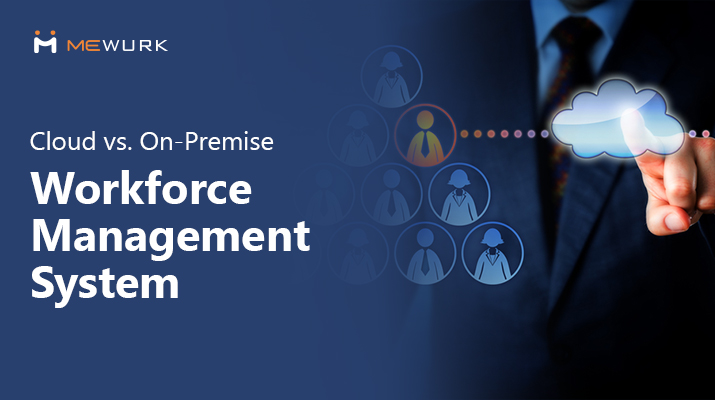
Yes. On-premise resource planning software is installed and maintained on your own servers with more control, whereas cloud-based workforce management systems are hosted online, which means they are easy to access and have lower maintenance needs.
How does a workforce management system benefit retail businesses?
Retail businesses can automate their tasks which have a repetitive nature, for instance, scheduling shifts for staff, time tracking, and payroll processing. A good retail workforce management software like Mewurk can be a real boon to these businesses to have better visibility and control over their entire workforce.

Most Popular Post
Why Accurate Attendance and Leave Management Matters for Business Growth?
Read More →Why Accurate Attendance and Leave Management Matters for Business Growth?
How To Leverage Attendance Data For Better Workforce Management?
Read More →How To Leverage Attendance Data For Better Workforce Management?