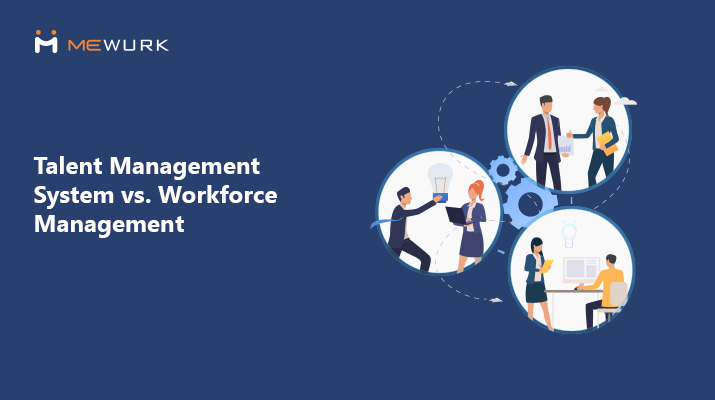
Talent Management System vs. Workforce Management System: What’s the Real Difference?
There are a lot of HR tech tools out there. And it doesn’t help that most of them sound vaguely alike. Talent Management System. Workforce Management System. Human Capital Management System. People platforms.Employee experience. Somewhere in the fog, someone is trying to sell you a dashboard.
But not all tools are built for the same purpose. Some are meant to help you hire and grow employees. Others exist to keep track of whether they showed up to work, took leave, skipped a shift or clocked out on time. Two of the most commonly confused systems are Talent Management Systems (TMS) and Workforce Management Systems (WFM).
The difference between them isn’t entirely semantic, but structural too. One is built for strategy. The other is built for operations.
And if you’re running a business, mistaking one for the other is a good way to spend money solving the wrong problem. Let’s break down what each system does, where they intersect, and how to figure out which one you actually need.
What Is a Talent Management System?
Good: Helps grow, develop, and retain people.
Bad: Doesn’t solve operational issues.
Role: Long-term strategy.
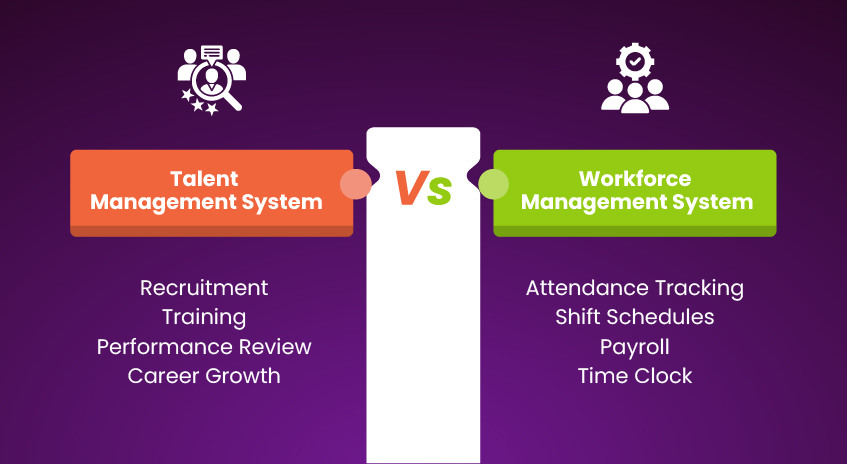
A Talent Management System is built around a single idea: your people are an asset worth investing in. These systems focus on the employee lifecycle, everything that happens from the moment a candidate applies to the day they (hopefully) become a leader. Core modules include:
- Recruitment and applicant tracking
- Onboarding
- Performance reviews
- Learning and development
- Succession planning
- Engagement and feedback tools
Therefore, in theory, the talent management system's meaning comes down to HR teams creating a structure around growth. You can map career paths, set up 360-degree feedback loops, track high-potential employees, and build a training pipeline. It’s the kind of system you’d expect a mid-sized or enterprise company to implement when they’re thinking about scaling thoughtfully.
But there’s a downside, though. TMS platforms work best only when the operational groundwork is solid. If your business is still struggling with basic attendance, unapproved leaves, or inconsistent shift coverage, then pouring money into employee development tools might feel a bit like repainting the walls of a house while the plumbing is leaking.

What Are Workforce Management Systems?
Good: Helps with the daily operations of a business
Bad: Doesn’t help you much if you want to know who’s ready for promotion.
Role: Operational backbone.
Workforce management systems do something more grounded than what talent management software could do. They help you answer questions like:
- Who came in today?
- Who’s on leave?
- Who’s working the night shift?
- Is the overtime really necessary?
- Is payroll accurate?
Core features usually include:
- Time and attendance tracking
- Shift scheduling
- Leave and holiday management
- Real-time workforce analytics
- Integration with payroll systems
On the surface, an online talent management system might seem like a glamorous side of HR software, while WFM handles the unglamorous day-to-day processes. It’s not going to help you write a glowing performance review or track someone’s competency in “strategic thinking.”
What it does do is keep the lights on. WFM tools are especially valuable in shift-based environments, factories, retail chains, field staff, logistics, where knowing who is physically where matters more than who might become the team lead next quarter.
But there is also something worth noticing here. Even in desk-based offices, bad workforce management can cause issues. Time theft. Buddy punching. Attendance fraud. Misaligned shifts. Payroll errors.
You can’t underestimate them as minor annoyances. They can breed real challenges like distrust. And no performance management tool is going to fix a team that’s frustrated because they didn’t get paid correctly.
Talent Management System vs. Workforce Management: Where They Overlap?
You might assume that talent management solutions and WFM systems would merge into one master HR platform. Some vendors try. But in practice, it rarely works that cleanly. They operate in different planes:
| Feature | Talent Management System | Workforce Management System |
|---|---|---|
| Focus | Growth and development | Daily operations |
| User | HR leaders and strategists | HR admins, team leads and employees |
| Data type | Skills, goals, reviews | Time, shifts, attendance |
| Primary value | Employee retention | Workforce efficiency |
| Best suited for | Mid to large companies | All sizes, especially shift-based work |
| ROI timeline | Long-term | Immediate |
Some features might look adjacent, say, performance reviews vs. productivity logs, but they’re built for different objectives. One helps you decide who deserves a promotion. The other helps you figure out if someone’s actually working.
What Comes First: A Talent Management System or WFS?
In most cases, workforce management systems come first. Not because talent management systems aren’t important, but because mismanaging the basics will kneecap your HR efforts before they start.
If your shift rosters are wrong, your leave requests are going unanswered, and people are punching in for their friends, you have an operational fire. Trying to install a talent management layer on top of that is like setting goals for a marathon while your foot’s still broken.
You need clean, reliable workforce data before you can make long-term people decisions. And that’s exactly what WFM software gives you: clarity. It tells you who’s doing what, when, and where. Once that’s sorted, then yes, by all means, start looking at talent acquisition and retention, skill development and career paths.
The Case of the Overambitious SME
Here’s a common scenario: a mid-sized business decides it’s ready to “professionalise” HR. Maybe there’s been some attrition. Maybe someone attended an HR tech webinar. Suddenly, they’re shopping for talent management software.
They watch flashy talent management system PPT presentations and spend money on a premium platform with performance review templates, AI-powered engagement surveys, and personalised learning tracks. Meanwhile, they have the attendance logs still on Excel. Their managers need to do the shift scheduling manually every week. The payroll errors won’t go away either.
And now here is another addition to talent management system examples, which no one is using. Not because it’s bad, but because the foundations were never there. The classic Pavlovian disconnect. People won’t chase growth paths when they don’t even know how many paid leaves they have left.
If that sounds familiar, don’t panic. Start with workforce management. Once people start trusting the system, you can build on it and then introduce them to a new talent management system login without resistance, confusion, or rolled eyes.
Can Talent Management System and WFM Work Together?
Yes, and when done well, they absolutely should.
A good Workforce Management System gives your Talent Management System the raw data it needs. For instance, if someone consistently misses shifts or logs poor attendance, it might factor into a performance review. If someone is taking on extra hours, that might show initiative.
But none of that is possible if the WFM system isn’t clean and accurate. Garbage in, garbage out.
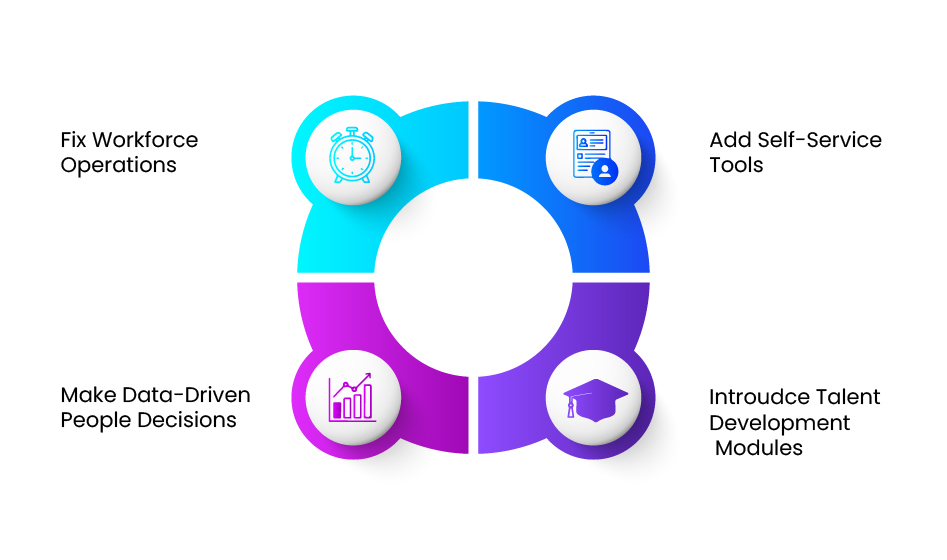
That’s why businesses that scale HR tech successfully often sequence their tools:
- Fix workforce operations
- Introduce self-service tools
- Layer on employee development tools and performance modules
- Use real data to inform talent decisions
You don’t have to pick sides. You just need to get the order right.
Final Thoughts
A Talent Management System helps you grow people. A Workforce Management System helps you manage them. They solve different problems, and confusing the two won’t do you any favours.
Here’s the simplest way to understand it. Talent management is like planting a tree. Workforce management is like watering it every day. If you skip the second part, don’t be surprised when the tree dies.
If your business is still figuring out the basics like time tracking, shift planning, or leave requests, you don’t need a talent platform. You need something your frontline touches every day and fixes the foundation first. And if you’re looking for a Workforce Management System that can do exactly that reliably, accurately and without the jargon, maybe it’s time we talked.
FAQ
Can a business use both a Talent Management System and a Workforce Management System together?
Yes, and they often should. While a Workforce Management System can help you deal with day-to-day tasks like attendance, shifts, and payroll, a modern TMS like Oracle Talent Management System will equip you to give your attention to employee growth and leadership development. Together, they create a complete HR ecosystem.
Which system should a company implement first - WFM or talent learning management system?
It is recommended for a company to invest first in a workforce management system. Without fixing the foundational issues like time tracking or shift scheduling, any further investment, like introducing a talent management system login may fall flat.
Can Talent Management Software improve employee retention?
Yes. Talent management systems can help design realistic career paths for employees. The key elements of a talent management system include feedback, training opportunities, and engagement tools. With these capabilities, a TMS can guide employees to meaningful growth opportunities.
What’s the main difference between Talent Management and Human Capital Management (HCM)?
Talent Management is a critical pillar in workforce/employee management. It focuses specifically on employee growth and development. Things like training, skill development, succession planning, etc. On the other hand, HCM is a much broader umbrella. It touches on talent management, plus other HR functions like payroll, compliance, and benefits administration.

Most Popular Post
Why Accurate Attendance and Leave Management Matters for Business Growth?
Read More →Why Accurate Attendance and Leave Management Matters for Business Growth?
How To Leverage Attendance Data For Better Workforce Management?
Read More →How To Leverage Attendance Data For Better Workforce Management?