Summary
This comprehensive guide answers the 25 most common questions about the PF contribution rate in India. Learn the latest employer and employee contribution rates, EPS breakup, wage limits, penalties, exemptions, and compliance rules, along with practical examples.
Ask ten HR managers what the employer PF contribution rate is, and you will likely get ten slightly different answers. It is confusion that costs Indian businesses money in the form of penalties and payroll corrections.
If you run payroll, manage compliance, or own a small business in India, you have probably typed "PF contribution rate" into Google at least once before a filing deadline. This blog answers the 25 questions that come up most often, with numbers you can verify and use.
What Is PF Contribution Rate? A Quick Definition
The PF contribution rate is the percentage of an employee's basic salary plus dearness allowance that both the employer and employee must deposit into the Employees' Provident Fund every month.
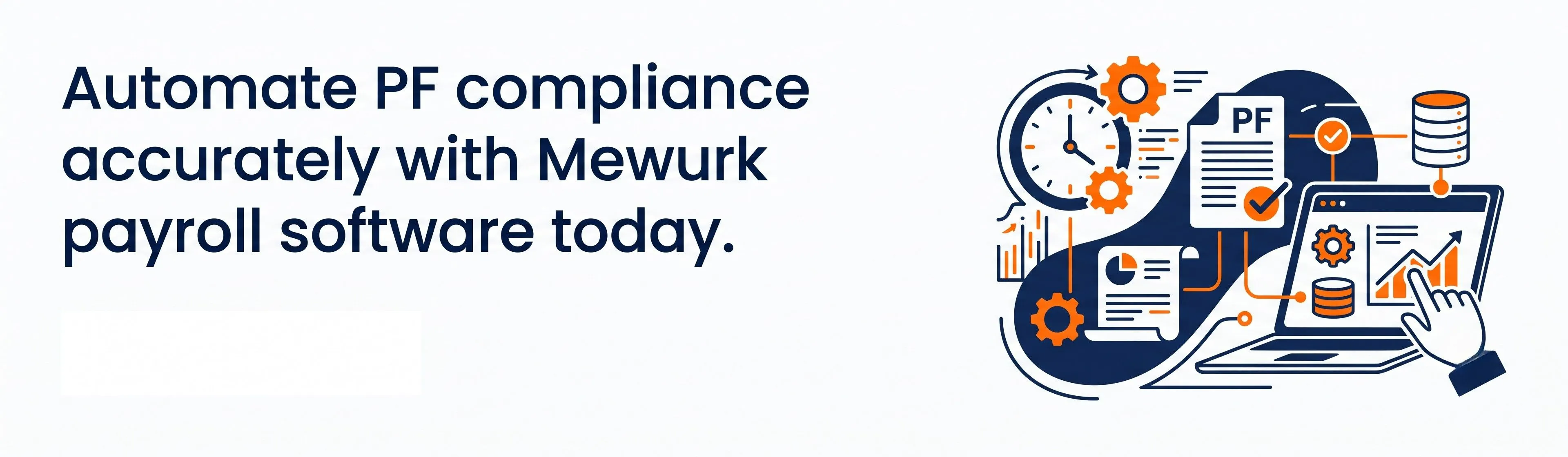
As of FY 2026-27, the standard PF contribution rate stands at 12% from the employee and 12% from the employer. It is calculated on basic wages plus DA. The scheme is run by the Employees' Provident Fund Organisation (EPFO), which comes under the Ministry of Labour and Employment.
One of the biggest hurdles for new HR professionals is understanding how the employer's provident fund contribution works. It is easy to assume that the employer's 12% share goes into the exact same account as the employee's deduction, but this is a misconception.
In Indian payroll, the employer's 12% is actually divided across three separate accounts. Because this process is not straightforward, you can easily end up misallocating these funds, which can then surface as a compliance error.
Quick Snapshot: PF Contribution Rate at a Glance
- Employee contribution: 12% of basic salary + DA (fully credited to EPF)
- Employer contribution: 12% of basic salary + DA (split across EPF, EPS, and EDLI)
- Wage ceiling for EPS calculation: ₹15,000 per month
- Reduced rate for small establishments: 10% (under 20 employees, or notified distressed industries)
- Current EPF interest rate: 8.25% per annum for FY 2025-26
PF Employer Contribution Rate Breakup: Where Does the Money Go?
This specific topic generates more confusion across payroll departments in India. While the PF employer contribution rate is a flat 12%, it is not deposited as a single lump sum. Instead, the Employees' Provident Fund Organisation (EPFO) rules require this 12% to be split into distinct parts.
Every HR professional and payroll administrator needs to understand this breakdown completely to avoid processing errors.
| Component | Rate | Wage Base | Purpose |
|---|---|---|---|
| EPF (Provident Fund) | 3.67% | Basic + DA | Employee's retirement savings |
| EPS (Pension Scheme) | 8.33% | Capped at ₹15,000/month | Future monthly pension |
| EDLI (Insurance) | 0.50% | Capped at ₹15,000/month | Life insurance for nominee |
| EPF Admin Charges | 0.50% (min ₹75/month) | Basic + DA | EPFO operating cost |
| EDLI Admin Charges | Currently nil (was 0.01%) | Capped at ₹15,000/month | Insurance admin |
So when someone asks what is the current employer PF contribution rate in real cash terms, the honest answer is closer to 13% of payroll once you add admin charges, not a flat 12%. Many founders budget only for the headline 12% and get an unpleasant surprise come audit season.
Worked Example
Say an employee earns ₹15,000 as basic salary plus DA, the statutory wage ceiling figure.
- Employee contributes: 12% of ₹15,000 = ₹1,800 (all goes to EPF)
- Employer contributes: 12% of ₹15,000 = ₹1,800, split as:
- EPF: 3.67% = ₹550.50
- EPS: 8.33% = ₹1,249.50
- Total credited to the employee's EPF account each month: ₹2,350.50 (₹1,800 employee share + ₹550.50 employer EPF share)
Notice that most of the employer's money goes into the pension pool instead of the savings account. Employees do not notice this until they check their UAN passbook and wonder where the rest of the employer's money went.
What Is the Current PF Contribution Rate of an Employer? Full Breakdown by Salary Band
The latest PF contribution rate does not change much year to year, but how it applies to your payroll depends on whether the basic salary crosses ₹15,000.
When Basic Salary Is Below or Equal to ₹15,000
PF is calculated on the actual basic salary plus DA. Both EPF and EPS contributions apply on the full figure; no capping needed.
When Basic Salary Exceeds ₹15,000
Only the employer is legally required to contribute based on the ₹15,000 limit for the EPS part. The EPS amount in this case stays fixed at ₹1,250 per month irrespective of how high the salary goes. The leftover employer contribution that would have gone to EPS goes into the EPF account instead. This is good news for higher earners because their EPF balance increases faster.
Voluntary Higher Contribution
Some employers choose to calculate PF on the full actual salary rather than stopping at the ₹15,000 limit, using it as an extra benefit to keep employees. This is entirely optional, and several larger companies do it to make their compensation packages look better without raising the visible CTC number too much.
PF Contribution Rate FAQs
1. What is the PF contribution rate?
PF contribution rate is the fixed percentage, 12% for both employer and employee, of basic wages plus DA that must be deposited monthly into an employee's Provident Fund account under EPFO rules.
2. What is the PF employer contribution rate?
The employer PF contribution rate is 12% of the basic salary plus DA. It is split between EPF (3.67%), EPS (8.33%, capped at ₹15,000), and a separate 0.5% for EDLI insurance.
3. Is the PF contribution rate the same for every company in India?
No. Companies with fewer than 20 employees, along with certain specific industries like jute, beedi, brick, coir, and guar gum factories, can use a lower 10% rate for both the employer and employee.
4. Can an employee opt out of PF?
Only if they are a brand new worker earning more than a ₹15,000 basic salary and have never been an EPF member before. Once you enroll, you cannot leave the system while you keep working. It doesn't matter how much your salary increases later.
5. Is PF mandatory for all employers?
Yes, once a company reaches 20 employees at any point in its history, EPF registration becomes mandatory. Once EPF registration is done, this cannot be undone, even if the number of employees drops below 20 later.
6. What happens if the employer deducts its own PF share from the employee's salary?
This is illegal. The Employees' Provident Funds and Miscellaneous Provisions Act, 1952 strictly forbids employers from taking their required share out of the employee's pay. Doing this is a punishable offense.
7. What is the PF contribution rate for new female employees?
Women who join the workforce for the first time get a lower employee contribution rate of 8% for their first three years of work. The employer still contributes the regular 12%. This was introduced to help keep women in the workforce and give them more take-home pay early in their careers.

8. Does the EPS portion ever earn interest?
No. EPS is a pure pension scheme funded completely by the employer's contribution. It does not grow with interest the way the EPF part does.
9. What is the wage limit used for PF calculation?
₹15,000 per month is the official wage limit used specifically to cap the EPS part of the employer's contribution. People have talked about raising this limit to ₹21,000, but as of right now, it stays exactly the same.
10. How is the pension amount calculated under EPS?
The EPFO uses the formula:
Pension = (Pensionable Salary × Pensionable Service) / 70.
So an employee with a pensionable salary of ₹15,000 and 30 years of service would receive roughly ₹6,428 per month, a figure that surprises many employees who expect a much larger payout.
11. By when must PF be deposited each month?
Employers must deposit both shares by the 15th of the following month. If you miss that date, Section 7Q applies, and you will be charged 12% annual interest from the due date until the day you pay.
12. What is EDLI and why does it matter?
EDLI stands for Employees' Deposit Linked Insurance. It is a life insurance cover funded entirely by the employer at 0.5% of wages (capped at the ₹15,000 limit). It pays out money to a chosen nominee if an employee dies while they are actively working for the company.
13. What is the latest PF contribution rate for FY 2026-27?
It stays exactly the same at 12% for both the employer and employee on basic wages plus DA. This structure has remained steady for several years now, and the EPS cap is still fixed at ₹15,000.
14. Are admin charges part of the PF contribution rate?
Yes, even though people forget about them. The employer pays an extra 0.5% of wages for EPF administrative costs, with a minimum payment of ₹75 per month. This pushes the real cost for the employer closer to 13% of basic wages.
15. Can an employer contribute more than 12%?
No. The employer's mandatory contribution is capped at 12%. Any extra money beyond that has to come from the employee through the Voluntary Provident Fund (VPF) route. The employer cannot match that extra money on their own beyond the legal limit.
16. What counts as basic salary plus DA for PF purposes?
Only the basic pay and dearness allowance parts count. HRA, travel allowances, bonuses, and other allowances mixed into the total CTC do not count toward the PF wage base. This is why the total CTC and the actual salary used for PF calculations look very different.
17. What is the current employer PF contribution rate breakup in percentage terms?
It is 3.67% to EPF, 8.33% to EPS (up to the limit), 0.5% to EDLI, and roughly 0.5% in admin charges. All of this adds up to an actual employer cost of about 13%, compared to the headline 12% rate.
18. Does the PF contribution apply to interns and contract staff?
It depends on how they are hired. Genuine interns doing a structured internship and independent contractors who get paid through a separate vendor invoice usually do not need PF. However, regular employees who are wrongly labelled as permanent contractors on the payroll are still covered.
19. What is the penalty for late PF payments?
On top of the 12% annual interest under Section 7Q, employers must also pay damages under Section 14B. These damages can range from 5% to 25% per year depending on how late the payment is, and repeat offenders can face legal prosecution.
20. Can the PF contribution rate vary between two employees in the same company?
Yes, in specific situations. A newly hired female employee gets a lower 8% rate for three years, while her male coworker contributes the standard 12%, even though they work at the exact same company.
21. Is PF interest taxed?
Interest earned on employee contributions up to ₹2.5 lakh in a financial year is completely tax-free. Any interest earned above that limit becomes taxable for the employee. This rule mostly affects high earners who make large voluntary contributions.
22. How do I calculate the employer PF contribution rate for an employee earning ₹30,000 basic?
The EPS portion still caps at ₹1,250 (which is 8.33% of ₹15,000). The remaining employer contribution of ₹2,350 goes into the employee's EPF account instead. The total money the employer pays stays at 12% of ₹30,000, which equals ₹3,600.
23. What software helps manage PF compliance accurately?
Modern HRMS platforms like Mewurk that have a compliance-ready payroll module will enable you to automatically apply the correct EPS cap, create the monthly ECR file, track UAN-Aadhaar linking, and catch errors easily.
24. Does the PF contribution rate change from state to state in India?
No, the rate is exactly the same all across India because the EPFO is a central government system. What does change by state are other legal deductions like professional tax, which people sometimes confuse with PF when setting up payroll.
25. Will the PF contribution rate increase anytime soon?
There is no official government notice raising the 12% rate or the ₹15,000 wage limit as of mid-2026. While people talk about raising the wage limit, it remains unchanged for now. If you are an employer, keep checking EPFO notices for updates.
How Mewurk Makes PF Compliance Less Painful
Getting the PF employer contribution rate breakup right, month after month, for dozens or hundreds of employees, is not something you can easily do on an Excel sheet.
Mewurk is a cloud-based HRMS built for small and medium businesses. It features a compliance-friendly payroll module which, once configured, will automatically apply the correct EPS cap, split contributions, and create EPFO-ready files without any manual math.
Instead of worrying every time the 15th of the month comes around, you can get accurate ECR files, UAN tracking, and audit-ready records as a regular part of running payroll if you are using Mewurk HR and payroll software.

Wrapping Up
Understanding the PF contribution rate is more than just knowing that both the employer and employee contribute 12%. We hope this blog cleared up the confusion around it.
To explore more on PF compliance in India, check out our detailed blog here.
If you found this helpful, please feel free to pass it along to a colleague.