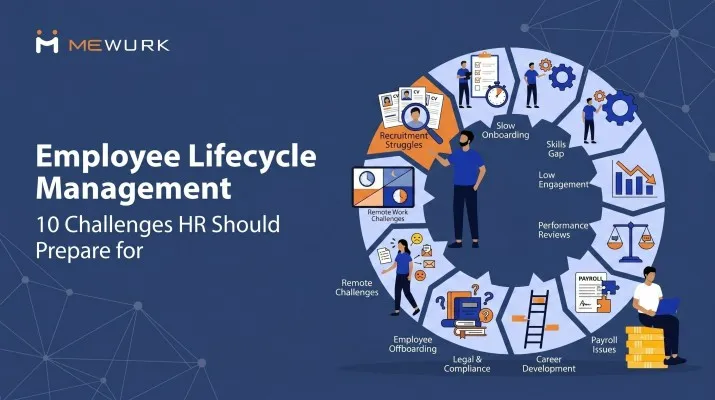
Summary
This guide explores ten common challenges affecting employee lifecycle management, covering areas like hiring, onboarding, engagement and compliance. It further shows how connected HR systems help organisations improve employee experiences and make better workforce decisions.
Managing employees is a lot of work from start to finish. Employee Lifecycle Management is just a formal way of saying you need to look after your staff from the day they apply for a job until the day they leave your company.
Lately, doing this has become much harder for HR teams. Challenges like thin budgets, complicated and lengthy paperwork, and the emergence of new technology and innovation like AI in HR, for instance, make it tricky to keep everyone happy and productive. Here is a basic look at the ten main problems HR faces today in employee lifecycle management and some simple ways to fix them.
What Is Employee Lifecycle Management?
Employee lifecycle management, in simple terms, means taking care of your employees from the day they join or even first hear about your company until the day they quit or retire. It cannot be limited to a single HR task since it spreads to multiple realms in the HR process, such as hiring, training, evaluating their work, keeping them happy and engaged, and letting them go when they wish to in a happy manner.
Employee Lifecycle Management at a Glance
- What it is: An organised approach to managing employees throughout their association with an organisation.
- Who owns it: HR leads it, but managers, IT, payroll, and department heads all play a role.
- Why it exists: Because a candidate's first impression and an employee's last day both shape your employer brand equally.
- What success looks like: Consistent, documented, and measurable experiences at every stage, supported by an employee lifecycle management system.
Why Employee Lifecycle Management Matters So Much Right Now
A few simple numbers show why you need to pay attention to employee lifecycle management in 2026. Research from Gallup shows that only about 21% to 31% of employees around the world care about their jobs. When employees in a company don't care about their job, it will hurt the business. On top of that, teams where employees are unhappy see 18% to 43% more people quitting.
Replacing a worker who leaves is incredibly expensive too. The Telegraph reported that it costs an average of £30,614 to replace just one employee. If it is a manager or a senior role, it costs way more. You will lose all their knowledge and will have to spend ages training someone new.
How the Employee Lifecycle Management Process Works
Most HR people agree that an employee lifecycle goes through six or seven main stages: finding them, hiring them, starting them out, training them, keeping them around, and saying goodbye (plus staying in touch after they leave).
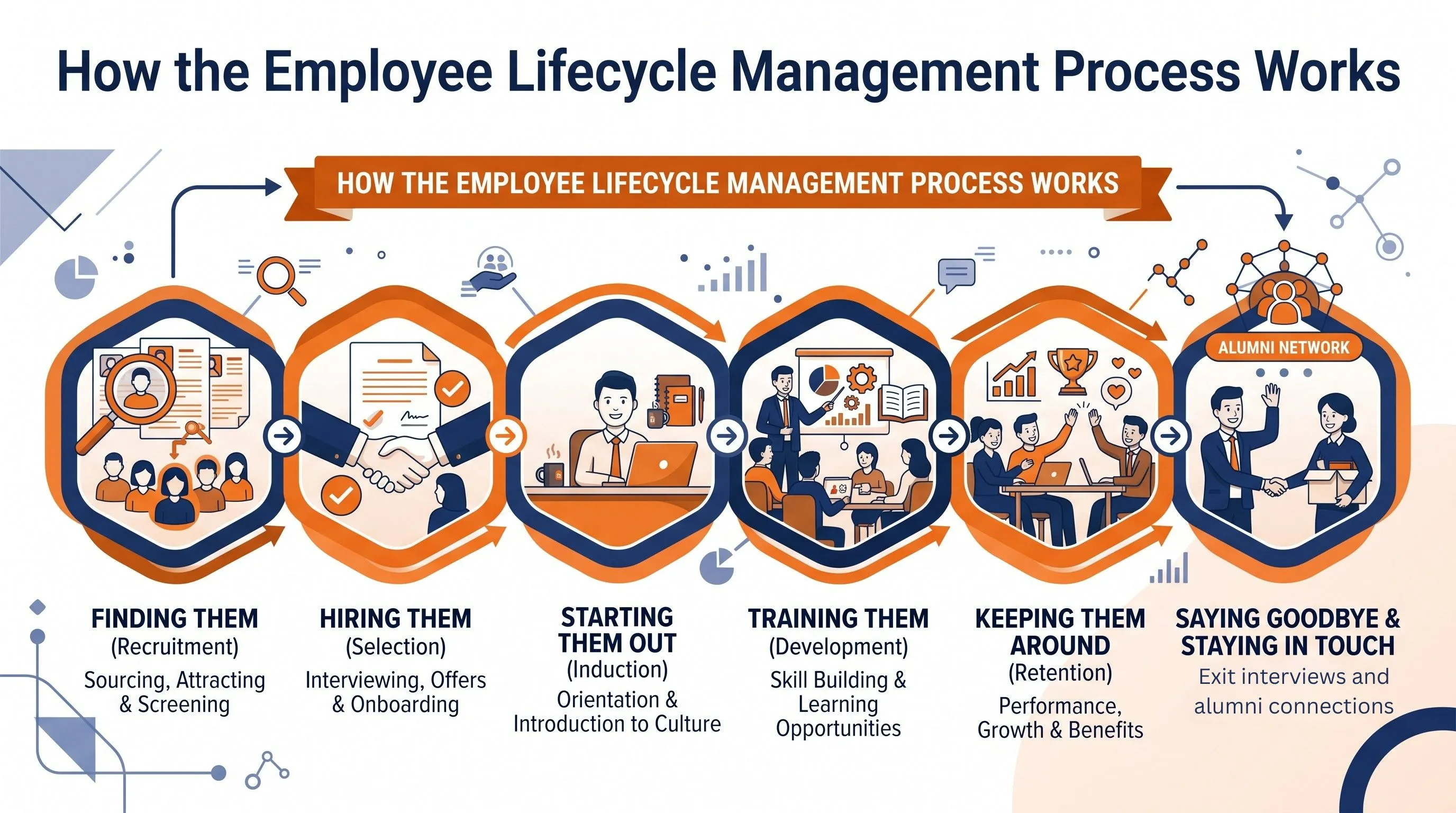
It doesn't really matter exactly how many steps you count. What matters is that you handle all of them together as one connected employee lifecycle management process instead of isolated HR functions.
You have probably sat in meetings where the hiring team, the training team, and the payroll team all had completely different information about the same employee. When the data doesn't match, you tend to doubt the integrity of your employees, and they will gradually lose trust in you in return. Your leadership team can't make good decisions if they don't have the right facts.
On the other hand, once you start looking at hiring, training, and leaving as chapters of the same book, you realise that it was the disconnected nature of data that created most of the problems in the first place.
10 Employee Lifecycle Management Challenges HR Should Prepare For
To manage employee lifecycle management well in 2026, you not only need a checklist but also be capable of anticipating friction points before they start to derail your workforce strategy. Here are the ten that come up again and again, and thus you should be prepared for.
1. Attracting the right talent on a tighter budget
Companies don't have enough money to pay what job seekers want these days. Before people even apply for a job, they check your company's Glassdoor reviews, your LinkedIn page, and what your top leadership say in public.
Because of this, having a good employer branding is actually one of the very first things you have to get right to improve employee lifecycle management.
2. Making onboarding stick
A lot of companies still think onboarding is just a one-day orientation. In fact, it is a longer process, although many employee lifecycle management platforms manage to reduce the duration.
Research shows that doing onboarding right is one of the best ways to keep employees from quitting, but many places still just hand new hires a laptop and a login and think their job is done.
3. Keeping performance management honest
Annual performance reviews are going away, and for good reason. Today's employees expect feedback right when things happen. Sharing regular feedback and writing it down needs to be a normal part of how you manage employees.
If your managers wait for an official review to bring up problems, they end up surprising people. Those unexpected facts almost never go over well when you're talking about how someone is doing at work.
4. Managing hybrid and distributed teams
Remote and hybrid arrangements have permanently changed how the employee lifecycle management process works these days. If your manager never sees a team member in person, he won't be able to spot issues like burnout, disengagement, or employee frustration.
We have Gallup's own data showing manager engagement has been sliding, which only compounds this problem.
5. Data fragmentation across tools
Fragmented data is probably the single biggest operational headache in employee lifecycle management today. Recruitment software here, payroll spreadsheet there, a separate leave tracker elsewhere. Without a unified employee lifecycle management software layer, HR shouldn't have to spend hours verifying numbers before making decisions.
6. Compliance and documentation across every stage
Labour law, tax rules, and data privacy regulations touch nearly every stage of the employee lifecycle management. They get changed so frequently that most HR teams are unable to track them manually.
If you miss documentation at onboarding or offboarding, it will create legal exposure that will surface years later.
7. Burnout and declining manager engagement
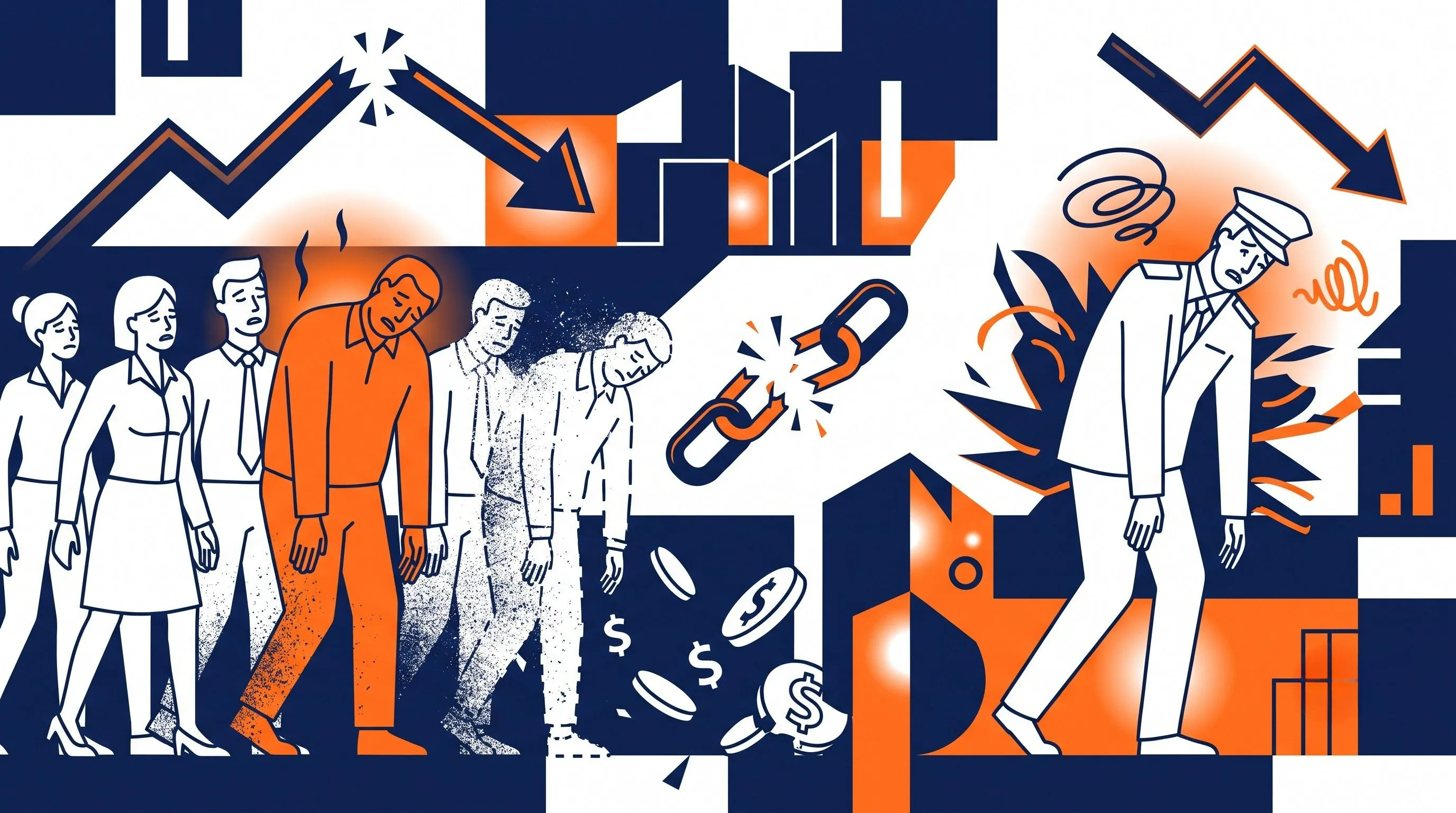
Gallup's research shows that burnout costs companies 15 to 20 per cent of their total payroll. This happens just from one single line of occurrence: employees quitting. The big problem is that burnout rarely gives any early warning signs.
On top of that, the managers who are supposed to help stop this are themselves burning out quickly. This makes it much harder for companies to keep their employees.
8. Employee anxiety around AI adoption
Employees all around the world are watching how AI is reshaping their roles in real time. Many are anxious and have openly talked about it in public. Surveys have found more employees report feeling worried than hopeful about how AI will affect their jobs.
HR handling the employee lifecycle management process in organisations now has this added responsibility to address this openly during development conversations.
9. Offboarding and knowledge transfer
Many companies rush the offboarding stage more than any other part of the employee journey. It is quite common among HR teams to skip exit interviews. When a departing employee walks out the door, the organisation is losing valuable knowledge.
Furthermore, businesses entirely neglect the alumni relationship, which could otherwise generate new client referrals or rehires. Teams lose months' worth of process knowledge that a simple 30-minute handover conversation could have saved.
10. Proving the ROI of your systems
It is true that boards and CFOs want numbers, and they don't really care about sentiment. If you can't show how your employee lifecycle management system reduced time-to-hire, improved retention, or cut compliance risk, you'll struggle to secure budget for the next upgrade.
Manual vs Automated Employee Lifecycle Management
As a business owner, you might wonder whether to do employee lifecycle management manually or with the help of a dedicated employee lifecycle management system. The table below will show you the differences in both approaches.
| Aspect | Manual Approach | Automated Employee Lifecycle Management Software |
|---|---|---|
| Onboarding paperwork | Emails, PDFs, physical signatures | Digital workflows with e-signatures |
| Performance tracking | Annual spreadsheets | Continuous check-ins and dashboards |
| Attendance and leave | Hard-copy registers | Real-time tracking and approvals |
| Data visibility | Fragmented across departments | Centralised employee database |
| Compliance documentation | Addressed only after issues arise | Proactive alerts and audit trails |
| Exit process | Inconsistent, undocumented | Structured checklists and analytics |
How a Centralised Employee Lifecycle Management Platform Improves HR Operations
Most of the ten challenges above share a common root cause: disconnected tools and inconsistent processes. This is the gap an integrated employee lifecycle management platform like Mewurk is built to close.
Mewurk brings attendance, leave, shift scheduling, payroll, document storage, HR tasks, and HR trends and analytics along with newly launched AI assessment and AI interviews into a single system. With our software, HR teams do not require stitching together five different tools to answer one simple question about a candidate or employee.
Building this kind of connected foundation for your employee lifecycle management is wiser than waiting until later. When your hiring data connects directly with your onboarding checklist, and your performance reviews link right into your offboarding process, everything works in sync. You will have much more control and order in managing your team.
A Practical Checklist Before You Act
Before you overhaul anything in your current employee lifecycle management process, sit with these questions and try to figure out answers.
If you answered no to two or more of these, your employee lifecycle management process likely has gaps worth addressing at the earliest.
Conclusion
This blog set out to map the ten challenges shaping employee lifecycle management in 2026 and give you a realistic starting point to address them. Did you find it useful? If it helped clarify where your own processes need work, please share it with fellow HR leaders or People Ops folks who could use the same clarity.
FAQs
1. What is employee lifecycle management in simple terms?
Employee lifecycle management in simple terms is the practice of managing an employee's full journey with your company, from attraction and hiring through development, retention, and offboarding. Employee lifecycle management has to be one connected process rather than several separate HR tasks.
2. How many stages are in the employee lifecycle?
Most frameworks divide the employee lifecycle into six to seven stages: attraction, recruitment, onboarding, development, retention, and offboarding. Some models add an alumni or happy leavers stage.
3. Why does employee lifecycle management matter for small businesses?
Small teams feel turnover costs much faster than big companies since replacing even one person disrupts their workflow and output. Hence, to help smaller HR teams stay organised without extra headcount, a structured employee lifecycle management process is essential.
4. What's the biggest mistake companies make in employee lifecycle management?
Treating onboarding and offboarding as one-time events instead of ongoing processes. Both stages shape retention and employer reputation far more than it is commonly realised by leaders.
5. Can an employee lifecycle management system reduce turnover?
Yes. Centralised data, which a reliable employee lifecycle management system like Mewurk offers, helps the HR team catch disengagement signals early. Additionally, structured onboarding and feedback loops are directly linked to stronger retention outcomes.