Buddy Punching
What Is Buddy Punching?
Buddy punching is a time fraud practice where one employee records attendance for another. It usually happens when a colleague punches in or out on behalf of someone who is late or absent.
In simple terms, if one person chooses to punch the buddy instead of reporting honestly, the organisation pays for time that was never worked.
Using a robust attendance management system is the best remedy to deal with buddy punching in organisations.
The buddy punching meaning goes beyond just helping a coworker. It directly affects payroll accuracy, team trust, and compliance.
Many HR professionals encounter this issue early in their careers, especially in workplaces that rely on manual attendance systems.
When someone asks what is buddy punching, the answer is straightforward. It is an intentional misrepresentation of working hours through shared access to attendance systems.
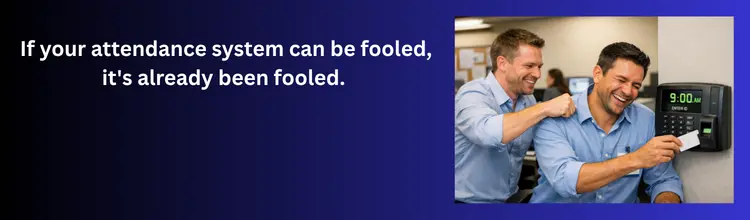
Buddy Punching Meaning in Workplace Context
Understanding the buddy punching meaning requires looking at how attendance systems operate in real settings.
How It Typically Happens:
- A colleague uses another employee’s ID card or login
- Biometric systems are bypassed through manipulation or poor enforcement
- Employees coordinate timings to cover each other’s absence
- A supervisor ignores repeated buddy clocking due to familiarity or pressure
In each case, the act of buddy clocking creates a false attendance record. Over time, these small gaps will become causes of serious financial loss and weaken trust across teams.
Why Employees Punch the Buddy?
An employee may decide to clock in for another to help them in the following ways.
- To avoid being marked late
- To cover absenteeism
- To maintain incentives tied to attendance
- To help peers in informal team cultures
In many companies, employees do not view buddy punching as misconduct because it has become the new normal there. That mindset is where HR needs to step in with clarity.
Why Organisations Need a Strong Buddy Punching Policy?
A clear buddy punching policy is essential to set expectations for the employees and to remove ambiguity over the practice. Such a policy will give HR a basis for action.
Key Components of a Buddy Punching Policy
- Definition of buddy punching and buddy clocking
- Examples of prohibited behaviour
- Disciplinary actions for violations
- Responsibility of supervisors to monitor attendance
- Guidelines for using attendance systems
A strong buddy punching policy does not rely on fear alone. It explains why the behaviour harms the organisation and fellow employees.
How to Communicate the Buddy Punching Policy?
Drafting a buddy punching policy won’t do any good if it is not communicated to the employees. Here is how an organisation do it well.
- Include it during onboarding
- Reinforce it in periodic training
- Use real scenarios instead of abstract rules
- Encourage managers to address it early
Buddy Punching Consequences for Organisations
The consequences of buddy punching surface in more areas, including payroll.
Financial Impact
- Inflated wage costs
- Overtime miscalculations
- Inaccurate budgeting
Even a few minutes per employee lost to an organisation via buddy punching can add up across a large workforce.
Cultural Impact
- Loss of trust among employees
- Perception of unfairness
- Reduced accountability
When one person gets away with buddy clocking, others notice. This will result in compliance risks in multiple areas:
- Violations of labour laws
- Audit discrepancies
- Legal exposure in wage disputes
Even if routine operations are overlooked or not really impacted at scale, the true buddy punching consequences will become visible during audits and disputes.
How to Prevent Buddy Punching?
Deliberate inspections from HR leaders might help in the detection of buddy punching instances; only through outright prevention can it yield results in the long run.
Practical Ways to Prevent Buddy Punching
- Use biometric attendance systems that require physical presence
- Enable GPS-based mobile attendance with selfie verification
- Restrict access to attendance credentials
- Monitor patterns such as identical punch timings
Alongside technology improvements, there must be steps to effect behavioural change among the employees as well.
Role of Managers
- Address suspicious patterns early
- Avoid informal approvals for late marking
- Lead by example in attendance discipline
How to Eliminate Buddy Punching in Modern Workplaces
To eliminate buddy punching, organisations need a mix of systems, awareness, and accountability.
Using Technology as a Deterrent
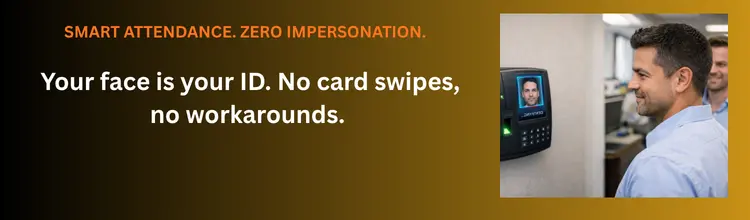
When technology steps in, buddy punching becomes much harder to get away with. Face recognition systems, for instance, cut down impersonation by verifying who is present rather than who clocked in.
Real-time alerts can flag unusual attendance patterns the moment they happen, instead of weeks later during audits. Having the attendance data directly linked with payroll and being available in real time will allow any inconsistencies to surface quickly and leave little room for manipulation. Together, these systems can create an environment where buddy punching is far more difficult to carry out unnoticed.
Building Accountability
- Link attendance accuracy to performance metrics
- Encourage peer accountability within teams
- Conduct periodic audits
Continuous Monitoring
- Analyse attendance reports regularly
- Identify repeat offenders
- Take consistent action
Buddy Clocking vs Genuine Errors
Not every attendance issue is buddy punching. HR must differentiate between an intentional buddy punching instance and an error. The following signs are usually associated with both cases and keeping them under the radar will help distinguish between both.
Signs of Buddy Clocking
- Repeated identical punch patterns between two employees
- Attendance during approved leave periods
- Mismatch between work output and logged hours
Signs of Genuine Mistakes
- Occasional missed punches
- System errors
- New employee confusion
An organisation should set the benchmark based on a fair approach to build credibility among the employees. Employees won’t have any issues with accepting strict rules if there is a balanced judgment.

Final Thoughts on Buddy Punching
Buddy punching may look like a small shortcut. In reality, it reflects deeper gaps in systems and culture.
A well-defined buddy punching policy, supported by the right tools and consistent action, is essential to prevent buddy punching before it spreads.


Empowering SMEs with modern-age, cloud-based Attendance and Workforce Management systems that help save time and boost productivity.


Download App