Recent Trends in HR: What Teams are Automating First in 2026
HR departments across India are going through a big change. The recent trends in HR show a move away from boring administration and paperwork toward things that help a business grow and scale effectively.
According to a PSB Insights survey, 43% of HR bosses said improving their tech is their number one goal. There’s a lot of pressure to get more done with fewer people, and HR trends 2026 suggest this is the year when trying out automation becomes a necessity.
Understanding Current Trends in HR Management
The current trends in HR management show that organisations are moving past just going digital to using smarter automation. Back in 2023, most HR leaders felt they would fall behind if they didn’t start using AI within two years. Well, that time is here, and new trends in HR are forcing everyone to adapt.
A Quick Reality Check:
- HR teams spend about a third of their day on the same repetitive tasks.
- Just scheduling interviews can take up 35% of a recruiter's time.
- Most companies use about six different tools to manage an employee’s journey.
This mess makes it hard to see the big picture, which is exactly what current trends in HR technology are supposed to fix.
How Are Recent Trends in HR Adding Strategic Value To Business?
The recent trends in HR are adding strategic value to businesses by encouraging HR to act like growth engines and show real results in hiring and company culture.
For years, HR was overburdened by the weight of its own bureaucracy, but 2026 marks the great unearthing, where digital bots handle the administration, and humans handle the people. Looking at global HR trends, organisations are clearly prioritising targeted automation, starting with high-risk, high-effort processes that directly affect compliance, speed, and employee trust. This is where recent trends in HR start to show a clear direction.
Top HR Trends Shaping How Teams Use Automation Today
Here is the commonly observed order of HR trends as teams move toward automation.
Trend 1: The Rise of Punch-to-Pay Connectivity
Among the recent trends in HR, the most impactful one is the death of the data gap between attendance and payroll. In the past, these were two separate tasks. Today, they are closely connected. By syncing directly with time-tracking and leveraging automation, payroll has become a simple background process from a stressful monthly event.
Why Payroll Automation Is the Strategic Priority?
More than just a talking point among recent trends in HR, payroll automation is a priority for HR teams worldwide. Once you have it automated:
- You won't have to worry about math mistakes anymore.
- It keeps up with tax laws automatically.
- It syncs directly with your time-tracking tools
- It cuts down on the amount of paperwork for everyone.

Trend 2: Attendance as an Employee Experience Tool
Attendance tracking holds importance in workforce management today for several reasons. For one, it is the very first thing that creates the data foundation for the entire employee lifecycle; it directly connects to payroll, leave, shift and even employee experience. Organisations that have made investments in this area are now able to benefit immensely from:
- Fingerprint or face scans instead of paper logs.
- Apps for remote workers to clock in.
- Real-time reports to know who is working.
- Data that goes straight to the payroll system.
As we talk about the recent trends in HR, it is worth noting that AI-enabled biometric attendance systems are rapidly becoming the industry standard. Platforms like Mewurk exemplify this shift by consolidating multiple tracking methods (web portal, mobile app and biometric face recognition attendance machine) into a unified digital environment for modern teams.
Trend 3: Hiring as a Strategic, Automated Function
Recruitment has made its place on the HR trends list more by acting as a strategic function. AI is now doing much of the work that humans were doing. AI-integrated HR systems are great at scanning resumes, matching candidates to jobs, and booking interviews.
AI in Hiring:
- Some IT companies have cut their hiring time by 40%.
- Use of AI in HR can facilitate shortlisting candidates in minutes.
- Chatbots in HR systems keep candidates engaged while they wait.
Automation Reshaping Employee Onboarding
Research shows most people think their company's onboarding is pretty bad. After the final round of interviews is done, the candidate is still made to wait for weeks of radio silence while HR handles background checks and paperwork. This black hole in the candidate experience is where top talent often disengages or accepts counter-offers.
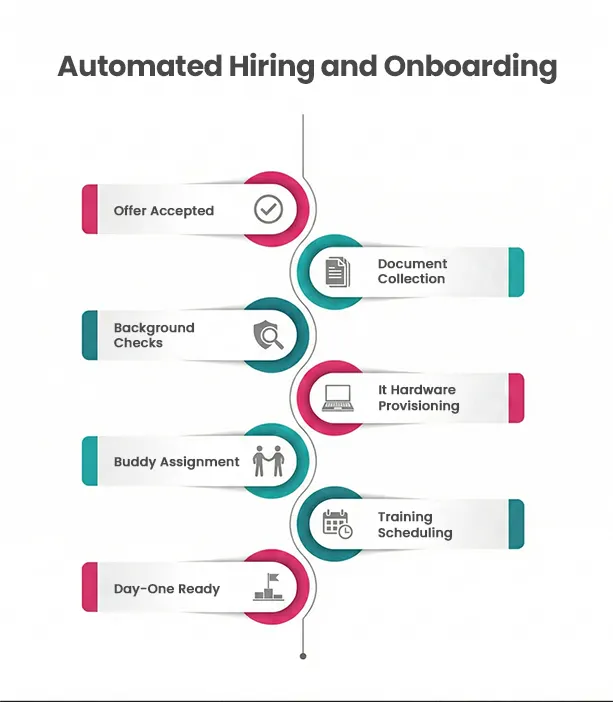
Recent trends in HR automation suggest that teams need faster, clearer options to execute onboarding. Here are some edges you can bring to the onboarding process by using HR automation tools.
- Instant Documentation: Send and sign digital offer letters in mere minutes.
- Triggered Pre-boarding: Dispatch welcome kits automatically the moment offers are signed.
- Engaging Content: Deliver introductory videos to new hires before day one.
- Automated IT Setup: Notify IT teams instantly to create secure email accounts.
- Hardware Readiness: Order necessary devices automatically to ensure day-one productivity.
- Document Collection: Use secure portals for instant tax and identity uploads.
- Buddy Assignment: Auto-assign mentors to help new hires acclimate quickly.
- Policy Acknowledgement: Digitally track signatures for employee handbooks and safety rules.
- Training Schedules: Automatically book required orientation sessions into new-hire calendars.
- Cultural Integration: Trigger automated invites for team-building lunches and meetings.
- Feedback Loops: Send automated surveys to measure the initial hiring experience.
Trend 4: The Increasing Focus on HR Analytics
The way HR uses data is changing. Recent trends in HR analytics point to a shift toward earlier, more practical insights. Companies are now using data to guess who might quit, find out if pay is unfair, and plan their next hires. These HR trends in 2025 and 2026 are shaping how decisions get made day to day, rather than during reviews or audits.
How it looks in practice:
- HR teams spot early signs of attrition from attendance patterns and workload data
- Pay gaps are reviewed continuously using payroll data
- Hiring plans are adjusted based on real-time headcount and skill gaps
- Managers get simple alerts when trends shift
- Strategic HR decisions are made using live dashboards during the ongoing month itself.
Trend 5: The Rise of AI Agents in HR Operations
In 2026, we will see more use of agentic AI across everyday HR operations. Unlike older software that simply followed preset rules, these AI agents will understand the intent from inputs and complete tasks with minimal human involvement.
Who’s using it?
- Big companies: 48% are already on board.
- Mid-sized: About 25% are using it.
What can it do?
Agentic AI can recommend ways to keep employees happy, create custom learning plans, and even give feedback to managers after an interview. However, recent trends in hr show many still aren't sure how to set the right guardrails for AI in HR.
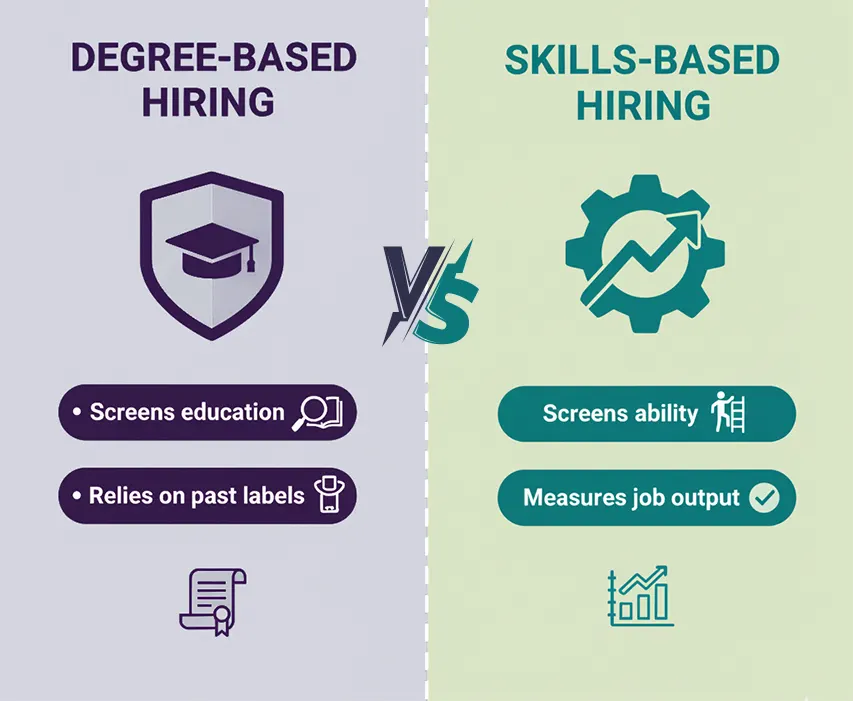
Trend 6: Skills-Based Hiring Takes Priority Over Degrees
Hiring decisions are gradually shifting away from formal degrees toward demonstrated skills. Employers are paying closer attention to what candidates can do, rather than where they studied. Automated skill assessments, which make it easier to evaluate practical ability early in the hiring process, reinforce this change.
Recent trends in HR show that this approach is also helping teams widen their talent pool, especially in roles where real-world skills matter more than academic credentials.
At the same time, this shift brings its own challenges. One of the current HR trends and challenges is deciding which skills matter for a role and how to assess them fairly. Without clear benchmarks, skill-based hiring can quickly become inconsistent.
What These HR Trends Mean for India
India’s job market continues to expand, with hiring up by 23%. For HR teams, this means faster hiring cycles, quicker onboarding, and less room for delays. Pay levels are also moving up, with salaries expected to rise by around 9% in 2026 as per Aon’s Annual Salary Increase report, especially in sectors like real estate and finance.
In the context of recent trends in HR in India, it is worth noting that workforce growth is no longer confined to traditional hubs like Bengaluru and Hyderabad. Cities such as Coimbatore and Ahmedabad are emerging as active tech and operations hubs, adding new layers of complexity for HR teams.
Managing attendance, payroll, and compliance across multiple locations has become harder without systems that align with current trends in HR.
The Bottom Line
The reality is simple: HR teams that automate thoughtfully will scale faster, make fewer errors, and free up time for work that matters. The recent trends in HR point toward removing friction rather than replacing people.
As India's workforce continues to grow and spread across new cities, teams that invest in connected systems today will hire, pay, and retain talent more effectively tomorrow. The question has shifted from whether to automate to deciding what must get automated next.
Frequently Asked Questions
1. Can small companies benefit from HR automation, or is it only for large enterprises?
Small teams gain more from automation because they have limited HR personnel, and every hour saved has a bigger impact on their productivity. Starting with payroll and attendance gives immediate relief without needing a massive budget or IT team.
2. How do I know which HR process to automate first?
Look at what takes the most time or causes the most errors. Recent trends in HR suggest starting where compliance risk is highest, usually payroll, attendance, or onboarding documentation.
3. Will automation make HR jobs disappear?
No. Current HR trends and challenges show automation handles repetitive work and allows HR to focus on strategy, culture, and employee engagement. The role evolves rather than vanishes.
4. Is AI in HR reliable enough to trust with important decisions?
AI works best when it supports decisions, not makes them. Recent trends in HR analytics use AI for insights and recommendations, but humans still approve final calls on hiring or promotions.
5. What's the biggest mistake teams make when adopting HR automation?
Trying to automate everything at once. Recent trends in HR management show that successful teams start small, test thoroughly, then scale gradually based on what actually works for their culture.

Most Popular Post
Why Accurate Attendance and Leave Management Matters for Business Growth?
Read More →Why Accurate Attendance and Leave Management Matters for Business Growth?
How To Leverage Attendance Data For Better Workforce Management?
Read More →How To Leverage Attendance Data For Better Workforce Management?