Important Days in January for HR Teams, Offices, and Workplaces
January marks fresh beginnings, renewed energy, and an opportunity to set the tone for the entire year. For HR professionals managing diverse teams, this month presents several notable observances. Many of the important days in January offer meaningful touchpoints to build culture, recognise employees, and address workplace priorities.
In this blog, we will explore the January important days in India and their cultural significance. We will also discuss how to align these days with a modern people strategy and company culture.
Why January Matters for HR Planning?
As the first month of the calendar year, January requires careful attention in HR planning. Teams return from holidays with mixed emotions. While some may be found fully energised, you might see others struggling to adjust. It is practically a transition period that tests how well you know your workforce. Various surveys point to the fact that the important days in January and February serve as natural anchors for engagement activities without forcing artificial enthusiasm.
If you have been closely following the attendance patterns of your team during this period on your attendance system, you might see some dips. Don’t panic. Use these observances to reconnect with your teams. The small gestures tied to these meaningful days cultivate deep-seated positive associations that would last beyond the calendar month.
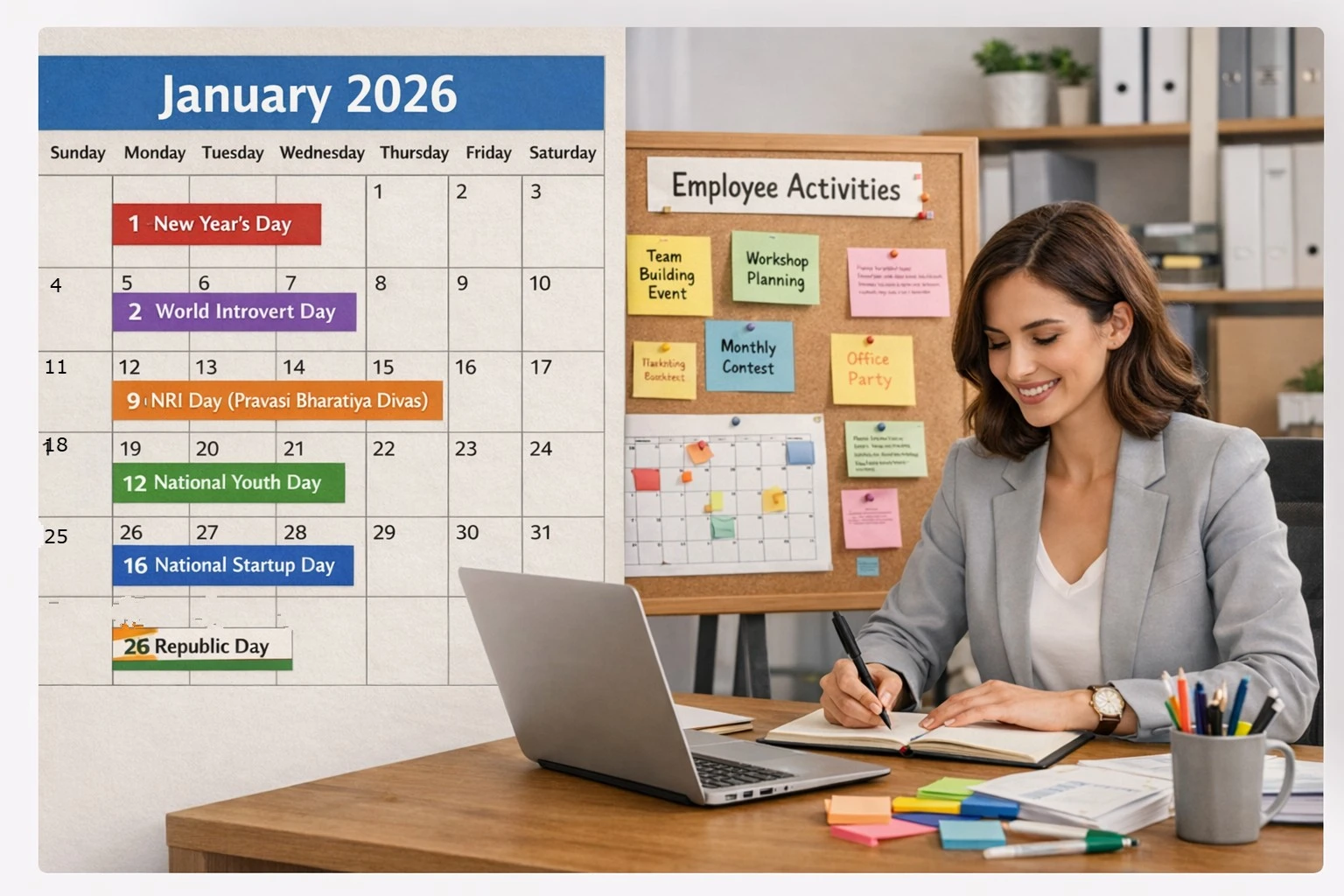
Important Days In January at A Glance
| Date | Occasion | HR Focus Area |
|---|---|---|
| Jan 1 | New Year’s Day | Culture & Goal Setting |
| Jan 2 | World Introvert Day | Inclusion & Workplace Design |
| Jan 9 | NRI Day (Pravasi Bharatiya Divas) | Diversity & Global Mobility |
| Jan 12 | National Youth Day | Gen Z Engagement & Mentorship |
| Jan 16 | National Startup Day | Innovation & Entrepreneurship |
| Jan 26 | Republic Day | Compliance & Pride |
New Year's Day (January 1)
Most offices remain closed on January 1, but this is a perfect day to set expectations for your team. Send a thoughtful message that acknowledges your team’s last year contributions while looking forward. Avoid generic corporate language and keep it real. Your team will appreciate authenticity over polish.
World Introvert Day (January 2)
About half of the workforce in the majority of the offices identifies as introverted, yet many workplaces favour extroverted communication styles. World Introvert Day is a day to think of those quiet powerhouses and create space for their uninterrupted flow.
Check if your collaboration tools allow asynchronous participation. Some employees contribute best when given time to process information privately.
Review your meeting culture. Do you allow silence? Can people submit ideas in writing before discussions? These adjustments cost nothing but make significant differences in engagement levels.
World Braille Day (January 4)
Accessibility extends beyond physical accommodations. The observance of World Braille Day prompts an evaluation of your digital infrastructure. Can screen readers navigate your HRMS portal? Are training materials available in multiple formats? Inclusive design benefits everyone, not just those with disabilities.
Many workforce management systems now include accessibility features as standard. If yours doesn't, this day provides justification for necessary upgrades.
NRI Day (January 9)
Pravasi Bharatiya Divas celebrates the contribution of overseas Indian communities. For organisations with global teams or NRI employees, this is a day to acknowledge their unique position. They bridge cultures, manage time zones, and often carry extra coordination loads.
Consider how your leave policies accommodate international travel needs. Do remote work arrangements fairly serve employees based outside India? These questions matter for retention.
National Youth Day (January 12)
National Youth Day marks the birth anniversary of Swami Vivekananda, but in workplaces, it’s also a moment to pause and look at how younger employees experience work. There is a common misconception that Gen Z is disengaged by default. The truth is that they are disengaged when work feels performative, opaque, or disconnected from growth.
Use this day to check whether your organisation is offering real mentorship or just calling onboarding a learning journey. Are junior employees paired with people who have the time and intent to guide them? Do they understand how decisions are made, or are they expected to figure it out on their own?
Small actions matter here. Open forums, reverse mentoring, and transparent conversations about career paths go further than flashy engagement programs. Young employees value honesty over hype.
National Startup Day (January 16)
National Startup Day is framed around founders, funding, and growth stories. But inside established organisations, it is a good reminder to examine how friendly your systems are to new ideas.
Do employees feel safe suggesting changes, or do their innovative ideas get buried under approvals and rigid processes? Are teams allowed to experiment on a small scale without being demotivated for failure?
Republic Day (January 26)
Republic Day is synonymous with grand parades, tricolour decorations, and a national holiday. But for a forward-thinking organisation, it is the perfect occasion to reflect on the Workplace Constitution. Just as the nation is committed to justice, liberty, and equality, this day invites you to evaluate the democratic health of your company culture.
Do your employees feel they have a voice in the governance of their daily work, or is the hierarchy too rigid to allow for healthy dissent? It is a day to celebrate Unity in Diversity by examining whether your teams leverage the diverse perspectives and regional backgrounds that make up your workforce.
How to Create an Office Calendar Using Important Days in January for HR Teams?
Here's a practical framework that has worked across different organisations:
Week 1: Reflection and Inclusion
The first week is a time to ease the team back into the rhythm of work and acknowledge the different personalities in your office.
The Focus: Personal goal setting and productivity.
Actionable Tip: Kick off with a New Year Vision Email to highlight shared company goals. On January 2 (World Introvert Day), declare a Meeting-Light Day to allow your silent powerhouses the space to focus and plan their month without the pressure of immediate social interaction.
Week 2: Connectivity and Accessibility
As the initial New Year energy settles, use the second week to bridge gaps across digital, physical, or cultural boundaries
The Focus: Global presence and infrastructure.
Actionable Tip: Conduct a quick Accessibility Audit of your internal portals in honour of World Braille Day. By January 9 (NRI Day), host a virtual Catch-up specifically to include team members working in different time zones or those from the NRI community to ensure they feel seen and connected.
Week 3: Innovation and Future-Proofing
This could probably be the busiest week of the month. Use the energy of the youth and the spirit of entrepreneurship to drive momentum.
The Focus: Mentorship and new ideas.
Actionable Tip: For National Youth Day (Jan 12), launch a Reverse Mentorship pilot where junior employees are welcomed to share fresh perspectives with seniors. On January 16 (National Startup Day), run an Idea Box campaign where employees can suggest one process they would like to disrupt or simplify within the company.
Week 4: Pride and Participation
The final week is about the collective identity of the organisation and its place within the nation.
The Focus: Governance, diversity, and long-term planning.
Actionable Tip: Leading up to Republic Day (Jan 26), host a Town Hall or a feedback session centred on your Workplace Constitution. Use this to discuss transparency and how diverse voices are heard in your hierarchy.
Practical Implementation Tips
- Block calendar time in December to prepare January materials
- Brief managers on the observance significance before the month begins
- Keep activities optional-forced participation defeats the purpose
- Use your communication platform to share quick facts, not lengthy lectures
- Measure engagement through simple polls or reaction counts
Important Days in January and February: Looking Ahead
As January closes, preview February observances to get a head start on planning. Creating quarterly cultural calendars that employees can reference helps managers plan team activities without constant HR intervention.
World Cancer Day falls early in February, which connects to January wellness themes. Employees like it better when you conduct activities that feel connected instead of just being random, one-off events.

Conclusion
The important days in January give you a great starting point to connect with your team without adding a ton of extra work to your plate. You don’t need to observe all the days. The trick is to pick the days that make sense for your specific office.
Also, meaningful engagement doesn’t require a huge budget or a grand production to make an impact. Small gestures usually go a lot further.
At the end of the day, it is about the human connection. Your team won’t remember every single slide or email, but they’ll definitely remember feeling seen and supported as they kick off the new year.
Frequently Asked Questions
1. Which Important Days in January should HR prioritise in Indian workplaces?
Start with New Year's Day messaging, consider NRI Day if you have global teams, and include World Introvert Day for workplace inclusiveness and culture assessment. Choose the days for observance based on your workforce composition rather than trying to cover everything.
2. How can I integrate important days in January into the HR calendar?
Use your HRMS system to schedule and announce important days ahead of time. Many workforce management platforms include holiday/important day calendar functions integrated into their leave management module, where it is quite simple to set annual recurring reminders for the important days.
3. Should we create policies around workplace observances?
Not necessarily. Guidelines work better than rigid policies. Give managers the autonomy to adapt observances for their teams. Participation should feel natural rather than being mandated.

Most Popular Post

Why Accurate Attendance and Leave Management Matters for Business Growth?
Read More →Why Accurate Attendance and Leave Management Matters for Business Growth?
How To Leverage Attendance Data For Better Workforce Management?
Read More →How To Leverage Attendance Data For Better Workforce Management?