Functions of HR Manager in the Age of Automation: What Has Changed Forever?
If you’ve spent the last ten years in HR, you would know for sure that the landscape hasn’t stood still even for a second. Many of us can relate to situations like our in-house HRIS systems crashing and leaving all of us panicked, or manually cross-checking attendance and leave records at 11 PM before the payroll days. That version of HR wasn’t too far back.
Today, we see algorithms predict attrition before employees even update their LinkedIn profiles. The functions of HR managers haven't disappeared entirely. They have taken on a new shape instead. This blog breaks down the change and the new capabilities expected from today’s HR teams.
The Old Vs the New: What Are the Functions of HR Manager Today?
Before we go into an outright comparison contrasting the old with the new, let’s be straightforward about one thing. The basic functions of HR manager haven't changed. Recruitment, training, compensation, performance management, and employee relations still form the backbone. What has changed is how we execute them.
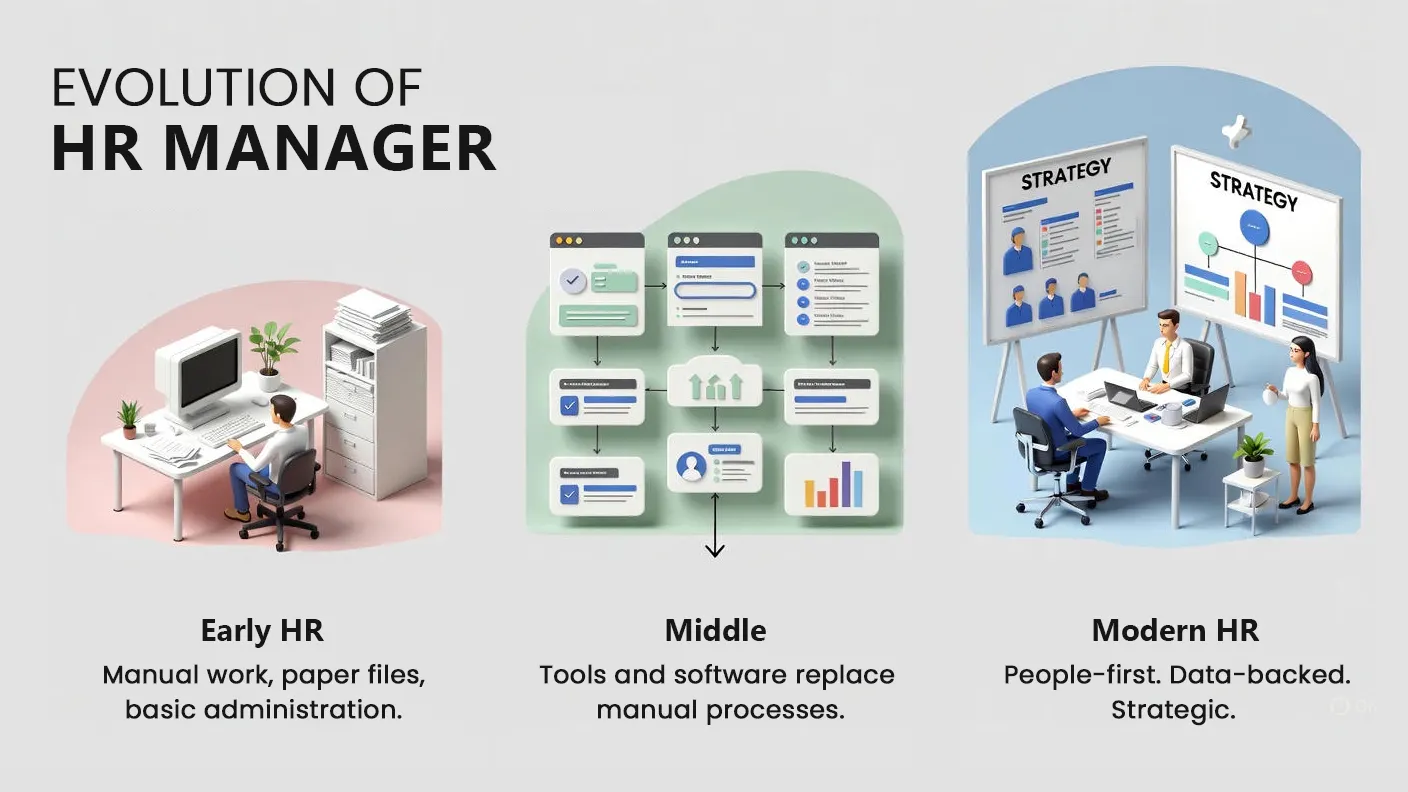
Quick Snapshot of HR Manager Function: Then Vs. Now
| Traditional Functions of an HR Manager | Tasks Shifted to Automation | HR's New Priorities |
|---|---|---|
| Resume screening | ATS filters 90% candidates | Cultural fit assessment |
| Leave tracking | Self-service portals | Policy design & fairness |
| Payroll processing | Cloud-based auto-calculation | Compensation strategy |
| Training schedules | AI-recommended learning paths | Career development planning |
The role and function of HR manager has shifted from being merely a process executor to a more responsible and strategic architect. This has become possible only due to the degree of automation modern HR software platforms offer to shoulder the operational load.
The 7 Functions of HR Management: What They Look Like in 2026
You have probably seen the textbook list of 7 functions of HR management. Let me show you what they look like when automation enters the picture:
1. Recruitment & Selection
Before: Posting jobs, screening resumes manually, scheduling interviews.
Now: AI sourcing tools identify passive candidates, chatbots conduct initial screenings, and video analytics assess communication skills. As an HR manager, your key responsibility here is to ask questions automation can't and figure out conclusions. “Will this person thrive in our environment?” or “Can they handle the demands of this role?”
2. Training & Development
Before: Organising classroom sessions, tracking attendance sheets.
Now: Learning management systems can deliver personalised content for each employee based on their skill gap. You only need to contribute your share to the shaping of the learning culture.
3. Performance Management
Before: Annual appraisals with paper forms.
Now: Performance conversations now draw from continuous feedback loops, real-time goal tracking, and sentiment insights gathered from daily communication patterns. The managerial functions of HR manager here involve coaching managers to give feedback that sticks and motivates.
4. Compensation & Benefits
Before: Salary surveys and endless Excel work.
Now: There are easy-to-use benchmarking tools to pull live market data, and benefits platforms offer a menu of choices for people to choose from. You are able to craft reward strategies that balance fairness with budgets in just a few minutes.
5. Employee Relations
Before: Reactive grievance handling (responding to problems after they happen).
Now: With tools like pulse surveys, you can spot early signs of dissatisfaction, and predictive models highlight who might be planning to leave. They help you track the employee experience in real time. But when someone shows up at your desk in tears, that moment still needs a human.
6. Compliance & Legal Duties
Before: Required hands-on intervention whenever any compliance issue or update came up.
Now: Compliance tools still need your input, but once the rules are set, they handle reminders, records, and audit trails. Your role gets shifted to interpreting grey areas.
7. HR Information Systems
Before: This barely existed for most SMEs.
Now: It has become the very foundation of SMEs. Cloud-based workforce management software centralises everything. The main function of HR manager in this respect is to ensure that the data stays accurate and decisions are made from it.
Operational vs. Strategic: Understanding the Dual Role of HR Manager
Most HR folks fail bitterly at keeping this dual identity and get confused between the roles involved in both. Knowing the difference between operational functions of HR manager and strategic work is the only way to know where to spend your time and attention.
Operative Functions of HR Manager (Being Automated)
- Processing leave applications and attendance regularisation
- Generating offer letters and employment contracts
- Maintaining employee records and databases
- Scheduling interviews and coordinating logistics
- Running payroll cycles and tax calculations
- Sending policy reminders and compliance notices
Strategic Functions (Where Your Time Must Create Impact Now)
- Designing workplace policies that reflect company values
- Building leadership pipelines and succession plans
- Creating DEI initiatives that go beyond token gestures
- Analyzing workforce trends and predicting talent needs
- Mediating complex conflicts and rebuilding trust
- Partnering with business leaders on organizational design
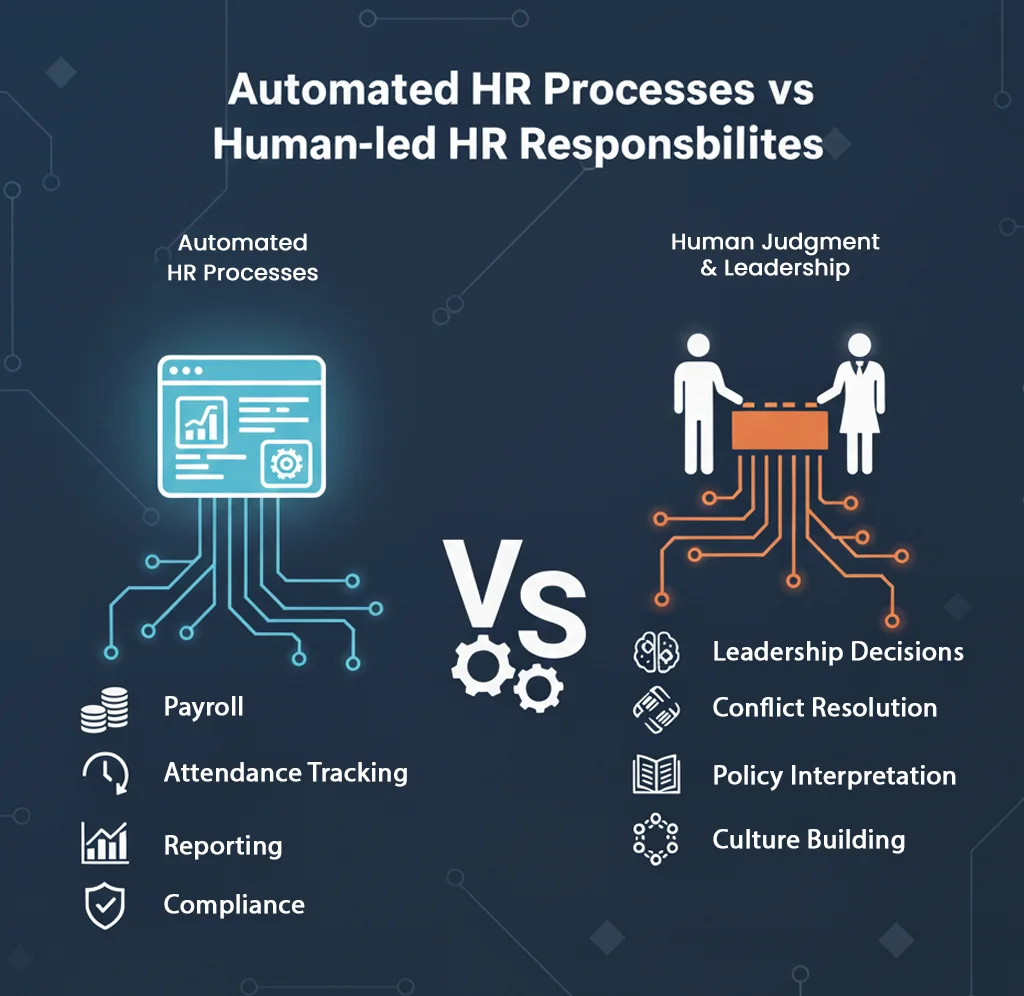
Irreplaceable HR Manager Responsibilities in the Age of Automation
The operative functions of HR manager, the day-to-day tasks, now happen while you sleep. But some things still need a human mind. For instance, choosing whether a four-day workweek makes sense for your company, managing a high-performing manager who struggles with people or creating psychologically safer working conditions for the remote team. These are the parts of HR that still rely on judgment, empathy, and experience.
The year 2025 has taught us that the line function of HR manager is not administration any more. It sits more on the side of interpretation. So if you want to stay relevant and in demand as an HR manager, be ready to prune these core competencies.
HR Manager Competencies That Matter in 2026
- Emotional Intelligence: Reading what's unsaid in exit interviews, sensing team dynamics that dashboards miss
- Business Acumen: Understanding P&L statements well enough to argue for headcount increases
- Change Management: Getting 200 people to adopt new software without a mutiny
- Data Storytelling: Translating attrition metrics into narratives that executives act on
- Ethical Judgment: Deciding when algorithmic recommendations cross privacy lines
These functional competencies of HR manager can't be downloaded. They can only be earned over years of experience through difficult conversations, failed initiatives, and those awful moments when the policy you pushed for ends up causing trouble.
Understanding Line vs. Staff Debate in an Automated World
If you’re used to the tone of traditional HR textbooks, you have probably seen long debates about whether HR is a line or staff function. Automation has made that debate more relevant today. The line function of HR manager means directly contributing to organisational goals in addition to supporting others who do.
When you're assisting managers in HR functions of management known as staff functions, your role is to guide, advise, and support their decisions. Automation amplifies your reach. You can't personally coach 50 managers on performance conversations. But you can create frameworks, train them through microlearning modules, and use analytics to identify who needs intervention.
Why Coordination Has Become the Toughest HR Manager Function Today?
The coordinative function HR manager has grown far more complicated than it used to be. What once meant keeping a few processes aligned now involves managing an entire ecosystem of moving parts:
- Multiple software vendors (ATS, LMS, HR, payroll, engagement tools)
- Remote and office teams with different needs
- Generational expectations (Gen Z wants TikTok-style learning, Boomers want stability)
- Legal compliance across different states (especially tricky in India, with varying labour laws)
The duties of HR manager and staff functions consist of creating coherence from conflicts and bringing structure to ambiguity. When you have multiple systems collecting employee data, you are supposed to be the most responsible person to safeguard their privacy.
What the Job Is Like for Assistant HR Managers?
If you're an assistant manager in HR functions of management known as the learning phase, automation is both your best friend and worst enemy. Since the software handles payroll calculations, you won't spend years mastering it. But you are expected to contribute strategically much faster.
What is best to do at this juncture is to own the technology and become the person who can troubleshoot when the HRIS integration breaks. Learn SQL basics to pull your own reports. Understand how applicant tracking systems rank candidates. These aren’t skills solely expected of IT professionals today but are fast becoming the core functions of HR manager in 2026.
Conclusion
The functions of HR manager haven't been replaced by automation, but they have been liberated from drudgery. As generative AI is coming for the last bastions, it has changed the expectation about the kind of work that should be worthy of the HR manager title.
Which means we are finally free to ask what has been waiting beneath the surface. Can we build workplaces people love? Can we solve human problems at scale? That is the uncomfortable gift automation has given us.
Frequently Asked Questions
1. Why is technology fluency now a functional competency for HR managers?
Because modern HR workflows run on dashboards, alerts, rule engines, and behavioural analytics. Understanding how these systems interpret data helps HR teams make sharper decisions. Technology fluency is, therefore, part of the professional identity of today's HR managers.
2. What are the main functions of HR manager that automation cannot replace?
Automation struggles with nuanced judgment calls, emotional intelligence, and complex stakeholder management. Functions like conflict resolution requiring empathy, organisational culture design needing contextual understanding, executive coaching, handling sensitive employee relations issues, and making ethical decisions in grey areas remain firmly human.
3. How do the operational functions of HR manager differ from strategic functions?
Operational functions involve day-to-day administrative tasks like processing leave requests, maintaining employee records, coordinating interviews, and running payroll, most of which are now automated. Strategic functions involve high-level planning. For instance, designing compensation philosophy, building leadership pipelines, creating DEI strategies, etc.
4. What skills should HR managers develop to stay relevant as automation increases?
HR managers are increasingly required to develop stronger data skills, comfort with HR tech, and a good grasp of the inner workings of the business. Having a solid understanding of change management, emotional intelligence, and clear communication adds further weight to your positional relevance.

Most Popular Post
Why Accurate Attendance and Leave Management Matters for Business Growth?
Read More →Why Accurate Attendance and Leave Management Matters for Business Growth?
How To Leverage Attendance Data For Better Workforce Management?
Read More →How To Leverage Attendance Data For Better Workforce Management?