Summary
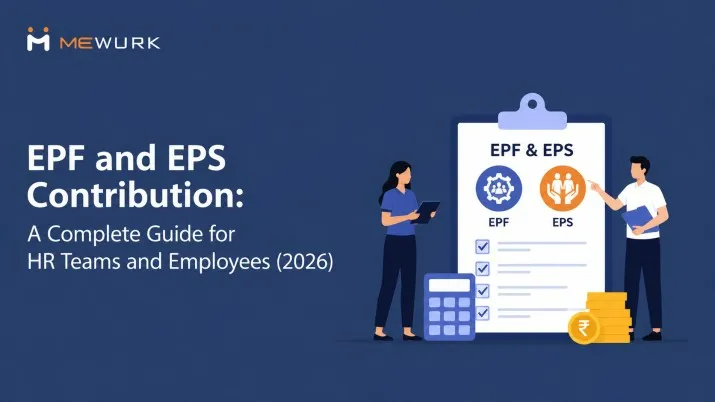
Confused about EPF and EPS contributions? This guide explains how employer contributions are split, current EPS rates, eligibility and more. You will also discover common payroll mistakes HR teams and employees should know to stay compliant and informed.
If you've ever stared at an employee's PF statement and thought "wait, why is the employer's bit split in two?", you're definitely not alone. It's probably the #1 question we get during payroll runs.
Most employees assume the full employer contribution lands in their EPF account. But no. A portion of it gets diverted to the Employees' Pension Scheme, or EPS, and that works totally differently.
In the HR compliance context, getting EPF and EPS contribution right isn't only about clearing employee doubts. It's also about payroll being accurate, staying compliant, and not messing up EPFO reports. This guide breaks down how EPF and EPS contributions work.
What Is EPF and EPS Contribution?
The Employees' Provident Fund (EPF) and the Employees' Pension Scheme (EPS) are both run under EPFO. Although they are linked, they do different jobs.
EPF is basically your retirement savings pot. The employee puts in, the employer puts in, both take a % of Basic + DA, and it slowly builds up over years.
EPS is the pension side. Only the employer funds it, using part of their contribution. It's meant to give a monthly pension for the employee after retirement or help family members if something happens to the employee.
That's why payroll people always say EPF and EPS contribution together. They're done in the same cycle, but the money goes to two places.

How Are EPF and EPS Different?
Even though both EPF and EPS contributions come under EPFO, they are not the same thing. Here are the key differences.
| EPF | EPS |
|---|---|
| Retirement savings account | Pension scheme |
| Employee and employer both contribute | Funded only from the employer's contribution |
| Earns annual interest declared by EPFO | Does not earn interest |
| Balance can generally be withdrawn as per EPF rules | Pension benefits follow separate eligibility rules |
| Individual account balance is visible in the EPF passbook | Pension amount is determined by EPS rules |
Easy way to think of it:
EPF helps you save. EPS helps you get a pension if you qualify.
How Is the Employer's Contribution Split Between EPF and EPS?
Both employee and employer put 12% of Basic + DA every month.
The employee's full 12% goes straight to EPF. The employer's 12% gets split. Some goes to EPF. And 8.33% (up to the wage ceiling) goes to EPS.
Example
Suppose an employee's Basic + DA is ₹15,000 per month.
- Employee Contribution: EPF = 12% of ₹15,000 = ₹1,800
- Employer Contribution: EPS = 8.33% of ₹15,000 = ₹1,250 (maximum)
- Remaining employer contribution goes to EPF = ₹550
So the monthly contribution looks like this:
| Contribution | Amount |
|---|---|
| Employee EPF | ₹1,800 |
| Employer EPF | ₹550 |
| Employer EPS | ₹1,250 |
This is the reason why employees see a smaller employer EPF amount than their own.
What Is the EPS Contribution Rate?
Right now the EPS contribution rate is 8.33% of Basic + DA, but only up to the wage ceiling. As of mid-2026, that ceiling is still ₹15,000 per month.
So max EPS per month is:
₹15,000 × 8.33% = ₹1,250
Even if someone earns ₹1 lakh, EPS usually won't go above ₹1,250 unless some special EPFO case applies.
As far is HR or payroll admin is concerned, that ₹15,000 figure is the one you need to remember when setting up payroll.
How Much Is EPS Contribution?
The question of how much is EPS contribution depends on the PF wages.
Here are a few cases:
| Basic Salary + DA | EPS Contribution |
|---|---|
| ₹10,000 | ₹833 |
| ₹12,000 | ₹1,000 |
| ₹15,000 | ₹1,250 |
| ₹25,000 | ₹1,250 (subject to EPFO rules) |
| ₹40,000 | Usually ₹1,250 (subject to EPFO rules) |
EPS stops increasing once you hit the statutory wage ceiling. That's why people earning ₹50,000 or ₹80,000 still see ₹1,250 for EPS.
What Is the Employer Contribution to EPS?
Employees don't pay EPS directly. It comes fully from the employer's PF share.
Here is how it works:
- Employee contributes 12% to EPF.
- Employer contributes 12% total.
- From the employer's share, 8.33% (up to wage ceiling) goes to EPS.
- Whatever's left goes to the employee's EPF.
So you won't see an EPS deduction on your payslip. It's hidden inside the employer contribution.
In payroll processing, this split happens every single month when we run PF and prep EPFO returns.
Why HR Teams Need to Calculate EPF and EPS Contribution Correctly
EPF and EPS contribution calculation looks simple, but even those mistakes that appear as negligible at first would cause big headaches later.
Some common slip-ups:
- Using the wrong wage ceiling for EPS.
- Putting the whole employer contribution into EPF by mistake.
- Wrong PF wages because of salary component issues.
- Reporting wrong numbers in EPFO returns.
- Not updating employee eligibility after new joinees or salary hikes.
When headcount grows, tracking EPS and EPF contribution manually becomes more than one could handle. That's where modern payroll management software like Mewurk helps.
It automates the statutory calculations, applies the EPF and EPS contribution rate you set, and spits out exact compliant reports.
Is EPS Contribution Mandatory?
Short answer: yes, for eligible employees. If someone is covered under EPF and qualifies for EPS, the employer has to allocate that part to EPS. You can't just opt out because you want more in EPF.
But not everyone is automatically in EPS. It depends on the employee's salary when joining, EPFO rules, and past membership. If you are an HR, you should check EPS eligibility during onboarding itself.
Who Is Eligible to Contribute to EPS?
EPFO decides this, not the employee. Generally, someone is eligible if they:
- Are covered under the EPF scheme.
- Meet the wage ceiling and membership conditions when joining.
- Aren't an excluded employee under EPFO rules.
People joining with PF wages under the limit usually get both EPF and EPS. Once in, the employer pays EPS every month.
If someone joins above the ceiling, it gets tricky. Depends on their previous EPF/EPS history and EPFO provisions. So HR should check their declaration and old EPF records before payroll.
Can We Stop EPS Contribution?
Most of the time, no. If you're eligible for EPS, the employer can't stop it just because you'd prefer more EPF. EPS is statutory. That contribution is part of mandatory PF and can't be redirected based on choice.
Only exceptions are specific cases under EPFO rules, like if someone qualifies as excluded. But that's a compliance call, not a payroll preference.
Can We Avoid EPS Contribution?
Same question but from employers usually. Still no, if the employee is covered. Employers can't just dump the full statutory amount into EPF and skip EPS where it applies. If you do that, your PF reporting will go wrong, and you will have issues during audits or inspections.
Can I Invest More or Contribute More to EPS?
Unlike EPF, EPS doesn't take voluntary contributions. The rate is fixed by the scheme and only comes from the employer's statutory share. You can't top it up with ₹2,000 or ₹5,000 extra each month. EPFO won't take it. If you want to save extra, look at VPF (Voluntary Provident Fund). That's where you can put more than the mandatory EPF bit.
What Happens to EPS Contribution?
Your EPS money doesn't sit in a savings account earning interest like EPF.
It funds pension benefits under the scheme. Depending on eligibility and service years, EPS can give:
- Monthly pension after retirement.
- Pension if there's permanent disability.
- Widow or widower pension.
- Children's pension if eligible.
- Pension to nominees in some cases.
How much pension depends on pensionable salary and pensionable service as per the scheme. So don't compare EPS to a bank account. It's for long-term pension support, not growing wealth.
How to Withdraw EPS Contribution?

EPS withdrawal is different from EPF. You can't pull it out when you quit.
The rules for withdrawal depend on total pensionable service. If the employee has less than 10 years of eligible service, they might be able to apply for a withdrawal benefit, but only under EPFO conditions.
If the employee has completed 10 years or more of eligible service, then they usually qualify for pension benefits instead of a lump sum withdrawal. In those cases, people normally get a Scheme Certificate if they leave before pension age, so service carries forward. Because it depends on each case, you shouldn't give generic advice. Just point employees to EPFO rules.
What Happens to EPS When You Change Jobs?
Switching jobs doesn't kill your pension benefits. If your UAN stays the same and PF transfer is done right, your eligible pensionable service continues under EPS.
As for HR compliance, make sure you check UAN during onboarding.
If you don't provide details or delay transfers, the employee will face issues later when claiming pension.
Can Govt Increase the EPS Contribution?
The government can increase the EPF and EPS contribution by amending the Employees' Pension Scheme. But as of mid-2026, no official change to EPS rate or ₹15,000 wage ceiling.
Until EPFO or Govt actually notifies something, employers should keep using current rules. Payroll teams should review updates now and then so as to avoid configurations getting outdated.
Common EPF and EPS Calculation Mistakes You Should Avoid
In many companies, EPF and EPS calculation errors are caused by payroll being processed manually or employee records aren't updated on time. Here's what goes wrong often.
1. Calculating EPS on the Wrong Salary
EPS is on PF wages, up to the ceiling. If payroll setup is wrong, the system might calculate EPS on full salary. That will create wrong contributions and reporting issues.
2. Crediting the Entire Employer Contribution to EPF
This happens a lot. Employer's full 12% goes to EPF, and EPS gets skipped. But the split is mandatory where EPS applies.
3. Ignoring Employee Eligibility
Not all employees follow the same EPS rules. New joiners, people with past EPF, or those joining above the wage ceiling might need different treatment. Assuming one-size-fits-all causes compliance problems.
4. Using Outdated Payroll Settings
Rules change sometimes via EPFO notifications. If your payroll sheet or software isn't updated, deductions will continue to stay wrong.
5. Incorrect Employee Master Data
A small mistake in joining date, UAN, PF wages, salary components and boom, EPF and EPS calculation will go wrong. Clean master data matters as much as payroll configuration.
A Simple Payroll Checklist for EPF and EPS Compliance
Before closing payroll each month, here is a simple payroll checklist for you to run first.
How Mewurk Helps You Manage EPF and EPS Contributions
Doing payroll on spreadsheets while ensuring correct EPF and EPS contributions is extremely challenging. Reliable payroll software like Mewurk will help you reduce manual work by automating statutory calculations based on rules you set.
With Mewurk, HR teams can:
- Calculate EPF and EPS during payroll runs.
- Apply wage limits through config.
- Generate reports to verify.
- Keep all employee PF records in one place.
- Cut manual calcs and improve accuracy.
Instead of checking eps contribution formulas every month, your payroll teams just need to review exceptions and focus on compliance.
Conclusion
Whether you're an employee or an HR professional, knowing how EPF and EPS contributions work is essential. EPF builds retirement savings. Hope you found this blog useful in understanding the essentials.
Frequently Asked Questions
What is EPS contribution?
EPS contribution is the portion of an employer's monthly Provident Fund contribution that goes to the Employees' Pension Scheme.
Does EPS earn interest like EPF?
No. EPF earns annual interest declared by EPFO, EPS doesn't. EPS gives pension benefits based on scheme rules.
Why is my EPS contribution limited to ₹1,250?
As of mid-2026, EPS is usually 8.33% of the wage ceiling of ₹15,000 per month. That works out to ₹1,250 max under normal calculation.
Can I check my EPS balance online?
EPS isn't a savings account with a balance. But you can see service history and pension details in your EPFO records.
What happens to my EPS if I change jobs?
If UAN is same and PF transfer is done properly, your eligible pensionable service usually continues under EPS.
Can I receive both EPF and EPS benefits?
Yes. Eligible members can get EPF as per EPF rules and also get pension under EPS if they meet conditions.
Is EPS available only for government employees?
No. EPS mainly covers eligible employees under EPF in the organised private sector and other establishments under the EPF Act.
Can I invest or contribute more to EPS?
Normally, you should follow prescribed limits under EPS. Extra voluntary contributions to EPS aren't allowed, like they are for VPF.