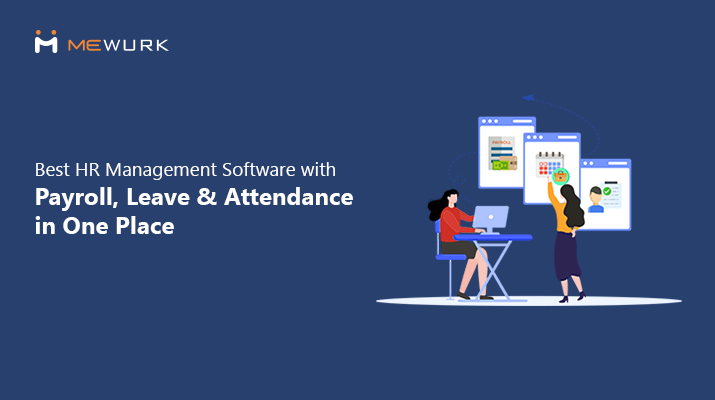
Best HR Management Software with Payroll, Leave & Attendance in One Place
For a while, I thought HR software was just upgraded spreadsheets with polished buttons.
That illusion lasted right up until I watched someone try to calculate salaries by pulling data from one tool, reconciling leave from another, manually cross-checking it with punch-in times from a biometric machine, and then running payroll on software that was unmistakably designed in 2009 and hasn’t seen any update since.
That’s when I realised something very specific: the only thing worse than having the best HR management software is having too many tools dressed up as HR software.
Most companies don’t need “more tools.” They just need one human resource management system that doesn’t feel like a punishment to use. Specifically, one that does Payroll, Leave, and Attendance and other usual stuff in the same place, without switching apps or tabs.
Turns out, that’s rarer than you'd think.
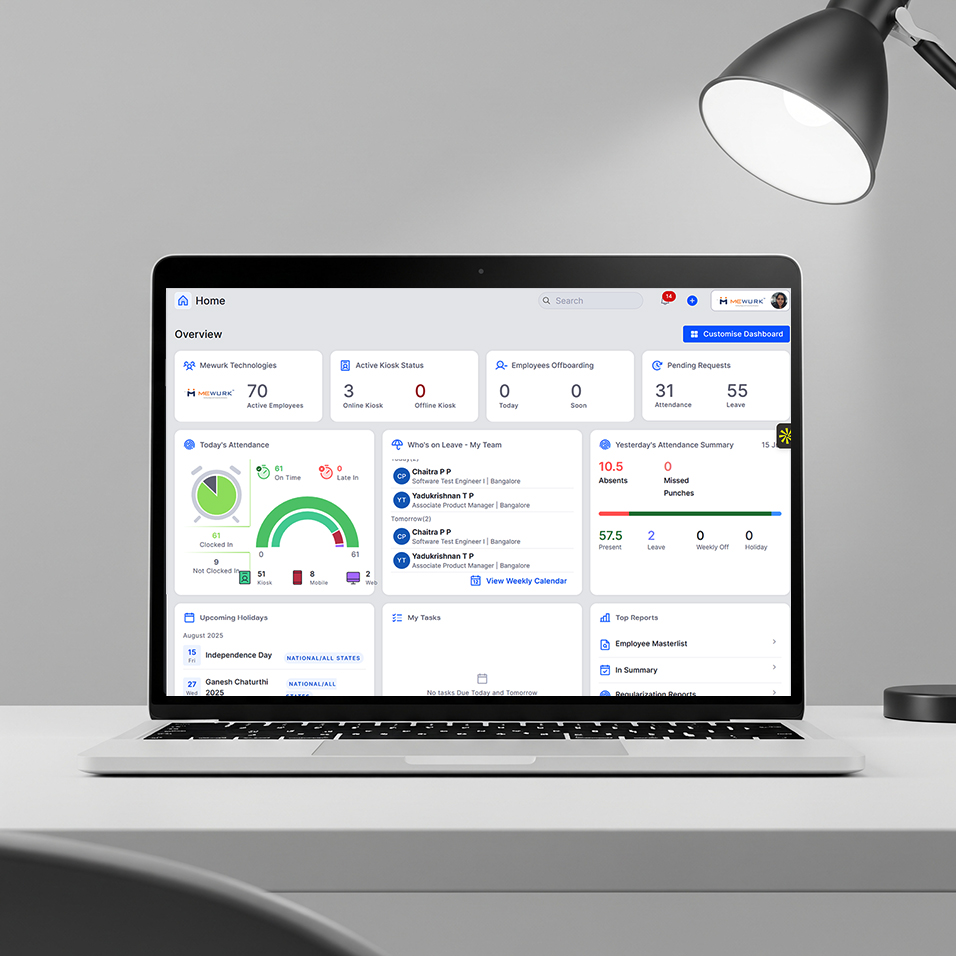
Why “One Place” Matters in the Best HR Management Software?
Let’s pause for a second and ask the obvious question: why should payroll, leave, and attendance live inside the same human resource management system?
The honest answer is: because they’re not separate things.
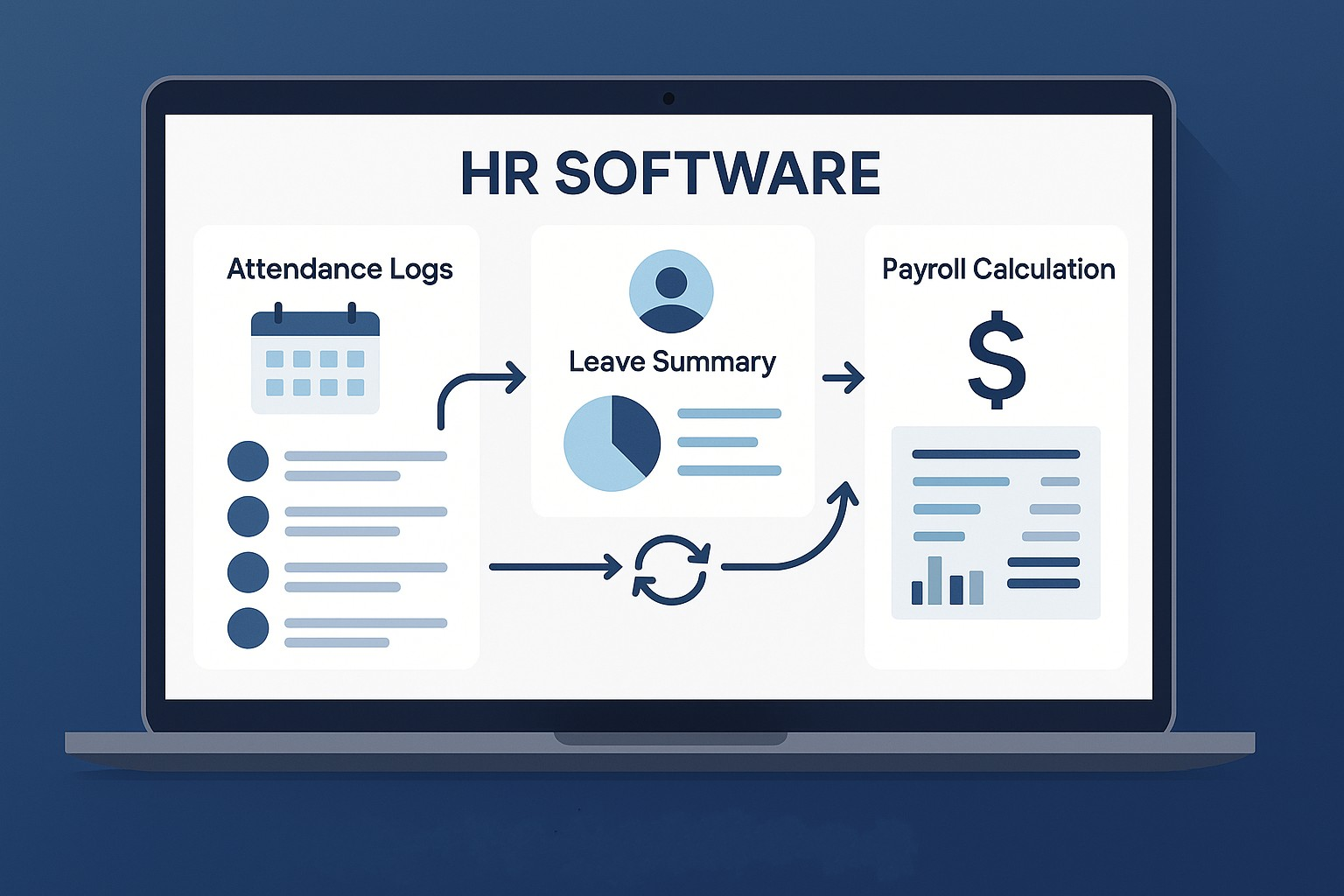
If someone’s late, that impacts their attendance.
If someone’s on leave, that reflects on their salary.
If someone forgets to punch in, but applies for leave later, the payroll system needs to know that.
It’s a connected story, but no one gets to see the full plot.
So when these systems don’t interact with each other, HR becomes the obvious link between them. Which is fine in theory, except HR isn’t the middleman for tools that won’t sync.
Why Does Your HR Workflow Feel Clunky?
The way most businesses manage HR right now is a bit like putting together ready-to-assemble furniture without the instructions. Using a hammer instead of an Allen key, and convincing yourself it’s “almost right.”
They use:
- A biometric device for attendance, which is fine
- A Google Sheet for leave tracking, which isn’t ideal
- A local vendor’s payroll app that still asks for TDS inputs manually.
- And then send HR interns pinging managers on WhatsApp for approvals.

What you end up with isn’t just inefficiency. It means your employee management system is fragile, and those flimsy solutions will eventually collapse. Like when someone quits and you realise you have no clean record of their working days, remaining leave, or salary breakdown. Then you will notice payroll errors popping up. People getting underpaid, or worse, overpaid.
Many HR tools we see out there, even those claiming to be the best human resource management software for small businesses, were never built to integrate with each other. Rather, they were meant to do their job in isolation. For instance, attendance software for tracking hours. Payroll software for calculating salaries. Leave management software for logging time-off days. They don’t share a brain.
But they should.
What The Best HR Management Software Should Offer?
Most blogs, at this point, will give you a 12-item checklist of features you already know you need. So let’s skip the obvious. Instead, let’s ask a better question:
What would good human resource management software feel like?
Here’s what I think:
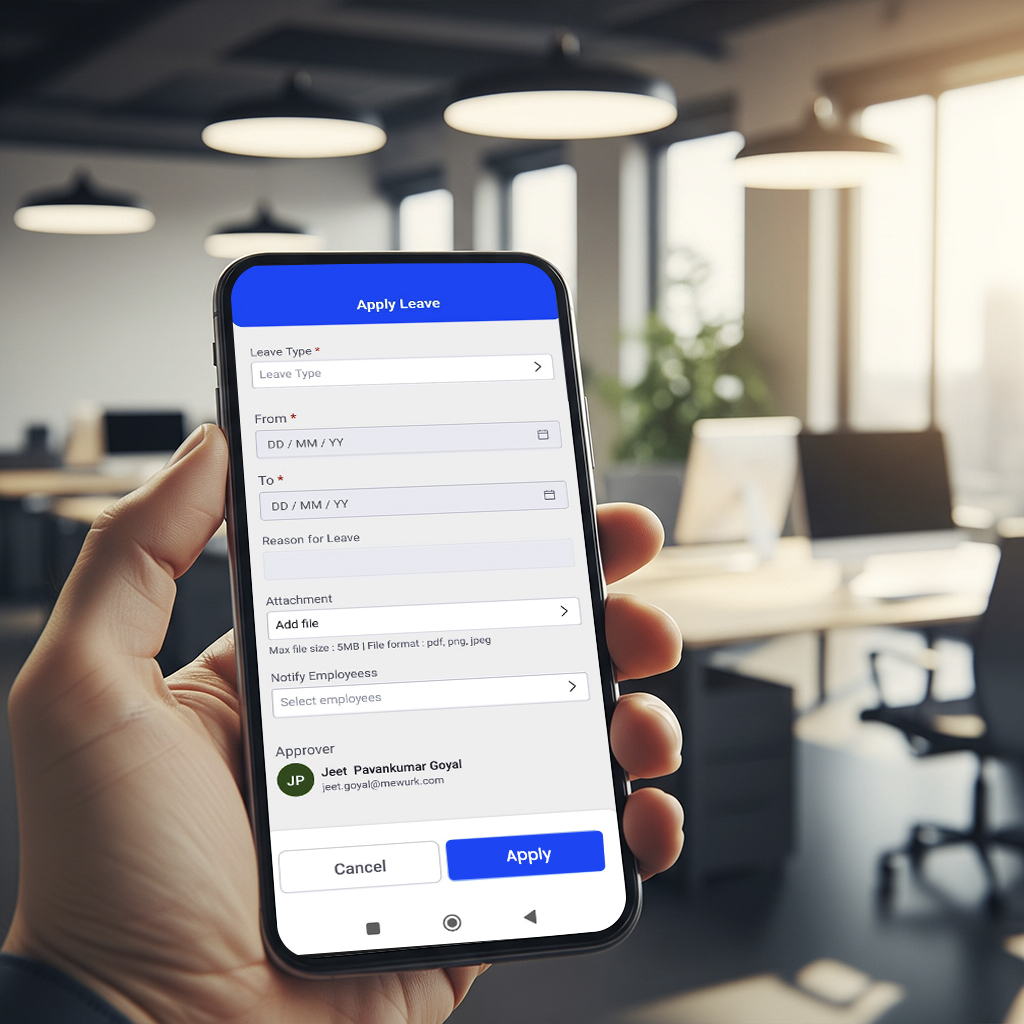
- You log in. You instantly see who’s working, who’s on leave, and who’s late.
- You click “Run Payroll” and it handles the rest- because it already knows the working days, holidays, unpaid leave, and OT.
- An employee applies for leave, and it auto-updates both their balance and your payroll preview.
- A manager checks attendance history without asking HR to export anything.
- HR isn’t flooded on the 30th of every month with a hundred “when’s salary coming?” pings.
In short, you do your work, and it does its job. Simple as that.
Does Such a Human Resource Management Software Exist?
Yes, and it’s called Mewurk.
We built Mewurk not because we wanted to enter the HR tech space. We built it because we were frustrated users first. We saw firsthand how a disconnected setup was and how none of the available options solved the problem end-to-end. There was no such thing as the best free HR management software. Either they were too expensive, or too bloated, or worse, made HR more complicated.
So we stripped it down to the essentials:
- Attendance that syncs with biometric, GPS, or app logins.
- Leave that’s automated, policy-driven, and transparent.
- Payroll that doesn’t just integrate with the above, but relies on it.
- Shifts that you can build once and reuse forever, even across teams.
- Document Management System that lets you store files (company or employee related) neatly and remind you when they expire.
- Reports that show evolving trends and let you act on them.
- Onboarding that feels like a simple checklist activity without the back-and-forth or delays.
- Self-service that not only means “do it yourself,” but also “do it easily.”
- Notifications that keep you informed about the important stuff you need to know.
- Access controls that keep things independent, accountable and secure for every user.
Rather than bolting modules together to sound like a comprehensive and best HR management software, we built a unified employee management system that is powered by a connected HR brain. A system where inputs don’t need to be re-entered, and outputs don’t need to be second-guessed.
What a High-Performing HR System Looks Like in Practice?
Let’s say you’re using the best HR management software like the one mentioned above. Here’s what changes practically:
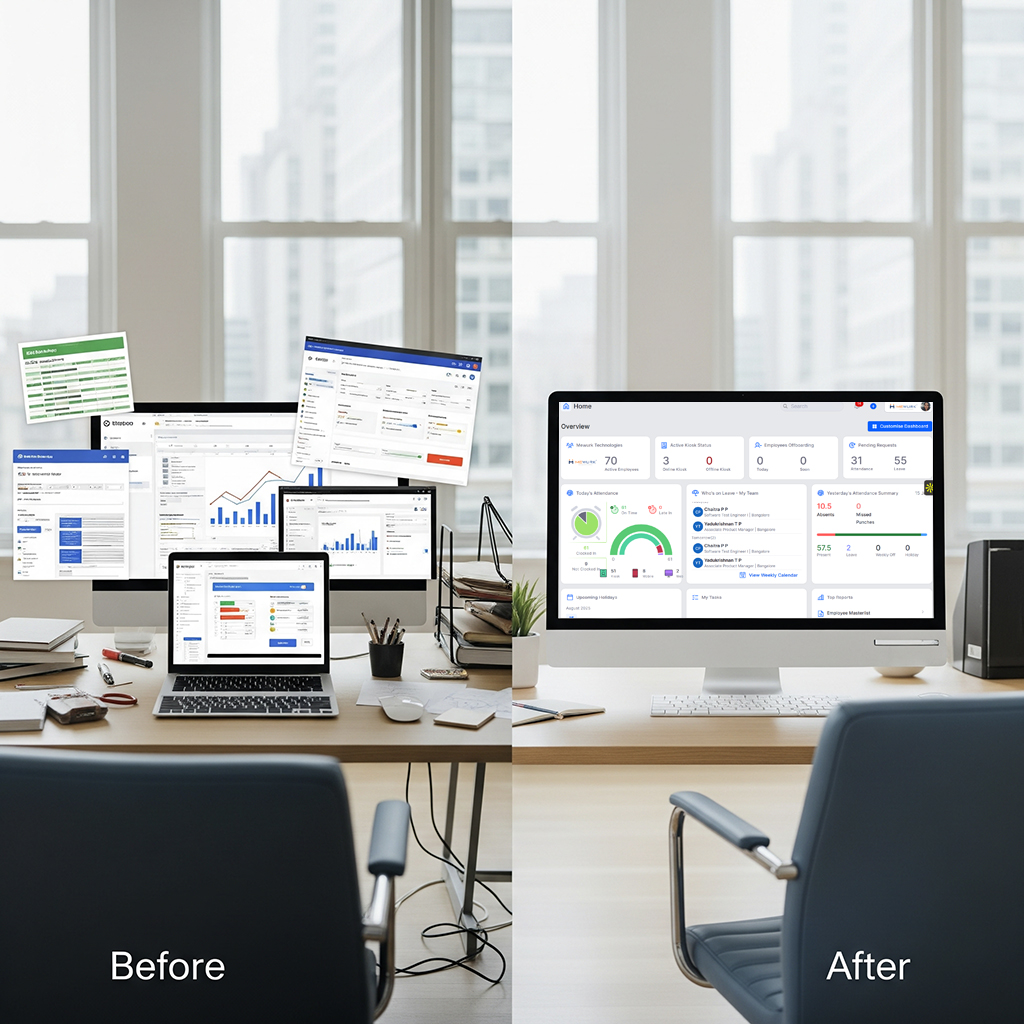
- Fewer errors. If leave and attendance are clean, payroll is clean. And so do compliance, audits, and other behind-the-scenes stuff.
- Faster processing. Since you are not glued to outdated and time-consuming methods, there is literally no need to double-check different reports.
- Happier employees. Because they get clarity about everything: leave balances, salary breakdowns, payslips, etc., they are happy.
- Better reporting. Now you can see patterns: who’s frequently late, which teams are overloaded, and who’s heading towards burnout.
- Lighter load for HR. When you use the best HR case management software to tackle tasks, it absorbs the workload rather than creating new loops.
And all of this becomes possible without you having to switch between five tabs, four vendors, and dozens of follow-up emails.
The ROI of Getting The Basics Right With the Best HR Software
Although saving time and reducing the manual workload sit at the core of investing in a workforce management solution, there is a hidden ROI in getting your core HR stack right. That is reputation, trust and retention.
People judge a company by how it handles the basics. Nothing erodes trust faster than delayed salaries, miscounted leave, or being told “our system didn’t record your attendance that day.”
If the fundamentals are solid, there is no need to flaunt fancy perks. What leadership often overlook but is very foundational is the fact that a brand isn’t its surface-level appeal but the operational trust. And the best HR management software, especially one that tightly integrates payroll, leave, and attendance together, makes sure that this very trust is reinforced in the day-to-day reality of work.
In a nutshell
The best HR management software isn’t the one with the longest feature list. It’s the one that helps you handle the basic things you need, like payroll, leave, and attendance, without turning them into separate departments, but in the same system.
Mewurk is our attempt at that kind of system. If you’re curious, we’d love to show you how it works. Schedule your free demo today.
But whether or not you try us, one thing’s worth remembering: you don’t need different tools as separate systems. You just need the best HR management software that connects the dots.
FAQ
Why should I look for payroll, attendance and leave management modules while choosing HR management systems?
If you want the best HR management software that delivers for your money, having attendance, payroll and leave modules is essential because these three are closely linked. One affects the other. Unless there is a common HR brain that connects and syncs these, you will end up doing each of them separately later.
How important is user-friendliness in HR management software?
In an organisation, there could be people who understand tech quickly and those who take time. A clean and intuitive UI will make sure that both groups of people find the system easy to adopt. Moreover, recent reports show that there is an increased sense of appreciation among businesses to choose the best HR management software India in terms of user friendliness.
How do I choose the best HR Management Software for my organisation?
Before you make the selection of an HR solution, assess your organisation's unique needs, size, budget, existing systems (for integration), and long-term goals. Evaluate multiple service providers based on their features, scalability, security, customer support, user-friendliness, and pricing models. On an additional note, request demos and read user reviews before making the final decision.
How does a cloud-based HR management system differ from on-premise HR management software?
Cloud-based HR solutions (SaaS) are vendor-hosted. This means you don’t need to worry about infrastructure, maintenance, or regular updates. They are all handled by the provider. On the other hand, on-premise HR management systems are hosted locally. You will require an in-house IT team for setup, maintenance, data security, and ongoing system updates.

Most Popular Post
Why Accurate Attendance and Leave Management Matters for Business Growth?
Read More →Why Accurate Attendance and Leave Management Matters for Business Growth?
How To Leverage Attendance Data For Better Workforce Management?
Read More →How To Leverage Attendance Data For Better Workforce Management?