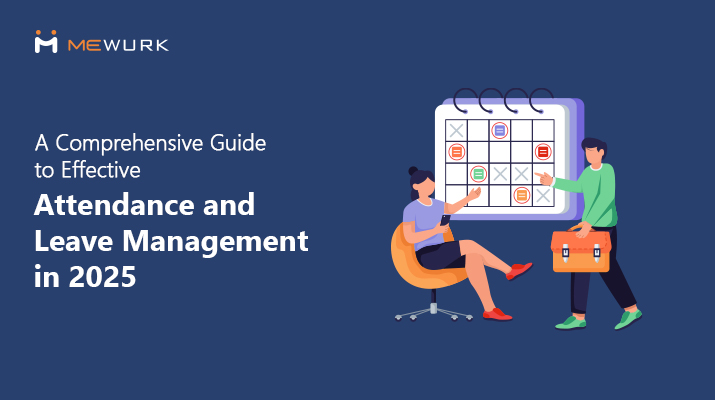
A Comprehensive Guide to Effective Attendance and Leave Management in 2025
The day for every employee in an organisation begins with marking their attendance or reporting their leave to HR if they are taking the day off. Proper attendance and leave management, therefore, is essential for HR in order to ensure a smooth office workflow.
However, minor mistakes, often caused by a lack of understanding or negligence, lead to issues ranging from labour law compliance violations to failure in time theft prevention. In this context, it is crucial for HR professionals to fully understand how leave and attendance management systems work. We have drafted this guide with exactly that goal in mind.
What is Attendance and Leave Management?
Attendance and leave management refers to the process of tracking employee work hours, absenteeism, and time-off requests in a structured, policy-compliant manner. This ensures that employee attendance is accurately monitored, including all leaves of absence taken and processed correctly in the payroll.
Proper employee attendance tracking is key to preventing indiscipline at workplaces. Absenteeism analytics, for instance, which you get from attendance monitoring, can guide the HR teams in the right direction regarding their resource planning and avoiding legal issues related to labour law non-compliance. When managed well, time and attendance management improves personal responsibility among employees and optimises HR functions.
Key Components of Attendance and Leave Management in HR
Choosing and implementing an attendance and leave management system is just the beginning of building a strong, future-ready workforce strategy. True efficiency is realised when you understand and manage the components.
Attendance and leave management in HR includes the following core components:
Tracking attendance
Modern attendance tracking does not rely on spreadsheets or attendance registers and spreadsheets. Instead, advanced Biometric attendance systems are used to record employees’ clock-ins and outs in real time. For remote employees, it is usually done with the help of mobile attendance apps. These smart alternatives give HR complete visibility into their employees’ work patterns and attendance trends.
Managing various leave types
An organisation decides on its leave and attendance management format in alignment with its employee leave policies. Each company may allocate different types of leaves for its employees. Sick leave, casual leave, earned and parental leave, to mention a few. For each type, there are different rules, entitlements, and documentation needs.
HRs and management should define their leave policies and implement them carefully in the leave and attendance management systems. To ensure fair policy compliance, it is important to educate the employees about the rules.
Setting up approval workflows and leave policies
Leave approvals are important, but their execution should not slow down workflows or create confusion. It is recommended to set up well-defined approval workflows that follow the organisational hierarchy, from the role of the employee through to their manager or department. Such structured workflows will cut down on delays.
Employee self-service portals play a key role in smoothing the leave request workflow, since they let employees apply for leave, track status, and receive approvals without constant follow-ups.
Top Challenges in Attendance and Leave Management Today

Even though overseeing attendance and leave seems a straightforward task, HR professionals continue to encounter recurring issues that affect productivity, precision, and legal conformity. The following are some of the recurrent issues today.
- Tracking work hours for remote employees
- Eliminating false reporting of work hours
- Monitoring compliance concerning work hours and breaks
- Protecting sensitive employee information from cyber breaches and identity theft
- Overseeing excessive sick leave and absenteeism
- Addressing unscheduled time off and short-notice changes to shifts
- Maintaining oversight of various leave of absence policies
- Ensuring accurate calculation of overtime and holiday hours
- Facilitating the prompt leave approval process
- Maintaining paper files rather than utilising computer systems
- Instructing supervisors on attendance and leave management
- Managing tardy or prematurely departing employees
- Coordinating multiple global teams working from different time zones
- Covering attending responsibilities when several employees take time off simultaneously
- Formulating equitable attendance policies that do not discriminate
Cloud-based HR solutions featuring advanced attendance and leave database management systems help HRs tackle much of these challenges and give them better control.
Modern Tools and Technologies for attendance and leave management

Automated Attendance Systems
Automated attendance systems use advanced technology to track when employees arrive, leave, and take breaks. They require no manual input either from the employees or managers.
Key Features:- Biometric systems - Use face recognition or fingerprint scans to identify employees.
- GPS tracking - Shows exact location when employees clock in or out via mobile attendance app.
- Accuracy: Fully cut out human errors in time recording
- Time-saving - Leave behind manual timesheets or punch cards
- Transparency - Everyone can see their attendance
Leave Management System
Leave management software helps employees request absence from work via the built-in self-service portal. Managers can decide whether to approve or decline the requests in real-time. Employees receive notifications when this is updated.
Key Features:- More autonomy: Employees can request leave via a self-service portal without calling managers
- Automated approvals: The system follows pre-defined leave policies to ensure uncomplicated leave approvals.
- Integration with payroll: The Leave and attendance management system syncs with payroll software to enable accurate salary calculation.
AI and Predictive Analytics
AI has stepped into employee attendance management systems and made them smart to look over past attendance to figure out who might be absent. The fresh insights, thus collected, are a great help for organisations to plan their teams better and stay ahead of bottlenecks.
Applications:- Forecasting absenteeism: Evaluating historical attendance data, these systems foresee possible absences.
- Making optimum staff coverage: Helps forecast staffing needs for high-demand periods.
- Identifying patterns: Spots trends in employee attendance and leave usage
Best Practices for Effective Attendance and Leave Management
The following best practices will enable you to guarantee that your digital leave and attendance management system is effective and that the employees are satisfied.
- Make sure to explain the policies regarding attendance and leaves to every employee.
- Use modern HR attendance management tools to ensure unbiased attendance and leave management.
- Examine and update policies concerning attendance and leaves regularly to maintain legal compliance.
- Train supervisors and managers on equitably managing attendance and leaves at all levels.
- Encourage employees to use a self-service portal for the submission of leave requests.
- Closely monitor attendance trends to deal with absenteeism at an early stage.
- Verify that the data is properly synchronised in the time attendance and leave management system for hassle-free operation.
- Promote openness by allowing employees to view their attendance records and leave balance.
- Make use of attendance and leave analytics to anticipate staffing requirements and prepare for peak workload periods.
Sample Attendance and Leave Policy Table
| Leave Type | Max Days | Approval Required | Carry Forward | Notes |
|---|---|---|---|---|
| Sick Leave | 10 | Yes | No | Medical certificate needed |
| Vacation Leave | 20 | Yes | Yes, up to 5 days | Use within the calendar year |
| Parental Leave | 90 | Yes | No | Applies to birth or adoption |
| Casual Leave | 7 | Yes | No | Urgent personal matters |
As you create your leave policy, you can follow a standard approach or take a more unique strategy. Ultimately, it depends on your workforce needs and how you want your employees to navigate their leave options. Here’s a sample leave policy table to help you better understand the process.
Diagram: Workflow of Leave Request and Approval Process

In a nutshell
As we approach the end of the first half of 2025, it's clear that workforce management continues to pose challenges, especially when it comes to core functions like attendance and leave management. But navigating these essentials shouldn't feel overwhelming. We hope this guide has helped you grasp the fundamentals of attendance and leave management in HR.
Ready To Upgrade From Paper-Based Leave And Attendance Systems?
FAQs
What are the major drawbacks of using attendance and leave management system in Excel?
Excel-based Leave and attendance management systems are prone to human errors. They lack real-time tracking or compatibility with biometric attendance machines, or payroll integration. You can’t think of using them for remote workforce management either.
Why is attendance and leave management important for businesses?
Proper management of attendance and leave is very important for every organisation. It helps them with accurate payroll processing, improves accountability among the employees, and supports compliance with labour laws and internal HR policies.
Which is the best attendance software for small businesses?
While there are numerous HR attendance management tools available and the best is always subjective to the users, small businesses should particularly emphasise a reasonably priced, scalable and customisation attendance software. Mewurk is definitely a choice worth considering, as it offers features tailored for small businesses such as biometric integration, shift scheduling, leave tracking, payroll sync, and more.

Most Popular Post
Why Accurate Attendance and Leave Management Matters for Business Growth?
Read More →Why Accurate Attendance and Leave Management Matters for Business Growth?
How To Leverage Attendance Data For Better Workforce Management?
Read More →How To Leverage Attendance Data For Better Workforce Management?